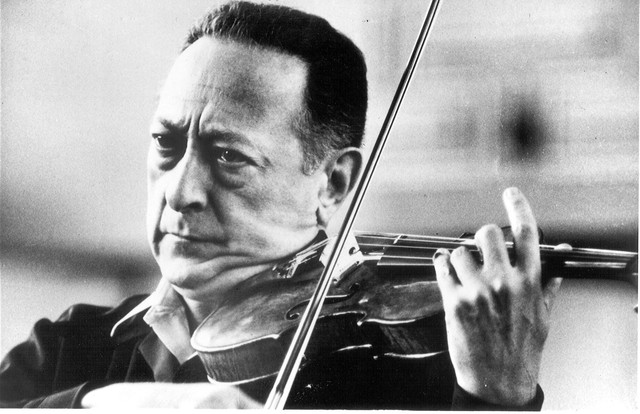
Jascha Heifetz
Charts
Tracks
Playlists
SEO
Press Mentions
Overview
Not included in any known risky playlists
Monthly Listeners
Discography
Genres
Spotify has not assigned genres to this artist yet
Top Audiences
Top Listener Locations
 Mexico City, MX2,528
 São Paulo, BR1,237
 Santiago, CL1,205
 Taipei, TW1,202
 Bogotá, CO1,100
Playlist Summary
Playlist Movement
No activity found
This artist's playlist additions and removals will appear here.
Biography & Metadata
The day after the 19-year-old Heifetz’s London debut, George Bernard Shaw wrote him a now legendary letter. “If you provoke a jealous God by playing with such superhuman perfection,” Shaw warned, “you will die young. I earnestly advise you to play something badly every night before going to bed, instead of saying your prayers. No mortal should presume to play so faultlessly.” Heifetz is widely considered to be one of the most profoundly influential performing artists of all time. Born in Vilnius, Lithuania on February 2, 1901, he became a U.S. citizen in 1925. Patriotic to his adopted country, he gave hundreds of USO concerts for Allied soldiers during World War II. In 1928, he published the first of dozens of acclaimed violin transcriptions. Many, including his arrangements of selections from Gershwin’s “Porgy and Bess,” are now part of the standard repertoire. Using the pseudonym Jim Hoyl, he even wrote a pop song that became a hit in 1946. In his later years, Heifetz became a dedicated teacher and a champion of causes he believed in. He led efforts to establish “911” as a national emergency phone number, and crusaded for clean air. In 1967 he converted a Renault sedan into one of America’s first commercial electric vehicles that he drove from his home to his classes at USC Los Angeles. As a result of his vast recorded legacy, Heifetz’s violin playing is no less influential today than it was in his lifetime. To legions of violinists he remains, quite simply, “The King.”
First discovered Aug 20, 2026, 6:50 PM