Adoniran Barbosa
Charts
Tracks
Playlists
Press Mentions
Google Rankings
Overview
Not included in any known risky playlists
Monthly Listeners
Discography
Genres
Spotify has not assigned genres to this artist yet
Top Audiences
Top Listener Locations
 São Paulo, BR258,513Itabuna, BR111,072Rio de Janeiro, BR92,433Belo Horizonte, BR67,778Brasília, BR57,005
Playlist Summary
Playlist Movement
Event | Playlist | Botted? | Position | Track | Happened at | |
|---|---|---|---|---|---|---|
Biography & Metadata
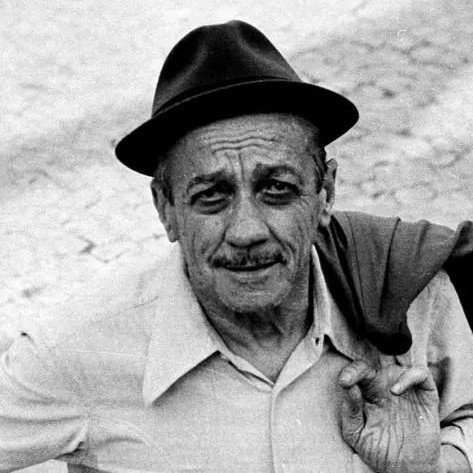
Adoniran Barbosa is the main composer of the samba of the state and city of São Paulo. His compositions portray the life in that city, evidencing the cultural mix of the Italian immigration and the hillbilly upstate accents in a samba style which is extremely singularized from that practiced in Rio de Janeiro. Barbosa had many successes that are celebrated as all-time classics of Brazilian popular music, like "Saudosa Maloca," "O Samba do Arnesto," "Tiro ao Álvaro" (with Osvaldo Moles), and "Trem das Onze," all of them having been continuously covered by great artists of all periods. The son of Italian immigrants, he worked several small jobs throughout his childhood and early adult life. It was only in 1933 that he became a regular radio singer on the Rádio Cruzeiro do Sul of São Paulo (even then he couldn't make a living on that). In 1935, Barbosa added lyrics to J. Aimberê's marcha "Dona Boa." The song won the annual carnival contest promoted by the mayoralty of the city and was his first one to be recorded (by Raul Torres, for Columbia). Working in the Rádio Record after 1941, Barbosa became acquainted with Osvaldo Moles, who created several comic characters for his radio plays that depicted the urban sociology of that city in that period, being highly influential in Barbosa's future compositions. After 1943, Barbosa performed regularly with the Demônios da Garoa. In 1945, he worked in the cinema for the first time, working on the film Pif-Paf, followed by Caídos do Céu (1946) and the important O Cangaceiro (1953). In 1951, his "Malvina" won the carnival contest and in the next year, "Joga a Chave" (with Osvaldo França) won it again. His peculiar style, which is the musical chronicle of the popular characters of the city of São Paulo, became fully developed after the recording of "Saudosa Maloca" and "O Samba do Arnesto" (with Alocim) in 1955 by the Demônios da Garoa. Barbosa had many other hits that remained as all-time classics of Brazilian popular music, like "Tiro ao Álvaro" (with Osvaldo Moles) and "Trem das Onze" (which won the carnival contest of the fourth centennial of the foundation of the city of Rio de Janeiro), but his first individual album as singer came only in 1974, followed by another three, the latter of which was a posthumous release. ~ Alvaro Neder, Rovi
First discovered Oct 1, 2026, 5:33 PM