The Blackbyrds
Charts
Tracks
Playlists
Press Mentions
Google Rankings
Overview
Included in 1 High Risk Playlist
Monthly Listeners
Series
- Monthly Listeners
- Listeners from Playlists
- Change
Discography
Genres
Spotify has not assigned genres to this artist yet
Top Audiences
Top Listener Locations
 Los Angeles, US10,764
 London, GB10,056New York City, US8,199Chicago, US7,691Brooklyn, US5,411
Playlist Summary
Playlist Movement
Biography & Metadata
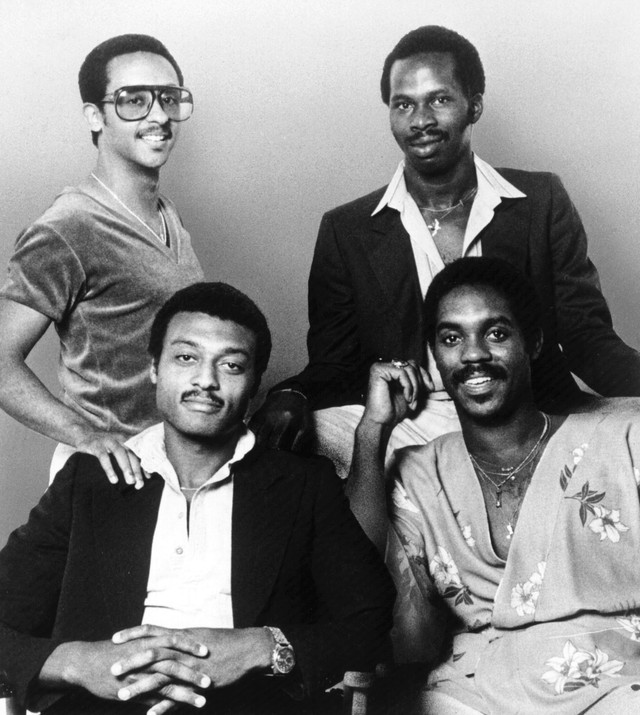
As synonymous with jazz-funk as any of their forebears or contemporaries, the Blackbyrds are master synthesists whose dance grooves and lush ballads are distinguished by their spirited rhythmic interplay, creative soloing, and uplifting group vocals. Conceived and closely assisted by trumpeter and educator Donald Byrd to provide some of his Howard University students with comprehensive experience in the music industry, the Blackbyrds debuted in 1974 and became exemplars of crossover jazz the next year with "Walking in Rhythm," a Top Ten hit on four Billboard charts, including the Hot 100. They then put together a streak of three gold albums from 1975 through 1977, starting with City Life, a Top 20 pop LP featuring the classics "Rock Creek Park" and "Happy Music," followed by Unfinished Business, highlighted by the Grammy-nominated title song, and Action, featuring "Mysterious Vibes" and "Dreaming About You," impeccable ballads that became two of the band's most-sampled recordings. After an extended dormancy, the Blackbyrds reconvened in 1999 and released their eighth album in 2012. They continued to perform deep into the next decade, led by original members Keith Killgo and Joe Hall. While teaching at Howard in Washington, D.C., Donald Byrd formed the Blackbyrds in 1973 with pupils Joe Hall (bass), Perk Jacobs (percussion), Keith Killgo (drums), Barney Perry (guitar), and Kevin Toney (keyboards), as well as Allan Barnes (saxophone, flute), whom he had discovered in his native Detroit. The latter four musicians played on Byrd's Larry Mizell-produced Black Byrd album and were also part of the lineup featured at the trumpeter's Montreux Jazz Festival performance that July. Named after Black Byrd, the Blackbyrds appeared on the Fantasy label in 1974 with a self-titled album whose back cover contained words of praise from Howard alum Roberta Flack. Larry Mizell was retained as producer and wrote two of the songs. Perry and Toney each co-wrote a song with Byrd, who wrote another two on his own. One of them was "Do It Fluid," the band's festive first single, which reached number 23 on the R&B chart and crossed into the Hot 100, peaking at number 69. The album consequently made strong impressions on the pop, R&B, and jazz charts. Byrd produced the Blackbyrds' next five albums. Flying Start, hot on the heels of the debut, was also released in 1974. The set was led by "Walking in Rhythm," a high-stepping Barney Perry composition that provided the band with their mainstream breakthrough early the following year, when it reached number six on the Hot 100, along with Top Ten placements on the R&B, disco, and adult contemporary charts. The Blackbyrds also released their third and fourth albums in 1975. First was the soundtrack to Cornbread, Earl and Me (a coming-of-age drama featuring a young Laurence Fishburne in his first film role) composed entirely by Byrd. Next came City Life, the band's most commercially successful album, as it reached number 16 on the pop chart, went number three R&B, and topped the jazz chart. Lead single "Happy Music," a duly joyous number written by Byrd, cracked the pop Top 20. "Rock Creek Park," the album's carnal and hypnotic second release, was a rare whole-band composition that included Orville Saunders in place of Perry and Stephen Johnson relieving Allan Barnes. It became the band's eighth charting single. (Perry went on to release an album as Blair [his middle name], while Barnes, who would rejoin decades later, continued a diverse career as a leader, sideman, and all-around vital part of the Detroit scene.) City Life was a certified gold seller by the time the Blackbyrds returned near the end of 1976 with Unfinished Business. While most of their previous albums featured a good number of auxiliary players and other collaborators, the band's bicentennial offering went all out with a large corps of singers and players, including solos from guitarist Ray Parker, Jr. and flutist Ernie Watts, and lavish arrangements from City Life contributor Wade Marcus. Additionally, Wesley Jackson temporarily replaced Stephen Johnson on reeds and woodwinds. Unfinished Business became the Blackbyrds' fourth Top Ten jazz LP, and its vibrant title song, written by Kevin Toney, was nominated for a Grammy in the category of Best R&B Instrumental Performance. The Brothers Johnson's "Q," an homage to their producer, Quincy Jones, took the award. Unfinished Business achieved gold status within five months, and the band responded with Action, a third gold album, in 1977. Another large-scale Byrd production, its sessions involved much of the same personnel as the preceding album, and Byrd brought his trumpet this time. Action yielded three singles, and while the first two, "Soft and Easy" and "Supernatural Feeling," were Top 20 R&B hits, "Mysterious Vibes" and "Dreaming About You," album cuts respectively contributed by Killgo and Toney, became two of the band's most beloved songs, and not just because they were sampled for dozens upon dozens of rap tracks. They're among the most sensational ballads of the era. In 1978, Fantasy issued Night Grooves, a compilation with a hype sticker advertising "New disco mixes of the Blackbyrds' greatest hits" (without crediting who was responsible for the remix work). Having recorded six studio albums in four years, the Blackbyrds didn't release their seventh one until 1980, and the break brought about a number of changes. Joe Hall, Kevin Toney, and Orville Saunders wrote material for Donald Byrd's 1978 album Thank You...For F.U.M.L. (Funking Up My Life), but by that point, Byrd had started teaching at North Carolina Central University, where he formed another group of music students, 125th Street, N.Y.C., with whom he made a trio of albums from 1979 through 1982. Meanwhile, enlisting producer George Duke and several songwriting partners, and bringing in lead singer James Garrett and percussionist Dan Stewart, the Blackbyrds recorded their seventh and final album for Fantasy. The resulting Better Days made it to number 40 on the R&B chart (number 133 pop) with help from the charting A-sides "What We Have Is Right," "Love Don't Strike Twice," and "Dancin' Dancin'." The Blackbyrds subsequently split, but Keith Killgo reactivated the band in 1999, and 13 years later, they independently released Gotta Fly, their eighth album, with Killgo, Hall, and Saunders joined by Allan Barnes and several new associates. Barnes died of a heart attack in 2016. Eight years later, Toney died of cancer. All the while, Killgo and Hall kept the Blackbyrds legacy alive while performing across the U.S. and Europe. ~ Andy Kellman, Rovi
First discovered Aug 25, 2026, 9:21 PM