Philippe Rogier
Charts
Tracks
Playlists
Press Mentions
Google Rankings
Overview
Not included in any known risky playlists
Monthly Listeners
Series
- Monthly Listeners
- Listeners from Playlists
- Change
Discography
Genres
Spotify has not assigned genres to this artist yet
Top Audiences
Top Listener Locations
 London, GB88
 Madrid, ES56
 Sydney, AU42
 New York City, US40Melbourne, AU36
Playlist Summary
Playlist Movement
Event | Playlist | Botted? | Position | Track | Happened at | |
|---|---|---|---|---|---|---|
Biography & Metadata
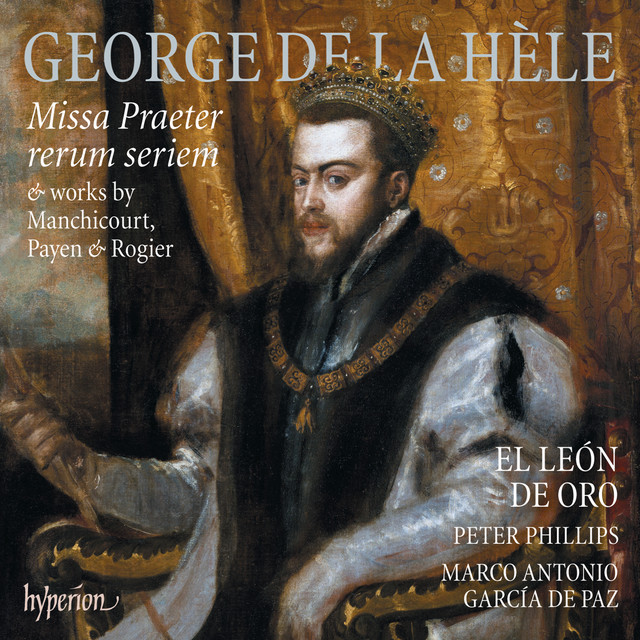
Philippe Rogier was the last Franco-Flemish composer of the renaissance to serve at the Spanish court. He was born in Arras around 1560; first mention of him isn't until 1572 when he was recruited as a choir boy into the service of Spanish monarch Philip II. No known records remain of his education, but as he signed himself as "sacerdos" in his publications, one must conclude that he had been ordained as a priest. In 1584 El Escorial -- an enormous complex containing one of the King's private residences -- was completed, and at the same time Rogier was named assistant to chapel master George de la Hèle; the following year Rogier composed the mass Ave martyr gloriosa and motet In illo tempore in celebration of the marriage of the King's daughter, Catherine Michelle of Spain, to Charles Emmanuel I, Duke of Savoy. in 1586, de la Hèle passed away, and Rogier acceded to chapel master. Although Rogier's renown didn't expand beyond the borders of Spain, he was granted benefices and prebends in France, his native Flanders and even in Germany, which he held until his untimely death at about age 35 in February 1596. In his will, Rogier made provision for the publication of five masses, which his assistant Géry de Ghersem undertook in 1599; another three survive, along with 25 motets and a small number of other works. The vast majority of Rogier's output was stored in the library of John IV of Portugal, which was destroyed during the Lisbon earthquake of 1755.
First discovered Aug 25, 2026, 10:26 AM