John Shirley-Quirk
Charts
Tracks
Playlists
Press Mentions
Google Rankings
Overview
Not included in any known risky playlists
Monthly Listeners
Series
- Monthly Listeners
- Listeners from Playlists
- Change
Discography
Genres
Spotify has not assigned genres to this artist yet
Top Audiences
Top Listener Locations
 Mexico City, MX831
 Santiago, CL753
 São Paulo, BR409
 Berlin, DE334
 London, GB323
Playlist Summary
Playlist Movement
Biography & Metadata
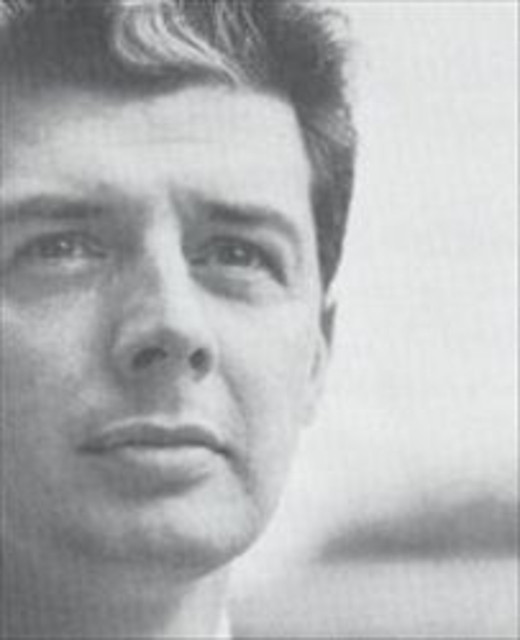
English baritone John Shirley-Quirk enjoyed singing and playing the violin as a child, but his true vocal talent did not become apparent until he was already studying chemistry and physics at the University of Liverpool. After several years of teaching those subjects at a British Air Force station, he began to study with the baritone Roy Henderson (1957). In 1961-1962, he sang with the Cathedral Choir at St. John's in London; during the same time he made his debut at Glydebourne in 1961 as Gregor Mittenhofer in Henze's Elegy for Young Lovers. In 1963, Benjamin Britten recruited him to join his English Opera Group; with that group he sang the premiere performances of Britten's Curlew River, The Burning Fiery Furnace, The Prodigal Son, Owen Wingrave, and Death in Venice (between 1964 and 1973). During that time, he also sang Guglielmo in Così fan tutte and, later, Golaud in Pelléas et Mélisande at the Scottish National Opera. He created the role of Lev in Tippett's The Ice Break at Covent Garden in 1977. Though his career centered around British venues and the music of English composers, Shirley-Quirk's career was by no means provincial. He sang his first performances of Wozzeck in St. Louis, and debuted in Berlin with Bartók's Bluebeard's Castle in 1969. Milan's Teatro alla Scala engaged him as Rangoni in Boris Godunov, and in 1974 he made his Metropolitan Opera debut in Britten's Death in Venice. Other important roles in his career were the Speaker in Die Zauberflöte and the Music Master in Ariadne auf Naxos. Shirley-Quirk had equal success as a recital and concert singer. He was highly regarded for his interpretation of the major choral works of Bach and Elgar and sang Mahler's Des Knaben Wunderhorn on many concerts in Europe, North America, and Australia. His recitals usually included songs by his mentor Benjamin Britten as well as those of Vaughan Williams and Butterworth. John Shirley-Quirk's lyric baritone voice, while not large, commanded a wide dynamic and expressive range; he had a wonderful sense of phrasing. It was as a Lied interpreter that he was best known; his intellectual curiosity allowed him to explore the inner world of the works he sang. His recordings, particularly of the works of Benjamin Britten, document his fine artistry. In 1975 he was named a Commander of the Order of the British Empire.
First discovered Aug 22, 2026, 12:27 AM