Philippe Boesmans
Charts
Tracks
Playlists
Press Mentions
Google Rankings
Overview
Not included in any known risky playlists
Monthly Listeners
Series
- Monthly Listeners
- Listeners from Playlists
- Change
Discography
Genres
Spotify has not assigned genres to this artist yet
Top Audiences
Top Listener Locations
 Brussels, BE6
 Paris, FR3Lille, FR3
 London, GB3
Playlist Summary
Playlist Movement
Biography & Metadata
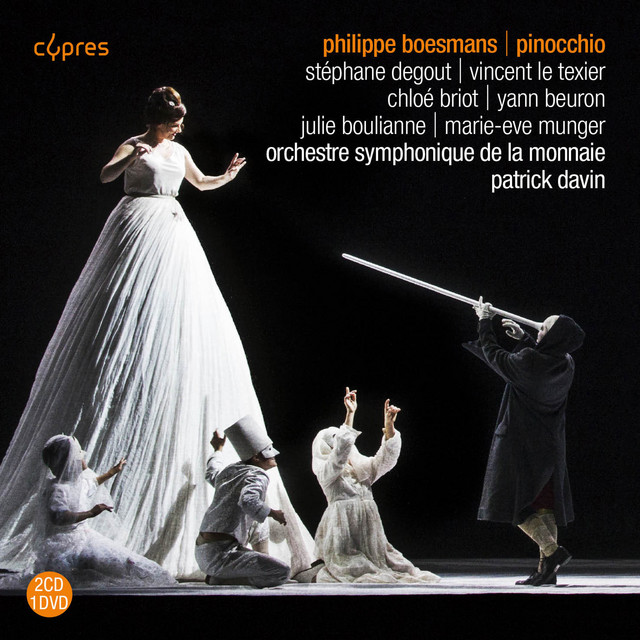
Composer Philippe Boesmans was best known for his six operas, several of them based on famous plays. He was a longtime composer-in-residence at the La Monnaie opera house in Brussels. Boesmans was born on May 17, 1936, in Tongeren, Belgium. He studied piano at the Conservatoire de Liège but was advised by his teacher not to pursue a career as a pianist. At the same time, however, he took a composition course from Pierre Froidebise, who introduced him to serialist methods. Boesmans was heavily influenced by the so-called Liège Group of composers, which included Henri Pousseur, André Souris, and Célestin Deliège. He attended the Darmstädter Ferienkurse summer composition courses in Germany and was exposed to many new styles, and he performed on piano with the Ensemble Musique Nouvelle. Further, he became an assistant producer at Belgium's French-language RTBF radio network, becoming a producer in 1971, and there, he learned much about orchestration as he worked with the station's orchestra. Thus, Boesmans was exposed to a wide variety of contemporary styles even as he remained essentially self-taught as a composer. As his style developed, he turned from serialism to more accessible idioms that included consonances, although he insisted that he had not turned his back on serialist composition. Boesmans won the Italia Prize for his 1969 work Upon La Mi. He wrote an opera, La Passion de Gilles, in 1983, but it was not until he became composer-in-residence at La Monnaie in 1985 that he gained wide recognition. The theater's directors, Gerard Mortier and then Bernard Foccroulle, began to commission new works from Boesmans, beginning with the Trakl-Lieder song cycle in 1987 and continuing with the operas that have formed Boesmans' main musical legacy. Many of them were based on famous theatrical works; Wintermärchen (1999) was an adaptation of Shakespeare's A Winter's Tale, while Julie (2005) was based on August Strindberg's Miss Julie. His 2009 opera Yvonne, princesse de Bourgogne took the Polish play Iwona, księżniczka Burgunda as its source. In 2015, he composed an opera based on the Pinocchio story. Boesmans' non-operatic works have been heard at such major contemporary music festivals as those in Darmstadt, Warsaw, and Metz, France. Boesmans died in Brussels on April 10, 2022. He had already completed his final opera, On purge bébé (based on a farce by Georges Feydeau), and it was presented posthumously by La Monnaie. As of the mid-2020s, some 20 of Boesmans' works had been recorded, including most of the operas. ~ James Manheim, Rovi
First discovered Oct 6, 2026, 6:06 AM