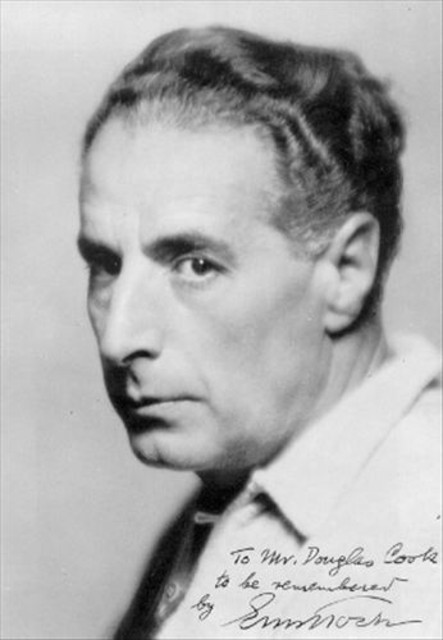
Ernst Toch
Charts
Tracks
Playlists
Press Mentions
Google Rankings
Overview
Not included in any known risky playlists
Monthly Listeners
Discography
Genres
Spotify has not assigned genres to this artist yet
Top Audiences
Top Listener Locations
 Berlin, DE23Stuttgart, DE16Frankfurt am Main, DE14Hamburg, DE11
 Stockholm, SE9
Playlist Summary
Playlist Movement
Event | Playlist | Botted? | Position | Track | Happened at | |
|---|---|---|---|---|---|---|
Biography & Metadata
The young Ernst Toch was almost entirely self-taught as a musician; his earliest compositional efforts involved copying out Mozart's string quartets, which in turn served as models for his own essays in the genre. Despite his evident promise, however, Toch's formal education was at first directed toward medicine; soon, however, he devoted his energies to musical studies. Toch went to Frankfurt in 1909, where he undertook formal training in both piano (with Willy Rehberg) and composition (with Iwan Knorr). In 1910, he won the Berlin Mendelssohn Prize for composition; three years later, he was appointed teacher of composition at the Mannheim Musikhochschule. Toch retained this post (interrupted by a wartime stint in the Austrian army) until 1929, when he moved to Berlin and actively pursued a career as composer and pianist. During this time he wrote several choral and dramatic works; among the most striking of these is the "Geographical Fugue" from Gesprochene Musik, which employs a contrapuntal, purely spoken treatment of the names of various exotic locales. Following the example of many of his countrymen, Toch fled Germany in 1933 as the Nazi party continued its ascent. After spending time in Paris and London, Toch emigrated to America in 1935, where he took up a teaching post at the New School for Social Research in New York. He eventually embraced his new home, becoming a US citizen in 1940. Beginning in 1936, Toch taught at the University of Southern California. His inventive, colorful musical sense and proximity to Hollywood led to a lucrative side career as a composer of film music; his scores for Peter Ibbetson (1935) and Address Unknown (1943) were nominated for Academy Awards. He was similarly honored for his "legitimate" endeavors, winning the 1956 Pulitzer Prize in music for his Third Symphony.
First discovered Sep 16, 2026, 2:55 PM