Juliette Gréco
Charts
Tracks
Playlists
SEO
Press Mentions
Overview
Not included in any known risky playlists
Monthly Listeners
Discography
Genres
Spotify has not assigned genres to this artist yet
Top Audiences
Top Listener Locations
 Paris, FR3,474
 Montreal, CA1,825
 Istanbul, TR1,795
 Amsterdam, NL1,710
 London, GB1,707
Playlist Summary
Playlist Movement
No activity found
This artist's playlist additions and removals will appear here.
Biography & Metadata
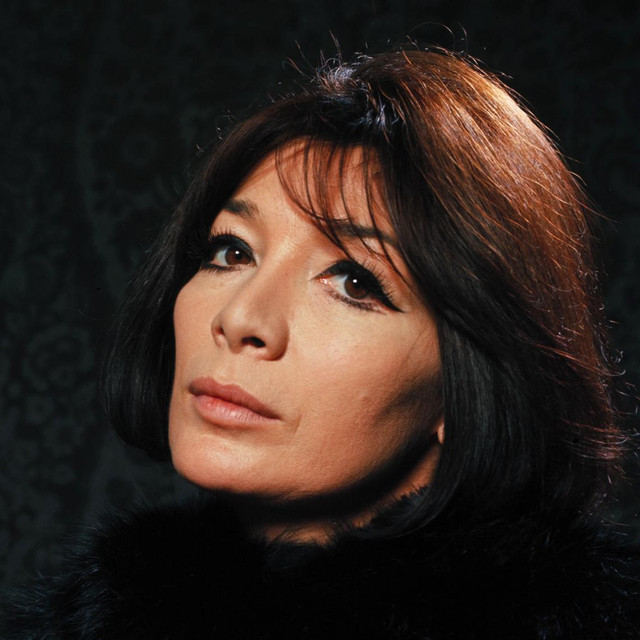
Muse to the Parisian literary scene of the '50s, godmother of songwriter-led '60s French pop, and a self-reinventing torch singer from the '70s into the 2010s, Juliette Gréco was one of the great French recording artists of the 20th century. Born in Montpellier in 1929, Gréco was classically trained at the Paris Opera as a youngster. Forced to flee Paris at the outbreak of the Second World War, and practically orphaned when her mother was jailed for her resistance to the Nazis in 1943, Gréco sought refuge with her former French teacher in the St. Germain des Prés quarter of Paris. In the later years of the war, the literary and artistic world of the Left Bank was flourishing, and Gréco became a fixture in this world, befriending Sartre and other writers of renown, and appearing in the theater and on a literary radio show. Her experiences of hardship in the war had influenced her politics and sowed the seeds for the great liberation she flaunted after the war, becoming the pinup for the so-called bohemian scene. Gréco made an acclaimed debut as a singer in 1949, premiering songs with the words of such leading French poets as Jacques Prévert ("Les Feuilles Mortes"), Jules Laforgue ("L'Eternel Féminin"), and Raymond Queneau ("Si Tu T'Imagines") set to music by Joseph Kosma. In the new post-war songs, lyrics were privileged over the bigger orchestrations favored by singers like Edith Piaf; Gréco's intellectual bent made her the perfect interpreter for this new movement. Her singing style shared the dramatic enunciation of Jacques Brel and the droll delivery of Georges Brassens -- her contemporaries in quite different musical scenes -- while showcasing sensual vocals that were all her own. Gréco released the song "Je Suis Qui Je Suis," again with words by Prévert and music by Kosma, two years later and it was a huge hit for her. Having toured Brazil and the United States, Gréco returned to Paris in 1954 to triumph at the Olympia Hall with the song "Je Hais les Dimanches," written by a young Charles Aznavour. Devoting most of the rest of the decade to a successful film career in the United States, Gréco returned to Paris in 1959 and began a second phase of her musical career as the patron of a new French generation of songwriters in the early '60s. She collaborated with artists like Serge Gainsbourg, who wrote "La Javanaise" for her, as well as Léo Ferré and Guy Béart. In 1968, then massively famous from high-profile television appearances and her earlier recordings, she released her song "Deshabillez-Moi," which was an openly sexual piece and marked a change from the intellectual, literary slant she had always put on her songs. After a slight stalling of her recording career in the early '70s due to trouble with record companies, Gréco embarked on the third stage of her career in 1975, collaborating closely with Gérard Jouannest, Jacques Brel's formal pianist, who set many of the texts written for her to music henceforth. She married him in 1989. Further releases in the '80s ("Gréco '83") and '90s (the beautiful "Juliette Gréco") saw her still experimenting, as well as promoting new songwriters like Etienne Roda-Gil and Caetano Veloso. She released "Un Jour d'Été et Quelques Nuits" in 1998, and in 2004 her album Aimez-Vous les Uns les Autres ou Bien Disparaissez was a true return to form, featuring collaborations with young artists Miossec and Benjamin Biolay. The album Le Temps d'une Chanson was released in 2006, and Qu'on Est Bien: La Valse Brune arrived two years later. The studio effort Je Me Souviens De Tout was released in 2009; she was accompanied by her husband Gérard Jouannest on piano and Jean-Louis Matinier on the accordion. To commemorate and promote the release, the trio gave four concerts at the Théâtre des Champs-Élysées. Given her prolific catalog on various labels, numerous compilations appeared over the next several years, including the double-length Si Tu T'imagines: Le Siècle D'or from Harmonia Mundi and Chante...Gainsbourg et Les Autres! from Go Hit. She paid tribute to Jacques Brel with Gréco Chante Brel in 2014 and was the subject of a 13-disc box entitled L'essentielle the following year. In 2016, during her sold-out Thank You tour across Europe, she had a stroke and had to cancel her remaining dates in order to recover. In 2018, at the age of 91, she began recording again, but none of the material was released. Juliette Gréco died on September 23, 2020 at her home near Saint-Tropez; she was 93 years old. ~ Caspar Salmon, Rovi
First discovered Aug 24, 2026, 1:46 PM