Sheila Chandra
Charts
Tracks
Playlists
Press Mentions
Google Rankings
Overview
Not included in any known risky playlists
Monthly Listeners
Discography
Top Audiences
Top Listener Locations
 London, GB914
 Denver, US654
 Sydney, AU561Melbourne, AU557
 Mexico City, MX511
Playlist Summary
Playlist Movement
Event | Playlist | Botted? | Position | Track | Happened at | |
|---|---|---|---|---|---|---|
Biography & Metadata
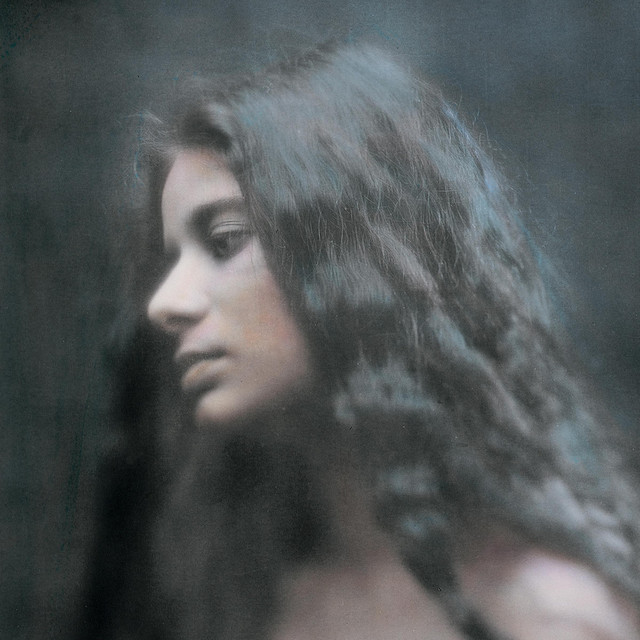
One of the most unusual and successful singers of the '80s and '90s that has attempted to fuse the music of non-Western cultures with Western pop, Sheila Chandra began recording as a teenager in Monsoon. Of Indian ancestry but born and raised in Britain, Chandra took lead vocals in the band, which pursued a sort of new wave-tinged raga rock along the lines of George Harrison's explorations on Beatles tracks like "Love You To." The combination yielded an album and an unexpected British hit single, "Ever So Lonely," in the early '80s. Chandra, however, felt limited by the label's pressures for more commercial product, and signed to a small indie label, Indipop, which she felt would offer more freedom for her explorations as a solo artist. In the mid-'80s, Chandra was astonishingly prolific, releasing five solo albums over a period of about two or three years, which drifted away from the Asian dance-pop of Monsoon into a more personal sort of world fusion. Chandra also began to write much of her own material, usually in collaboration with producer and husband Steve Coe; Coe had also helped produce, write, and perform the music in Monsoon with Martin Smith, who assisted on Chandra's early solo records. Indian instruments were still usually employed, and electronic rhythm tracks still sometimes used to guarantee some measure of danceability and pop/rock appeal. But with increasing frequency, Chandra was pushing herself beyond the parameters of pop/rock with wordless pieces of both melismatic singing and percussive mouth noises, ambitious song cycles, interwoven overdubbed vocal tracks, and a 27-minute track based around a raga. (Her mid-'80s Indipop albums have been reissued in the U.S. by Caroline.) Chandra truly matured as an artist, however, with her '90s albums for Peter Gabriel's Real World label (distributed in the U.S., again, by Caroline). As proof that adulthood doesn't have to mean tamer and more mainstream product, these found Chandra achieving a true world fusion that drew from Indian ragas, elements of British folk, Middle Eastern chants, sophisticated studio overdubs, and more vocal percussion compositions, the last of which bordered on the downright experimental. Chandra and Coe were now almost solely responsible for the music (Martin Smith no longer being an active participant), constructing drone-like instrumental textures to suitably complement Chandra's oft-wordless singing. Pop and rock were hardly factors anymore; Chandra was primarily interested in extending the limits of vocal expression, whether applied to Indian, Spanish, or Islamic forms, or the kind of material that could find a suitable home in the repertoire of June Tabor or Laurie Anderson. These recent works have firmly established Chandra as one of the principal boundary jumpers of contemporary music, but she's not a dilettante, and she imbues her music with a haunting, spiritual grace. In 2010, Chandra was diagnosed with 'Burnt Mouth Syndrome', a painful neurological disorder that ended not only her recording career but her ability to speak as well. ~ Richie Unterberger, Rovi
First discovered Aug 18, 2026, 2:17 PM