Ignaz Pleyel
Charts
Tracks
Playlists
SEO
Press Mentions
Overview
Not included in any known risky playlists
Monthly Listeners
Discography
Genres
Spotify has not assigned genres to this artist yet
Top Audiences
Top Listener Locations
 Mexico City, MX70
 Madrid, ES65
 London, GB63
 Sydney, AU60Melbourne, AU42
Playlist Summary
Playlist Movement
No activity found
This artist's playlist additions and removals will appear here.
Biography & Metadata
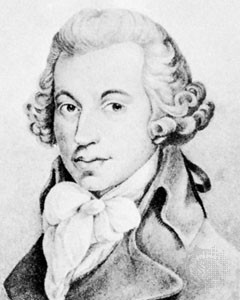
Ignace Joseph Pleyel was a French composer from the classical era known for his orchestral works and accessible chamber music for strings. He was also an entrepreneur and found success both as a music publisher and as a piano builder. Pleyel was born in Ruppersthal, Austria, in 1757 to a non-musical family. He had seven older siblings, and his father worked as a schoolteacher. When he was 15 years old, he became a student of Joseph Haydn, which was made possible by the financial sponsorship of Count Ladislaus Erdődy. After four years with Haydn, Pleyel composed a marionette opera, Die Fee Urgele, which was first performed at the Esterházy Palace. He also composed at least the overture of Haydn's marionette opera Die Feuersbrunst. After completing his studies in the late 1770s, Pleyel worked for Count Erdődy, and he became a Freemason. In the early 1780s he traveled to Naples, where he received a commission to compose pieces for the hurdy-gurdy for King Ferdinand IV to play. It was also around this time that he composed his String Quartets, Op. 1, dedicated to Count Erdődy. In 1784 Pleyel received another commission from the king to compose an opera, and he traveled to France, where he became an assistant kapellmeister under Franz Xavier Richter at the Strasbourg Cathedral. After Richter's death in 1789, Pleyel became the kapellmeister, and he also taught music lessons. In this capacity, he had access to a large choir and orchestra, and a generous budget for performances. However, in 1791 the French Revolution banned musical performances in the church, which brought an end to his position in Strasbourg. Pleyel was forced to consider other employment opportunities, and a short while later he accepted an appointment in London as the conductor of the Professional Concert series. His former teacher Haydn was also working in London as the conductor of another concert series, which made them rivals. Apparently Pleyel didn't know that he was going to be competing against his former teacher prior to accepting the position. Regardless, they were both hugely successful from their time in London and remained good friends during and afterward. By 1795, Pleyel had moved to Paris, and he founded the Maison Pleyel music publishing company. The business did very well and published around 4,000 works by the leading composers in Europe in its almost 40 years of operation. It was also the first to produce miniature study scores of large-scale works such as symphonies and string quartets. Pleyel started his final business venture in 1807, the Pleyel et Cie piano manufacturing company. Pleyel et Cie became the preferred brand used by Frédéric Chopin and was the first manufacturer in France to produce upright pianos. Pleyel's son Camille became a partner in the company in 1815, and he eventually took over after his father's retirement in 1824. Pleyel spent his final years enjoying nature at his farmhouse outside of Paris, where he passed away in 1831. ~ RJ Lambert, Rovi
First discovered Aug 19, 2026, 7:54 AM