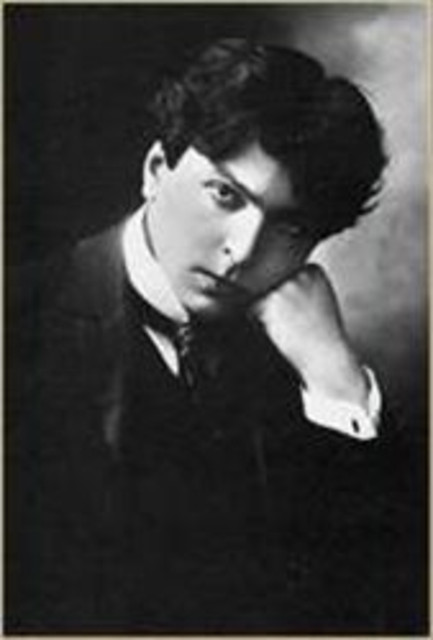
George Enescu
Charts
Tracks
Playlists
Press Mentions
Google Rankings
Overview
Not included in any known risky playlists
Monthly Listeners
Discography
Genres
Spotify has not assigned genres to this artist yet
Top Audiences
Top Listener Locations
 Bucharest, RO1,256
 London, GB481Cluj-Napoca, RO408
 Madrid, ES347
 New York City, US280
Playlist Summary
Playlist Movement
Event | Playlist | Botted? | Position | Track | Happened at | |
|---|---|---|---|---|---|---|
Biography & Metadata
George Enescu is still considered the greatest of all Romanian composers. While he is widely known for just one famous opus, he was in reality a very imaginative, highly skilled composer of music possessing great depth and subtlety, as well as being one of the great concert violinists of his time. For appearances in the West he adapted his name to a form that would prompt the French to pronounce it correctly: Georges Enesco. He was given a violin and lessons at the age of four, progressing very rapidly and beginning to compose a year later. Legend has it his first teacher was a Romany fiddler. He entered the conservatory of the Gesellschaft der Musikfreunde in Vienna in 1888. His primary violin teacher was Joseph Hellmesberger. He took piano from Ernst Ludwig and harmony, theory, and composition from Robert Fuchs. He made his violin debut in 1889 in Slanic, Moravia. He remained in the Conservatory until 1894, regarded as a fully formed virtuoso at the age of 13. Nevertheless, he went on to the Paris Conservatory for more violin studies, and took harmony, theory, and composition from Dubois, Gédalge, Massenet, and Fauré. This mixture of late Romantic German and French training helped give his music its distinctive quality. In 1897 the Concerts Colonne gave a concert of his works. The work he decided to designate as his first mature piece, the Poème Roumaine, Op. 1, premiered in 1898. That same year he started conducting the Romanian Philharmonic Society in Bucharest. Enescu quickly established one of the most important solo and chamber music careers of the time. His recital partner was the great French pianist Alfred Cortot, and he formed a piano trio with Louis Fournier and Alfredo Casella in 1902, and in 1904 the Enescu Quartet. He joined the faculties of the École Normal and the American Conservatory in Paris. In the meantime, he took an active part in building a classical concert life in his native Romania. He formed a Philharmonic Orchestra in the town of Iasi, and a Composers' Society. He wrote his most famous works, the two Romanian Rhapsodies, Op. 11, for the Philharmonic. He also worked closely with the Conservatories in Bucharest and Iasi. In 1912 he funded a "George Enescu Prize" in composition, and played the world premieres of the winning works. He made his first appearances in the United States in 1923, as violinist and guest conductor with the Philadelphia Orchestra. The brilliant young American prodigy, Yehudi Menuhin, became his most famous pupil. Others were Gitlis, Grumiaux, and Ferras. Through the 1930s he continued work as a violinist, conductor, teacher, musicologist, and organizer, while as a composer he toiled on his powerful opera Oedipus. When World War II broke out, he happened to be at his country estate in Romania and was more or less stuck there for the duration. After the war ended, he went to New York, where he watched a Soviet-backed government take over his country. He remained in New York, increasingly incapacitated by arthritis. He gave a farewell concert with Menuhin in 1950, then returned to Paris. He suffered a stroke in 1954. As a result of it, he spent ten months almost entirely paralyzed.
First discovered Aug 21, 2026, 7:11 PM