Ingrid Haebler
Charts
Tracks
Playlists
SEO
Press Mentions
Overview
Not included in any known risky playlists
Monthly Listeners
Discography
Genres
Spotify has not assigned genres to this artist yet
Top Audiences
Top Listener Locations
 Mexico City, MX2,759
 Taipei, TW2,245
 Santiago, CL1,468
 London, GB1,376
 São Paulo, BR1,372
Playlist Summary
Playlist Movement
No activity found
This artist's playlist additions and removals will appear here.
Biography & Metadata
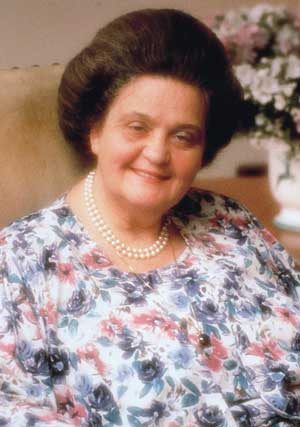
Ingrid Haebler was an Austrian pianist known for her interpretations of the music of Mozart, Beethoven, and Schubert. She made some of the earliest recorded examples of historically informed performances, and her albums with violinist Henryk Szeryng were critically acclaimed. She was born in Vienna in 1929 and when she was still a baby she moved with her parents to Poland. Haebler began learning the piano from her mother when she was a child, and she made her debut in 1940 in Salzburg. She moved there with her parents at the beginning of World War II, and she became a student of Robert Scholz at the Salzburg Mozarteum. Later she attended the Vienna Academy, where she studied with Paul Weingarten from 1943 to 1947, and Richard Hauser in 1952. She also received some instruction from Nikita Magaloff at the Geneva Conservatory in 1950, and from Marguerite Long at the Paris Conservatory in 1953. Throughout the '50s she won top prizes in numerous piano competitions in Europe, such as the Geneva and Munich competitions, and she toured in Japan, Australia, Europe, and Canada. She was awarded the Harriet Cohen Beethoven Medal in 1957, and she made her U.S. debut in 1959 as a soloist with the Minneapolis Symphony Orchestra. Additionally, in the '60s she performed solo recitals, and she toured and recorded with violinist Henryk Szeryng. Their recordings of the sonatas for violin and piano by Beethoven and Mozart were highly respected. Haebler also made complete recordings of the piano sonatas of Schubert and Mozart, and her recordings of Mozart’s piano concertos with her own original cadenzas are particularly favored by connoisseurs. She returned to the Salzburg Mozarteum in 1969 for a two-year appointment as a piano professor, and it was also around this time when she recorded the keyboard concertos of Johann Christian Bach with conductor Eduard Melkus and the Capella Academia Wien. Her use of a fortepiano on these sessions made her one of the earliest practitioners of the historically informed performance concept. She continued touring and recording throughout the '80s, and in 1986 she was presented with the Medal of Honor of Vienna. The Philips label re-released some of her recordings in 1999, in Volume 42 of their Great Pianists of the 20th Century series and box set. Her style is often described as elegant and expressive, with a crystalline sense of articulation. Haebler passed away on May 15, 2023, just five weeks short of her 94th birthday. Many of her recordings are available on the 58-disc box set from Decca, Ingrid Haebler: The Phillips Legacy released in 2022. ~ RJ Lambert, Rovi
First discovered Aug 18, 2026, 10:45 PM