Sattar
Charts
Tracks
Playlists
Press Mentions
Google Rankings
Overview
Not included in any known risky playlists
Monthly Listeners
Series
- Monthly Listeners
- Listeners from Playlists
- Change
Discography
Genres
Spotify has not assigned genres to this artist yet
Top Audiences
Top Listener Locations
 Baku, AZ6,239
 Frankfurt am Main, DE4,640
 Toronto, CA4,138
 Istanbul, TR2,651Nuremberg, DE2,253
Playlist Summary
Playlist Movement
Biography & Metadata
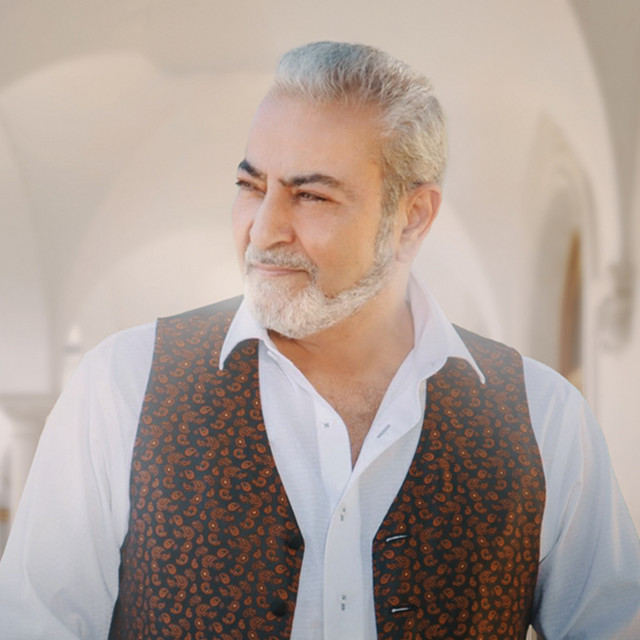
Having the necessary vocal abilities and musical background for perfectly performed traditional Iranian music, Sattar is also one of the most esteemed Iranian pop singers. He became Pahlavi Royal Family's favorite singer before the political upheavals in late '70s. Through 35 years of professional career, Sattar has been granted many awards both for his humanitarian activities -- like voluntarily performances at charity events -- as well as his traditional Iranian and popular music records. Sattar (born Abdolhassan Sattar Pour) was born in 1949 in Tehran. His fame started at the age of 22 when he released a song called "Khaneh Be Doush" (Vagabond; with lyrics by Iraj Jannati Ataee and music by Babak Bayat) for a popular TV series called Morad Barghi. Although he first started his work as a traditional Iranian music singer in early '70s, but his music slowly turned to Middle Eastern pop in late '70s. His voice can not be easily classified in common classical vocal ranges since traditional Iranian music has its own criteria for categorizing singers; but in some sense, he can be considered as a tenor. Sattar left Iran in 1978 and continued his career in Los Angeles. He recorded over 270 songs and released 30 albums as of 2007, some of which were recorded as Bazm (shindig) albums (live albums in traditional Iranian music mostly recorded by Iranian national TV) before the Islamic Revolution in 1979. In most of his pop releases he insists on using Persian music instruments/themes and including some Iranian folklore songs. That is why his music always has Persian context. Since his migration he has worked with labels Caltex Records, Taraneh Records, and Avang Music and performed in 23 countries all around the world. His 2006 album, Golbanoo, was released by Taraneh Records. He has lots of hit songs, some of which are "Gol e Pouneh" (Bee Balm Bud), "Bahar E Man Gozashteh Shayad" (My Blossom May Have Gone), "Shazdeh Khanoom" (Princess; which is said to be written for the daughter of Mohammad Reza Pahlavi), "Shahr E Gham" (Town of Sorrow), "Hamsafar" (Fellow Traveler), and "Man Ro Natarsoon" (Do Not Frighten Me), and are internationally known. Many singers covered "Gol E Sangam." In September 2004 the International Further Studies Institute (IFSI) conferred him with an Honorary Doctorate award for his humanitarian activities as well as his works in Persian music. Sattar is also an Academy Award winner who could receive two Golden Lioness Statuettes in October 2005 from The World Academy of Arts, Literature, and Media (WAALM) for the ability of his voice in both traditional Iranian and pop music. ~ Pouya Partovi, Rovi
First discovered Nov 2, 2026, 10:01 AM