Georgie Auld
Charts
Tracks
Playlists
Press Mentions
Google Rankings
Overview
Not included in any known risky playlists
Monthly Listeners
Series
- Monthly Listeners
- Listeners from Playlists
- Change
Discography
Top Audiences
Top Listener Locations
 Los Angeles, US15
 Madrid, ES12Chicago, US9New York City, US8Denver, US7
Playlist Summary
Playlist Movement
Biography & Metadata
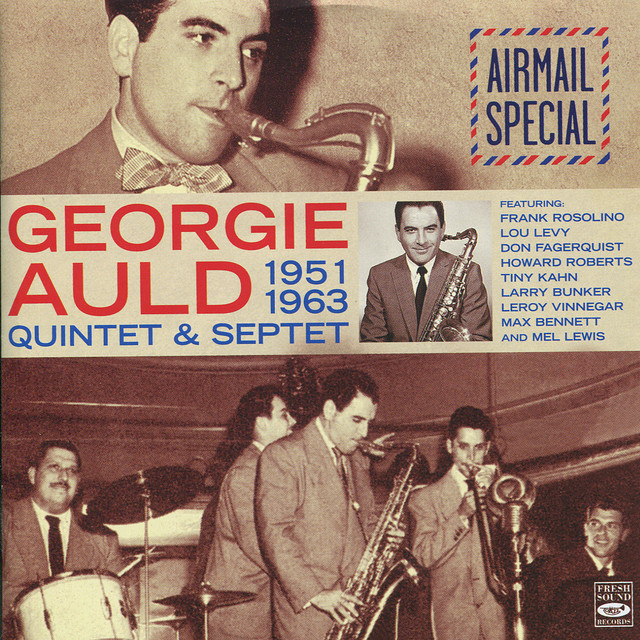
Georgie Auld had a long and varied career, changing his tenor sound gradually with the times and adapting to many different musical situations. He moved from Canada to the U.S. in the late '20s and, although originally an altoist, he switched to tenor after hearing Coleman Hawkins. While with Bunny Berigan during 1937-1938, Auld sounded like a dead ringer for Charlie Barnet. After spending a year with Artie Shaw in 1939 (including leading the band briefly after Shaw ran away to Mexico), Auld sounded much closer to Lester Young when he joined Benny Goodman. With B.G., Auld was a major asset, jamming with a version of Goodman's Sextet that also included Cootie Williams and Charlie Christian. He was back with Shaw in 1942, and then led his own big band (1943-1946), an excellent transitional unit between swing and bop that at various times included such young modernists as Dizzy Gillespie, Erroll Garner, and Freddie Webster; Sarah Vaughan also guested on a couple of his recordings. After the band's breakup, Auld led some smaller groups that tended to be bop-oriented. He was with Count Basie's octet in 1950 and then freelanced for the remainder of his career, maintaining a lower profile but traveling frequently overseas and not losing his enthusiasm for jazz. Some may remember that, in 1977, he had a small acting role as a bandleader and played Robert De Niro's tenor solos in the otherwise forgettable Liza Minelli movie New York, New York. ~ Scott Yanow, Rovi
First discovered Nov 12, 2026, 5:49 PM