Carl Nielsen
Charts
Tracks
Playlists
Press Mentions
Google Rankings
Overview
Not included in any known risky playlists
Monthly Listeners
Series
- Monthly Listeners
- Listeners from Playlists
- Change
Discography
Genres
Spotify has not assigned genres to this artist yet
Top Audiences
Top Listener Locations
 Copenhagen, DK1,434Aarhus, DK961
 Stockholm, SE746
 London, GB712
 Oslo, NO533
Playlist Summary
Playlist Movement
Event | Playlist | Botted? | Position | Track | Happened at | |
|---|---|---|---|---|---|---|
Biography & Metadata
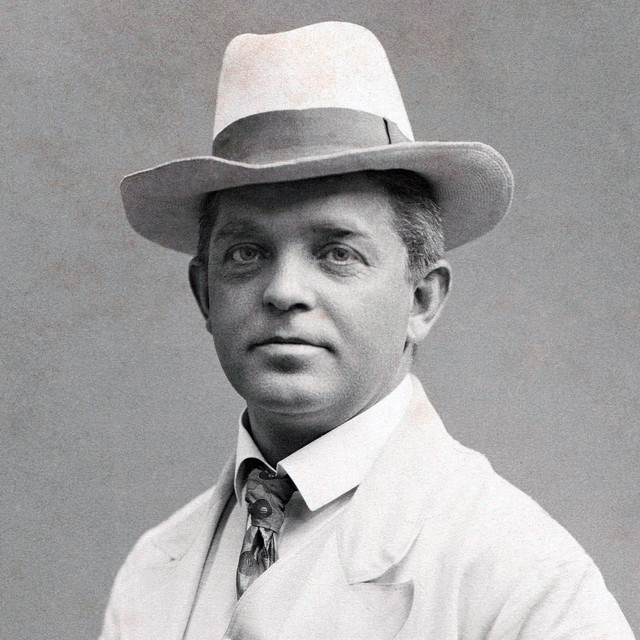
Although Finland's extraordinary Jean Sibelius may be foremost among Nordic composers, his contemporary, Carl Nielsen -- best known for six highly original symphonies and simple popular songs -- holds an honored place as Denmark's foremost post-Romantic musical ambassador, and has found considerable acclaim among musicians and audiences alike. A painter by profession, Nielsen's father spent as much or more energy on his secondary activities as a violinist, and it was in this way that young Carl received his first musical instruction. At 14 he auditioned for a position with a military wind ensemble at Odense (he was hired as a bugler, despite his lack of formal training on the instrument). During a visit to Copenhagen in 1883, Nielsen was introduced to composer Niels W. Gade, who suggested that the young musician enroll at the Conservatory for serious studies. During Nielsen's three years at the Conservatory (1884-1886) his primary subjects were violin and theory, and he never received formal instruction in composition. Nevertheless, in 1888 his Suite for Strings, Op.1 received a successful debut in Copenhagen. In 1889 Nielsen was hired as a violinist at the Royal Theatre in Copenhagen, a position he retained until 1905 (though in 1891 he journeyed to Paris, where he met and married Danish sculptress Anne Marie Brodersen). During the 1890s Nielsen composed prolifically, and much of his output was put into print. By 1903 he had signed a contract with the Wilhelm Hansen publishing firm in Copenhagen, effectively ending his tenure with the Royal Theatre (though he would not officially resign for two more years). His career as a conductor began in 1908 when he accepted a staff position with the Royal Theatre Orchestra. From 1916 until his death in 1931 (of heart disease), he taught at the Royal Danish Conservatory. Nielsen's music is highly individual in both content and construction, although only the symphonies and the three concertos (violin, flute, and clarinet) have earned places in the repertory outside Denmark (where many of his choral pieces have become part of the national heritage). Each of the three concertos is a worthy contribution to its instrument's literature, though perhaps the Clarinet Concerto deserves the most attention. While starting out from the perspective of classical form and harmony, he later developed an "extended" tonal and even atonal language for his music, born of his highly expressive melodic style. Like his colleague Sibelius, Nielsen poured his finest material into the symphonic mold. From the early First Symphony of 1892 (which is one of the first such works to begin and end in different keys), to the famous Fourth Symphony ("The Inextinguishable," a reference to the enduring power of both life and music), each is a noble testament to a remarkable man's view of the world around him. ~ Blair Johnston, Rovi
First discovered Oct 12, 2026, 3:46 AM