Antoine Reicha
Charts
Tracks
Playlists
SEO
Press Mentions
Overview
Not included in any known risky playlists
Monthly Listeners
Discography
Genres
Spotify has not assigned genres to this artist yet
Top Audiences
Top Listener Locations
 Prague, CZ49
 London, GB26
 New York City, US24
 Berlin, DE22
 Vienna, AT21
Playlist Summary
Playlist Movement
No activity found
This artist's playlist additions and removals will appear here.
Biography & Metadata
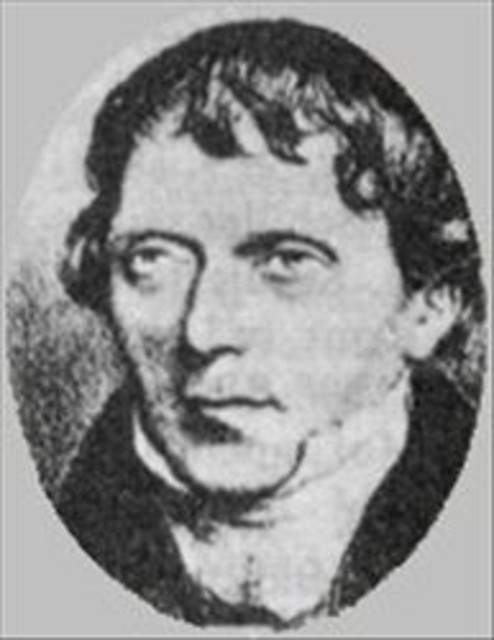
Antoine Reicha was a French composer and theorist whose career spanned the late eighteenth and early nineteenth centuries. While his music for woodwind quintet is well known, he was also an opera composer and the author of several important texts on music theory. In terms of his place historically, Reicha was not only a contemporary of Beethoven, but also the one-time teacher of Berlioz and Liszt. Reicha's earliest training was with his uncle Josef Reicha, and he later studied music in Bonn and Hamburg. When he moved to Vienna in 1801, Reicha studied with Albrechtsberger and also made the acquaintance of the elderly Joseph Haydn and other important members of the musical community in that city. While in Vienna, Reicha composed a number of fugues for the keyboard and a large amount of chamber music. It was only when Reicha moved to Paris in 1808 that he worked on music of a larger scale. Here he attempted to establish himself as a composer of opera. Of his three surviving completed operas, though, only one achieved any degree of success. That opera, Sappho, was written in 1822. Nevertheless, by that time Reicha had a reputation as an excellent teacher of composition, and in this capacity he was respected by most of the musicians of his day. His treatise on composition (Cours de composition musicale [1818]) became a standard text in the nineteenth century, and his Traité de haute composition musicale (1826) was one of the most important works of its kind in the nineteenth century. Reicha's Art du compositeur dramatique (1833) is a manual for composers of opera and is important for its insights into the approach to the form. Reicha's musical style is relatively conservative and formal. His chamber music, for which he is best known, was written in the second decade of the nineteenth century. It sounds, however, more like eighteenth century music. Nevertheless, the works are strong melodically and quite competent in structure.
First discovered Aug 12, 2026, 3:39 PM