Johann Adolf Hasse
Charts
Tracks
Playlists
Press Mentions
Google Rankings
Overview
Not included in any known risky playlists
Monthly Listeners
Discography
Top Audiences
Top Listener Locations
 Madrid, ES1,096
 Mexico City, MX859
 Paris, FR828
 London, GB681
 Amsterdam, NL638
Playlist Summary
Playlist Movement
Event | Playlist | Botted? | Position | Track | Happened at | |
|---|---|---|---|---|---|---|
Biography & Metadata
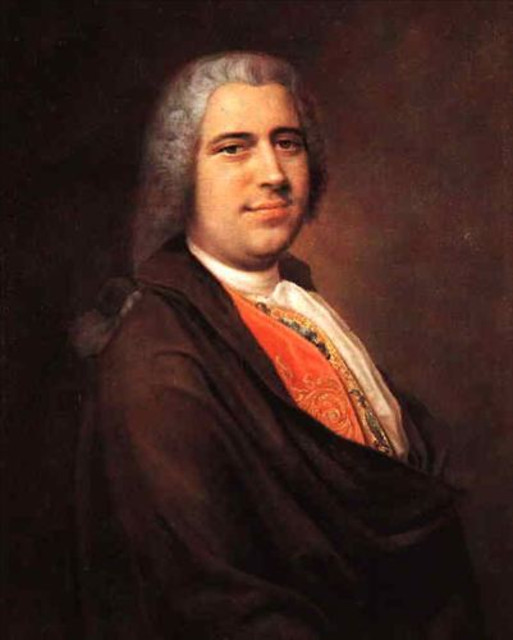
Though today almost completely eclipsed by his contemporary George Frideric Handel, in his day Johann Adolf Hasse was revered as one of the most successful opera composers in either Italy or the provinces of Germany. The grandson of a German burgomeister, Hasse studied in Hamburg and began an operatic career at an early age. His rich tenor voice earned him a position serving the court of Brunswick, and he produced his first opera there at the age of 21 (Antioco, 1721). The same year he began a tour of Italy, including Venice, Bologna, Florence, and Rome. He settled for at least six years in Naples, where he studied composition with Alessandro Scarlatti and churned out several more operas. In 1730, Hasse was in Venice, writing his first opera (Artaserse) in collaboration with the greatest Italian dramatist of the century, Pietro Metastasio, who would later provide Mozart with several libretti. In the same momentous year, Hasse married a celebrated Italian soprano, and accepted a position as chapelmaster for Dresden. The following years found Hasse dividing his time between Venice, Dresden, and the Hapsburg capital of Vienna. J.S. Bach and his son heard Hasse's first Dresden opera Cleofide of 1731, while his wife sang his works for the royalties of Vienna, Saxony, and Holstein. His sacred music began to appear in Venice. Though his time was divided between Dresden and the Italian courts, he gave his German patrons large numbers of opera seria and oratorios during each stay. The 1740s proved a pivotal decade in Hasse' growing relationship with Metastasio; by 1761 Hasse had composed operas on all but one of the poet's lifelong output of libretti. Hasse also deepened his ties with Prussian ruler Frederick the Great, himself an amateur musician. Hasse's operas and oratorios filled the theaters of Dresden, Naples, Venice, Vienna, and even Warsaw, while his cantatas thrilled the Hapsburg court and his later flute music invaded Berlin. Yet the prolific composer had long suffered from attacks of gout. By 1772 or 1773 he, his wife Faustina, and their two daughters retired to a home in Venice. The Italians welcomed him; he continued to compose, especially sacred music, and to revise earlier compositions. But Faustina died late in 1781, and Il caro Sassone finally followed her two years later.
First discovered Sep 17, 2026, 8:08 AM