Cole Porter
Charts
Tracks
Playlists
SEO
Press Mentions
Overview
Not included in any known risky playlists
Monthly Listeners
Discography
Top Audiences
Top Listener Locations
 London, GB6,099
 New York City, US4,319Chicago, US3,574
 Melbourne, AU3,382Sydney, AU3,298
Playlist Summary
Playlist Movement
No activity found
This artist's playlist additions and removals will appear here.
Biography & Metadata
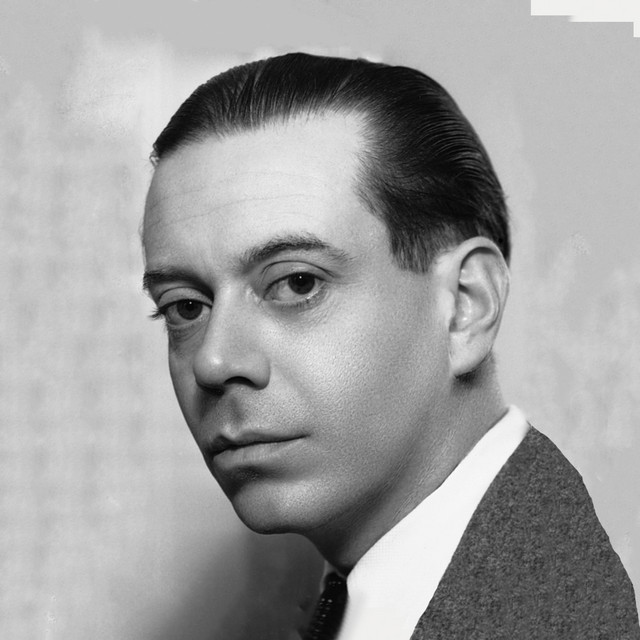
Cole Porter was born the grandson of wealthy Indiana entrepreneur J.O. Cole and demonstrated musical talent from an early age. Porter entered Yale in 1913, joined the glee club and composed fight songs, some of which are still sung at Yale today. Porter's attempt to make it through Harvard Law School proved disappointing, and by 1916 he was in New York trying out his first Broadway show, which closed after only 15 performances. Porter would soon follow it with yet more failures. In 1917 Cole Porter move to Paris and lived there for much of the 1920s. Though bisexual, in 1919 Porter married, and in 1923 composed his only large-scale "serious" work, the ballet Within the Quota, a piece that anticipated the symphonic jazz genre. In Paris, Porter met songwriter and producer E. Ray Goetz, brother-in-law of Irving Berlin. The first show they wrote together, Paris (1928), finally broke Porter's long losing streak and provided him with his first hit song, "(Let's Do It) Let's Fall in Love." Porter's next production, Fifty Million Frenchman (1929), was a smash and established his reputation. For this show Porter provided both lyrics and music, which would remain his working method for the rest of his career. Throughout the 1930s Porter maintained a steady stream of Broadway successes, including The Gay Divorce (1932), Anything Goes (1934), Jubilee (1935), and Red, Hot and Blue (1936). Many of the songs for which Porter is best known were written for these productions, such as "Night and Day," "Begin the Beguine," "You're the Top," and "I Get a Kick Out of You." In 1937 Porter was injured in a riding accident, which resulted in the loss of a leg. For Porter this was a devastating setback and it resulted in his withdrawal from the active social life he had previously known. Nonetheless, Porter enjoyed his greatest Broadway successes afterward, with Du Barry Was a Lady (1939), Panama Hattie (1942), and Kiss Me, Kate (1948), which broke all standing box-office records with an unheard of 1,077 performances. Porter also wrote for motion pictures and lived for many years in Hollywood. With the death of his wife in 1954 Porter began to slow down, and when he lost his other leg in 1958 Porter stopped writing altogether, living out his remaining years in seclusion. Cole Porter was an enormously prolific songwriter; a published collection of his lyrics contains words for more than 800 songs.
First discovered Aug 26, 2026, 3:03 AM