John Ogdon
Charts
Tracks
Playlists
Press Mentions
Google Rankings
Overview
Not included in any known risky playlists
Monthly Listeners
Series
- Monthly Listeners
- Listeners from Playlists
- Change
Discography
Genres
Spotify has not assigned genres to this artist yet
Top Audiences
Top Listener Locations
 London, GB295
 Rome, IT234Milan, IT231
 Madrid, ES211
 Mexico City, MX204
Playlist Summary
Playlist Movement
Biography & Metadata
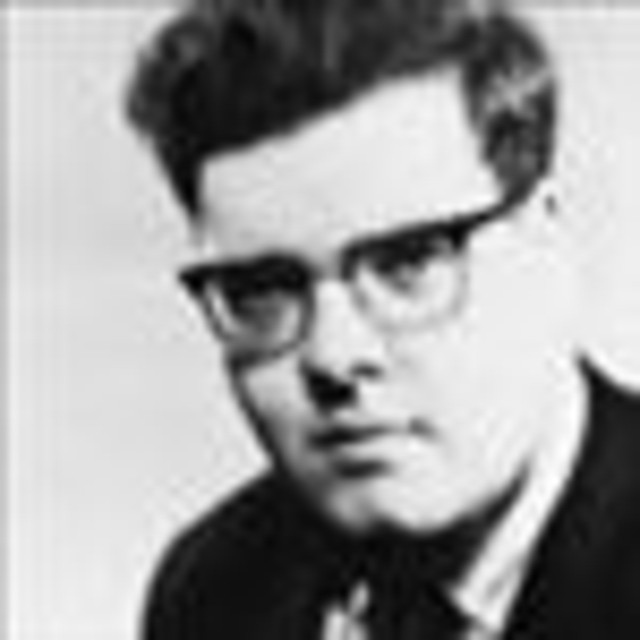
John Ogdon's life and career might be summed up as prodigious. A player of great strength and protean technique, Ogdon was unafraid, and in fact preferred, to tackle the biggest scores, including Busoni's mammoth Piano Concerto, Beethoven's "Hammerklavier" Sonata, the Concerto for solo piano (from the Op. 39 Etudes) of Charles-Valentin Alkan, and the four-hour Opus Clavicembalisticum by Kaikhosru Sorabji, which he first played in private recital at the age of 22. His repertoire was also massive: more than 80 composers were represented, with literally hundreds of scores, many of them committed to his unparalleled memory and more than 260 of them preserved in recordings. Ogdon was also a composer of nearly 200 works in many forms, a symphony and piano concerto among them, and he taught and wrote extensively on music. Even his size was impressive. Tall and with a tendency toward obesity, Ogdon brought power and strength to his performances, with critics often resorting to words like "thunderous" in their assessments. Yet John Ogdon was always sensitive to the demands of musical architecture. An affable and approachable artist among his more aloof colleagues, Ogdon's primary concern was to communicate music's essence through clear delineation of its form. He also was capable of sensitive intimacy with his repertoire. When he was at the height of his powers, it was Ogdon's concentration and unrelenting but plastic control that impressed audiences. Born in Manchester in 1937, Ogdon early on showed such talent that he was taken on by such renowned teachers as Iso Elinson, Egon Petri, and Ilona Kabos. Following an acclaimed series of concerts in the north of England, Ogdon made his sensational London debut at the age of 21, playing Busoni's rarely heard Piano Concerto. Two important prizes in the early 1960s established his international reputation: the Budapest Liszt Prize in 1961 and First Prize in the 1962 Moscow Tchaikovsky Competition, the latter shared with another rapidly emerging artist, the young Vladimir Ashkenazy. A hectic career followed, in which Ogdon played acclaimed concerts and recitals around the world, recorded extensively, and wrote a number of well-received treatises, including Sorabji and Melville (1960), Liszt's Later Piano Music (1970), and The Romantic Tradition (1972). He also began studying composition with Richard Hall, Thomas Pittfield, and George Lloyd. Ogdon married pianist Brenda Lucas in 1960, and the two often appeared in recital together. In 1973, Ogdon suffered a breakdown, which, given the pace of his career, might not have been unexpected, but a more serious cause was at the heart of it. Like his father before him, Ogdon was diagnosed with schizophrenia and hospitalized for several years at the Maudley Hospital in London, where he was nevertheless reported to maintain a practice schedule of three hours a day on the hospital's Steinway. In 1980, he made a comeback in the concert hall, but critics found that his technique had suffered from the years of institutionalization and the medication he took to maintain his inner balance. Still, there were moments of great inspiration when the brilliance of his conceptions overshadowed any diminution of his keyboard powers, and his 1988 recording of Sorabji's Opus Clavicembalisticum (Altarus CD 9075, four discs) is an astonishing achievement. Between 1975 and 1980, Ogdon taught at Indiana University. His death in London from pneumonia at age 52 prematurely ended a dramatic career.
First discovered Aug 21, 2026, 7:08 PM