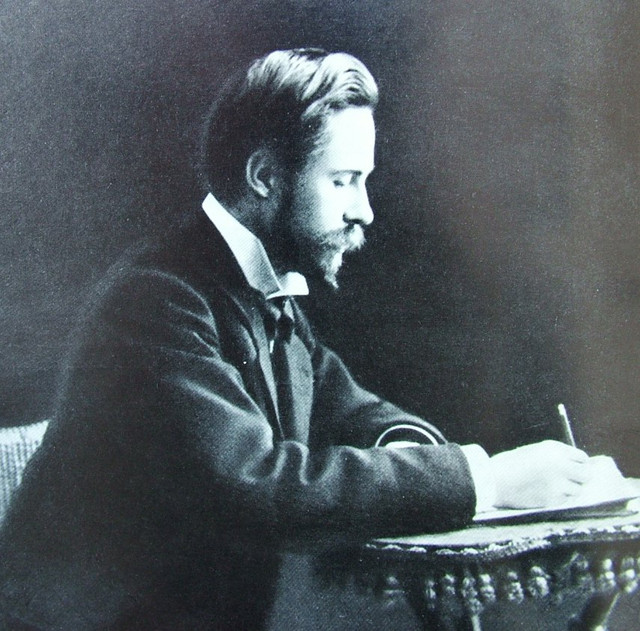
Alexander Scriabin
Charts
Tracks
Playlists
SEO
Press Mentions
Overview
Included in high risk playlists
Monthly Listeners
Discography
Genres
Spotify has not assigned genres to this artist yet
Top Audiences
Top Listener Locations
 London, GB8,885
 New York City, US5,230
 Sydney, AU5,170
 Mexico City, MX5,057Los Angeles, US4,313
Playlist Summary
Playlist Movement
No activity found
This artist's playlist additions and removals will appear here.
Biography & Metadata
Mystic, visionary, virtuoso, and composer, Scriabin dedicated his life to creating musical works which would, as he believed, open the portals of the spiritual world. Scriabin took piano lessons as a child, joining, in 1884, Nikolay Zverov's class, where Rachmaninov was a fellow student. From 1888 to 1892, Scriabin studied at the Moscow Conservatory, where his teachers included Arensky, Taneyev, and Safonov. Although Scriabin's hand could not easily stretch beyond an octave, he developed into a prodigious pianist, launching an international concert career in 1894. Scriabin started composing during his Conservatory years. Mostly inspired by Chopin, his early works include nocturnes, mazurkas, preludes, and etudes for piano. Typical examples of Romantic music for the piano, these works nevertheless reveal the composer's strong individuality. Toward the end of the century, Scriabin started writing orchestral works, earning a solid reputation as a composer, and obtaining a professorship at the Moscow Conservatory in 1898. In 1903, however, Scriabin abandoned his wife and their four children and embarked on a European journey with a young admirer, Tatyana Schloezer. During his sojourn in Western Europe, which lasted six years, Scriabin started developing an original, highly personal musical idiom, experimenting with new harmonic structures and searching for new sonorities. Among the works composed during this time was the Divine Poem. In 1905, Scriabin discovered the theosophical teachings of Helena Petrovna Blavatsky, which became the intellectual foundation of his musical and philosophical efforts. In true Romantic tradition, he sought to situate his work as a composer in the wider spiritual and intellectual context of his age. Previously influenced by Nietzsche's ideas about the advent of a superhuman being, Scriabin embraced theosophy as an intellectual framework for his profound feelings about humankind's quest for God. Works from this period, exemplified by the Poem of Ecstasy (1908) and Prometheus (1910), reflect Scriabin's conception of music as a bridge to mystical ecstasy. While the ideas underlying his works may seem far-fetched, Scriabin's musical language included some fascinating, and very tangible, innovations, such as chords based on fourths and unexpected chromatic effects. Lacking an inner forward-moving force, Scriabin's later works nevertheless fascinate the listener by harmonic transformations which aim to reflect certain undefinable aspects of human consciousness. In addition, the composer, who strongly believed in the synaesthetic nature of art, experimented with sounds and colors, indicating, for example, lighting specification for the performance of particular works. Indeed, Scriabin's interest in color was hardly academic, considering that , as an orchestrator, he exploited the full potential of orchestral color. While Scriabin never quite crossed the threshold to atonality, his music nevertheless replaced the traditional concept of tonality by an intricate system of chords, some of which (e.g., the "mystic chord": C-F sharp-B flat-E-A-D) had an esoteric meaning. Scriabin's gradual move into realms beyond traditional tonality can be clearly heard in his ten piano sonatas; the last five, composed during 1912-1913, are without key signatures and certainly contain atonal moments. In 1915, Scriabin died in of septicemia caused by a carbuncle on his lip. Among his unfinished project was Mysterium, a grandiose religious synthesis of all arts which would herald the birth of a new world.
First discovered Aug 22, 2026, 8:39 PM