Tomás Luis de Victoria
Charts
Tracks
Playlists
Press Mentions
Google Rankings
Overview
Not included in any known risky playlists
Monthly Listeners
Discography
Genres
Spotify has not assigned genres to this artist yet
Top Audiences
Top Listener Locations
 London, GB1,888
 Madrid, ES1,466
 Mexico City, MX1,072
 Sydney, AU689
 New York City, US659
Playlist Summary
Playlist Movement
Event | Playlist | Botted? | Position | Track | Happened at | |
|---|---|---|---|---|---|---|
Biography & Metadata
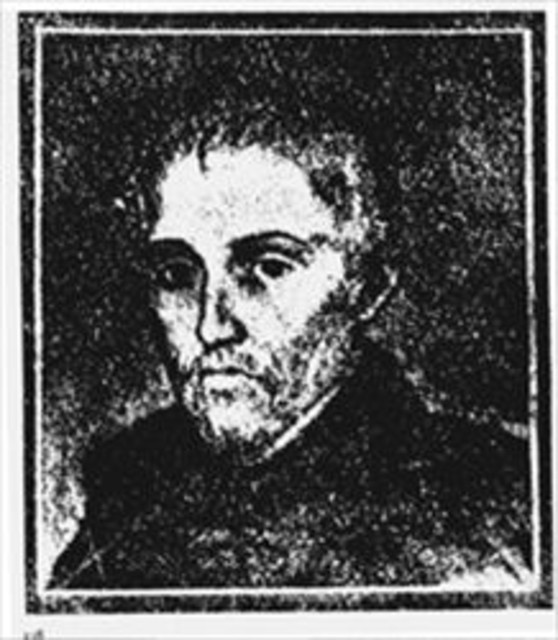
Tomás Luis de Victoria was the dominating figure of 16th century Spanish music, particularly sacred music. The purity of his music reflects ideas of the Roman Catholic counter-reformation, as embodied in Palestrina's music. Victoria's polychoral writing and expressive text setting set the stage for developments in the Baroque era. Victoria was born in Avila. He was sent to Rome to study, possibly for a time under Palestrina during the latter's years at the Roman Seminary. In 1571 he succeeded Palestrina there as choirmaster, a post he also subsequently occupied at the Jesuit Order's German College. Later he became active as a priest, working at St. Girolamo della Carità. Following his return to Spain in 1585, Victoria served the Empress Maria and her daughter as teacher, organist, and choirmaster until his death in 1611. By the time Victoria arrived in Rome, the conservative ecclesiastical establishment and the Council of Trent had ensured that any musical hint of the "lascivious or the impure" was largely banished (Palestrina was even moved to dismiss his publication of secular madrigals as a youthful peccadillo). It is, therefore, not surprising to find that Victoria's output consists solely of religious music that eschews even the use of secular cantus firmus, and that displays the formal perfection and the well-smoothed vocal writing of the Palestrina style. What is surprising is that despite his Roman training and years of service in the city, Victoria so strongly retained his Spanish roots. Some of his finest works were composed after his return home, and many of them contain features that seem to epitomize the deeply mystical approach of so much Spanish Renaissance music. Comparison with Palestrina reveals a greater emphasis on chromatic color and use of dynamic contrast; Victoria's block harmonies and multiple choirs look forward to the Baroque. His response to words is acute and highly personal, a characteristic particularly suited to the comparatively dynamic and plastic form of the motet and to other texts which allow full rein to subjective treatment. Of Victoria's 44 motets, the early four-part O quam gloriosum can perhaps be allowed a special mention, since it is pervaded by a youthful vigor and joyous radiance that gives lie to the understandable impression that Spanish Renaissance composers were preoccupied with somber religious subjects. His widely performed Christmas motet, O magnum mysterium, exudes a quiet sense of wonder. Victoria's fame as a motet composer has tended to overshadow his masses, yet at their finest, as in the lovely Missa Ave maris stella, they are not inferior to those of Palestrina. To discover Victoria at his greatest, however, one must ultimately return to the darker side, and in particular to the two works by which he is best known, the Tenebrae Responsories (first published in 1585) and the Requiem of 1605, a work of timeless serenity. The former is a setting of 18 pieces that adhere to the traditional form of the responsory, with its alternation of verse and refrain. The work takes us through the Passion story in music that relies not so much on the drama of the events themselves as on a quite extraordinarily direct and profound response to the text, a response frequently achieved by means of the greatest simplicity, or, perhaps more accurately, apparent simplicity. ~ Brian Robins, Rovi
First discovered Aug 23, 2026, 6:43 PM