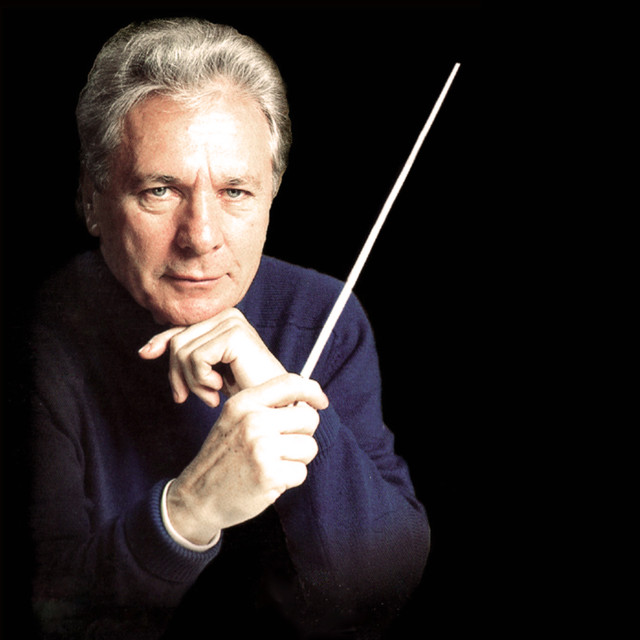
Maurice Jarre
Charts
Tracks
Playlists
SEO
Press Mentions
Overview
Included in high risk playlists
Monthly Listeners
Discography
Genres
Spotify has not assigned genres to this artist yet
Top Audiences
Top Listener Locations
 Mexico City, MX6,238
 Santiago, CL5,437
 Madrid, ES4,592
 London, GB3,808
 São Paulo, BR2,994
Playlist Summary
Playlist Movement
No activity found
This artist's playlist additions and removals will appear here.
Biography & Metadata
Born in Lyon, Maurice Jarre abandoned an engineer's degree the Sorbonne, to the profound shock of his family, to study music with Arthur Honegger at the Paris Conservatoire. He fell in with other young French composers of his generation -- Pierre Boulez, Marius Constant, and Georges Delerue -- and Jarre's earliest concert works share with them a concern for twelve-tone-derived methods of composition. In 1950, the Théâtre Nationale Populaire opened in Paris, and producer Jean Vilar named Jarre its musical director; Jarre served in this capacity five years and first established his name as a composer for the stage. Jarre also worked with choreographer Roland Petit during this time and developed a populist, melodic style in addition to the more advanced music he already knew; Jarre would later comment that this was the happiest time of his life, and the experience laid a good foundation for his career as a film composer. In 1952, director Georges Franju asked Jarre to score his short, artistic documentary Hôtel des Invalides, and the success of this film garnered interest within the French film industry in Jarre. He continued to work with Franju, likewise scoring the horror classic Le Yeux sans visage (Eyes without a Face, 1960), and by the mid-'50s Jarre had discovered he was too busy writing for the cinema to continue composing music for concerts or the theater. Jarre's international breakthrough came with his score for David Lean's Lawrence of Arabia (1962), which earned him his first Academy Award and placed Jarre's name on the A-list of screen composers with its sweeping, panoramic themes. However, his next project with Lean, Doctor Zhivago (1965), not only brought the Oscar to Jarre's mantel once more, but added a Grammy, largely on the strength of Jarre's tune Lara's Theme. It was later adapted as the pop hit "Somewhere My Love." The enormous success of Doctor Zhivago ensured that Jarre could no longer work out of France and earned him a ticket to Hollywood, where he settled for good, though Jarre would work once in awhile on European projects, such as Volker Schlöndorff's Die Blechtrommel (The Tin Drum, 1979). Throughout the 1970s and '80s, Jarre maintained a punishing schedule, scoring on average about four to five films a year. Not all of these films are well remembered, but nevertheless, certain titles form an impressive résumé: The Effect of Gamma Rays on Man-in-the-Moon Marigolds (1972) for Paul Newman; The Man Who Would Be King (1976) for John Huston; Jesus of Nazareth (1977) for Franco Zeffirelli, and The Year of Living Dangerously (1982), Witness (1985), and Dead Poets Society (1989) for Peter Weir, not to mention the TV miniseries Shogun (1980) and the popular thriller Fatal Attraction (1987). Jarre was noted for his use of unusual instrumentation, and in 1980 began to add more electronics to his arsenal of instruments, a field in which his son, Jean Michel Jarre, had already distinguished himself. Originally it was a measure to save time, but Jarre noted that he ultimately ended up expending more effort on his predominantly electronic score for Ghost (1990) than if he had used conventional instruments. Jarre's loudest score was for Mad Max Beyond Thunderdome (1985), which folded "four grand pianos plus a pipe organ, digeridoo, fujana, a battery of exotic percussion and three ondes martenots" into the context of the standard, 51-piece Hollywood symphony orchestra. It was not such elephantine requirements, however, that won Jarre his third and final Oscar, but his last score for David Lean, A Passage to India (1984); altogether Jarre was nominated by the Academy nine times. The Golden Globes were even kinder to Jarre, with 11 nominations and four wins. Not everyone was firmly in Jarre's corner; some new music aficionados never forgave him for abandoning the avant-garde concert music of his youth -- though such techniques did figure significantly in his film output -- and in France, Jarre took a lot of criticism for "going Hollywood" and becoming a commercial success. However, Jarre was such a good film composer that certain of his scores -- such as those for The Train (1964) and Five Card Stud (1968) -- are better known than the films from which they come.
First discovered Sep 4, 2026, 11:47 PM