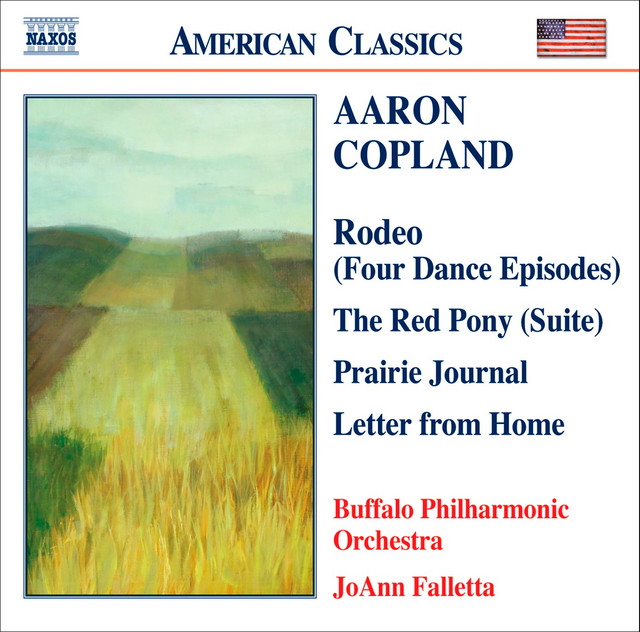
Buffalo Philharmonic Orchestra
Charts
Tracks
Playlists
Press Mentions
Google Rankings
Overview
Not included in any known risky playlists
Monthly Listeners
Series
- Monthly Listeners
- Listeners from Playlists
- Change
Discography
Top Audiences
Top Listener Locations
 New York City, US503
 London, GB482Chicago, US339Los Angeles, US333
 Sydney, AU279
Playlist Summary
Playlist Movement
Event | Playlist | Botted? | Position | Track | Happened at | |
|---|---|---|---|---|---|---|
Biography & Metadata
The Buffalo Philharmonic Orchestra's reputation has steadily grown since the 1960s, with a number of distinguished conductors at the helm. Including the appointment as music director of JoAnn Falletta, one of the first women to lead a major American orchestra, the group has had an unusually progressive profile, both in concert and on its many recordings. The Buffalo Philharmonic was founded in late 1934 and gave its first concerts in a 1935-1936 season that also included youth events. The first conductor, Lajos Shuk, came to Buffalo from the New York Civic Symphony; he was succeeded in 1936 by Franco Autori, who remained in his post until 1945. Autori oversaw the opening in 1940 of the new Kleinhans Hall, a striking modern structure thought to have some of the best acoustics among American concert halls. William Steinberg, who went on to lead the Boston Symphony and the Pittsburgh Symphony, was music director from 1945 to 1952, and he was succeeded by Izler Solomon and Josef Krips (1954-1963). Under Krips, the orchestra grew; it now numbers some 80 musicians. The orchestra began to gain a national profile with the appointment in 1963 as music director of Lukas Foss, who was a contemporary composer as well as a conductor. Foss frequently programmed contemporary music in concert (the orchestra made four appearances at New York's Carnegie Hall during this period) and also made many recordings featuring new music. Foss was succeeded in 1971 by Michael Tilson Thomas, who also had a contemporary orientation; Julius Rudel (1978-1985) was an opera specialist. Since 1985, the orchestra has had only three conductors: Semyon Bychkov (1985-1989), Maximiano Valdés (1989-1998), and, since 1998, JoAnn Falletta. Falletta's tenure has been progressive not only because of her still-unusual status as a female conductor but also in her dedication to American repertory, evident in her many recordings with the orchestra. Those appeared on the Naxos label and also on the new label she established, Beau Fleuve, referring to Buffalo's scenic Niagara River. A Beau Fleuve Music & Arts Celebration was established in 2017. Under Falletta, the orchestra has appeared in New York, Florida, and Warsaw, Poland, and has attracted top-notch soloists, including cellist Yo-Yo Ma and violinists Joshua Bell and Midori. Falletta and the orchestra released the album Kodály: Háry János Suite; Summer Evening; Symphony in C major on Naxos in 2023. ~ James Manheim, Rovi
First discovered Nov 3, 2026, 8:44 AM