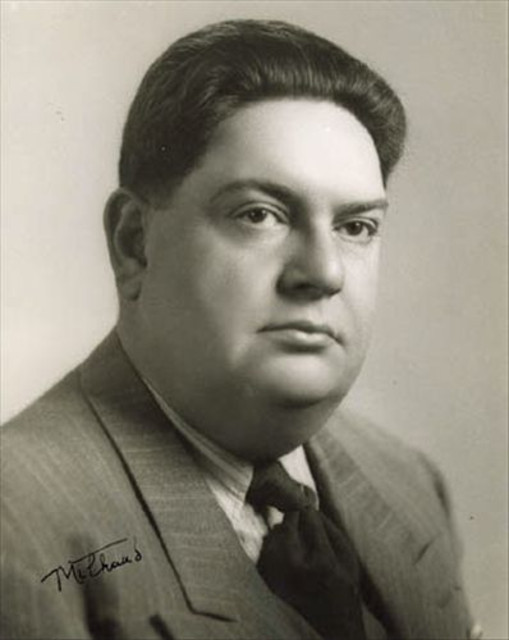
Darius Milhaud
Charts
Tracks
Playlists
SEO
Press Mentions
Overview
Not included in any known risky playlists
Monthly Listeners
Discography
Genres
Spotify has not assigned genres to this artist yet
Top Audiences
Top Listener Locations
 London, GB428
 Mexico City, MX421
 Madrid, ES307
 Paris, FR291
 Santiago, CL282
Playlist Summary
Playlist Movement
No activity found
This artist's playlist additions and removals will appear here.
Biography & Metadata
One of the more prolific composers of the twentieth century, Darius Milhaud was born to a Jewish family in southern France during the last decade of the nineteenth century. He learned the violin as a youth. Studies at the Paris Conservatoire from age 17 on gave the young composer opportunity to work with some of the most prominent French composers and theorists of the day, including Charles Marie Widor, Vincent d'Indy and André Gedalge, and allowed him to focus on developing his skills as a pianist. While serving as an attaché at the French delegation in Rio de Janeiro during the First World War, Milhaud began a long and fruitful association with poet Paul Claudel (who was at that time a Minister at the delegation), several of whose plays Milhaud would go on to provide with incidental music (Proteé, 1919; L'annonce fait à Marie, 1934) and who, in turn, would supply libretti for many of Milhaud's compositions (e.g. the opera Christophe Colomb of 1928). After returning to Paris in 1919 Milhaud was adopted into the circle of "Les Six," a group of progressive French composers brought together under the guidance of Jean Cocteau. However, like any such artificial collection, Les Six was quick to dissolve, and during the 1920s Milhaud adopted an assortment of new musical influences (notably jazz, which the composer first discovered during a trip to the U.S. in 1922, and which features prominently in much of his subsequent music). Milhaud composed, performed, and taught ceaselessly during the 1920s and 1930s, only abandoning his homeland in late 1939 after all hope of resisting the German advance vanished. Settling in the United States, Milhaud accepted a teaching position with Mills College in Oakland, California, and continued to compose prolifically. From 1947 he combined his American teaching duties with a similar position at the Paris Conservatoire, remaining at both institutions until 1971, when his poor health forced him into retirement (Milhaud had suffered from a serious, paralyzing rheumatic condition since the 1920s; in later years he was only mobile through the use of a wheelchair). He died in Switzerland three years later. Milhaud's musical output is impressive, both in terms of quantity and quality. The numbers alone are staggering for a twentieth century composer: nine operas, 12 ballets, 12 symphonies (in addition to six chamber symphonies), six piano concertos (one of them a double concerto), 18 string quartets, and about 400 other compositions in almost every conceivable form and instrumentation. The most frequently discussed feature of his musical language is polytonality (the simultaneous use of multiple tonal centers), though Milhaud was familiar with and fluent in any number of twentieth century "techniques." A skillful contrapuntist, Milhaud composed two string quartets (Nos. 14 and 15, both from 1949) which may also be performed simultaneously as an octet.
First discovered Aug 18, 2026, 9:42 PM