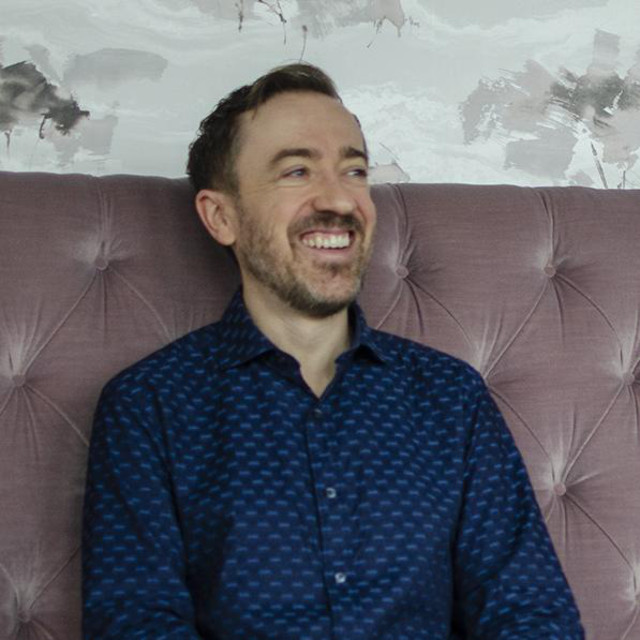
Geoffrey Keezer
Charts
Tracks
Playlists
SEO
Press Mentions
Overview
Not included in any known risky playlists
Monthly Listeners
Discography
Genres
Spotify has not assigned genres to this artist yet
Top Audiences
Top Listener Locations
 São Paulo, BR42
 New York City, US26
 London, GB24Brooklyn, US21Rio de Janeiro, BR19
Playlist Summary
Playlist Movement
No activity found
This artist's playlist additions and removals will appear here.
Biography & Metadata
A remarkably talented pianist, composer, and arranger, Geoffrey Keezer is a Grammy-winning performer known for his agile improvisational skills and nuanced approach to post-bop jazz. Keezer debuted to acclaim in the late '80s as one of the last members of Art Blakey's Jazz Messengers while still in his teens. Along with notable tenures with Art Farmer and Ray Brown, he has worked with a bevy of luminaries including Christian McBride, Joshua Redman, and Sting, to name a few. He made his Blue Note debut with 1991's Here and Now and co-leads the Storms/Nocturnes trio with saxophonist Tim Garland and vibraphonist Joe Locke. He has continued to garner acclaim, picking up his first Grammy nomination for Best Latin Jazz Album for 2009's Aurea and winning the Grammy for Best Instrumental Composition for "Refuge" off 2022's Playdate. Born in 1970 in Eau Claire, Wisconsin, Keezer grew up in a creative family with parents who taught music; his father also played drums and his mother played piano and French horn. He started playing piano at age three and began formal lessons at age five. While still in his teens, he became interested in jazz and gained early experience playing in his father's band. After high school, he studied at the University of Wisconsin. During this period, he won the Young Talent Award at the 1987 National Association of Jazz Educators convention in Atlanta, Georgia. Around the same time, he transferred to Berklee College of Music in Boston to focus more on jazz. It was while at Berklee that he made his leader debut with 1989's Waiting in the Wings, a brightly delivered post-bop album for Sunnyside Records with trumpeter Bill Mobley, saxophonist Bill Pierce, vibraphonist Steve Nelson, bassist Rufus Reid, and drummer Tony Reedus. A year later, he delivered a quartet date for the label, Curveball, featuring vibraphonist Nelson, drummer Victor Lewis, and bassist Charnett Moffett. However, it was 1989 that proved a banner year for Keezer who, after just a year of study, left Berklee to join drummer Art Blakey and the Jazz Messengers. For the next year, until Blakey's death in 1990, the pianist toured with the group, which at the time included trumpeter Brian Lynch, bassist Essiet Okon Essiet, tenor saxophonists Javon Jackson and Dale Barlow, and alternating trombonists Frank Lacy and Steve Davis. Keezer would appear on two 1990 albums with the Messengers, Chippin' In and One for All. In 1990, Keezer made his Blue Note debut with Here and Now, again featuring vibraphonist Nelson, along with bassist Peter Washington, drummer Billy Higgins, and a guest appearance by altoist Donald Harrison. He then evoked his Messengers experience with Other Spheres, bringing along a handful of players including Bill Mobley, Bill Pierce, and Peter Bernstein. Also in 1990, he joined trumpeter Art Farmer's quartet, touring with the group and serving for a period as musical director. By 1997, he had left Farmer's group to join legendary bassist Ray Brown's trio. Other concerts that decade found him appearing with numerous jazz icons, including Gerry Mulligan, Dizzy Gillespie, J.J. Johnson, Kenny Burrell, Ray Brown, and more. The '90s also found him touring as a member of Three Musicians, with Joshua Redman and Christian McBride. Redman and McBride joined Keezer on his 1998 album Turn Up the Quiet. Keezer was also a member of the Contemporary Piano Ensemble, a five-piano group featuring James Williams, Mulgrew Miller, Harold Mabern, and Donald Brown. Along with touring, they released the albums Four Pianos for Phineas and The Key Players. In 2000, Keezer returned to his own work with the solo piano album Zero One. Two years later, he released Storms/Nocturnes, the eponymous debut from his trio with saxophonist Tim Garland and vibraphonist Joe Locke. He also paid homage to pianist Hank Jones on Sublime, dueting with fellow pianists Kenny Barron, Chick Corea, Benny Green, and Mulgrew Miller. A second Storms/Nocturnes album arrived with 2003's Rising Tide. He then moved to the MaxJazz label for several albums, including 2003's Falling Up with bassist Scott Colley and drummer Karriem Riggins (as well as guests including trumpeter Ingrid Jensen and Hawaiian slack key legend Keola Beamer, and others) and 2005's Wildcrafted: Live at the Dakota with bassist Matt Clohesy and drummer Terreon Gully. In 2009, he picked up a Grammy Award nomination for Best Latin Jazz Album for Aurea, a collaboration with Peruvian, Argentinian, and N.Y.C.-based performers including percussionist Hugo Alcázar, saxophonist Ron Blake, vocalist Sofia Rei, and others. Another Grammy nomination came his way in 2010 for his work on vocalist Denise Donatelli's album When Lights Are Low. A third Storms/Nocturnes arrived with 2011's Via. He released his first solo piano album in over a decade with 2013's Heart of the Piano. A trio album, On My Way to You, appeared in 2018 and featured singer Gillian Margot. That same year, he played on Sting and Shaggy's album 44/876. In 2022, he delivered the orchestral-accented Playdate, featuring saxophonist Blake, organist Shedrick Mitchell, bassist Richie Goods, and drummer Kendrick Scott. The album took home the Grammy Award for Best Instrumental Composition for Keezer's song "Refuge." ~ Matt Collar
First discovered Aug 20, 2026, 10:25 PM