Jesús Guridi
Charts
Tracks
Playlists
SEO
Press Mentions
Overview
Included in high risk playlists
Monthly Listeners
Discography
Genres
Spotify has not assigned genres to this artist yet
Top Audiences
Top Listener Locations
 Madrid, ES265
 New York City, US155
 London, GB145Chicago, US143
 Sydney, AU140
Playlist Summary
Playlist Movement
No activity found
This artist's playlist additions and removals will appear here.
Biography & Metadata
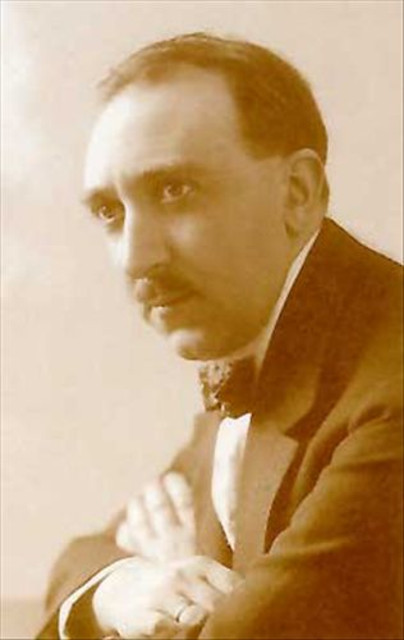
Outside of Spain, Jesús Guridi remains a generally obscure name, but he is perhaps among the most underrated composers of the twentieth century and thus one of the most worthy of revival. He achieved distinction as a composer of orchestral and choral music, and particularly of opera (or zarzuela). Those familiar with his work are aware of his depth of expression and some have even compared his achievements on the operatic stage with those of Wagner and Smetana. His opera Amaya (1910-1920) began to draw broad international acclaim only in the late '90s, after initial success in Spain in 1920 and in Argentina in 1930. For most of the first half of the twentieth century, Guridi enjoyed much adulation in his homeland, but had limited success abroad. Things may change for the better for Guridi: the choral/orchestral works Así cantan los chicos and Canciones populares vascas (3 sets), and especially the 10 Melodías have gained considerable currency since the latter-twentieth century. Guridi was born on September 25, 1886, in Vitoria, Alava (Basque region), Spain. By 11 he was composing, hardly a surprising development as his family tree was rife with musicians and composers. In his teens he studied at the Madrid Conservatory, and from 1904-1906, with finances provided by a wealthy admirer, the Count of Zubiria, he studied in Paris at the famed Schola Cantorum under Vincent d'Indy and other notables. He had further studies in Liège with Joseph Jongen (1906) and in Cologne with Otto Neitzel (1908). After his return to Spain, he took on two prestigious church organist posts, first at Parroquia de los Santos Juanes and next at the Basílica del Señor Santiago. He held the latter for two decades, and from 1914 taught organ in Madrid. Meanwhile, he was making considerable headway with his compositions: Guridi's first opera, Mirentxu (1910), was a great success, and would soon be followed by the masterly symphonic poem Una aventura de Don Quijote (1916), and then by his second opera, the aforementioned Amaya, premiered in 1920. Guridi moved to Madrid in 1939, joining the faculty at the Madrid Conservatory and serving as director of the Ufisa Film Corporation. Guridi's Sinfonía pirenaica (1945) and his Homenaje a Walt Disney (1956), for piano and orchestra, are among his finest late works. Guridi died on April 7, 1961, arguably the most important Basque composer of his time.
First discovered Jan 10, 2025, 2:44 PM