Waldemar Kmentt
Charts
Tracks
Playlists
Press Mentions
Google Rankings
Overview
Not included in any known risky playlists
Monthly Listeners
Discography
Top Audiences
Top Listener Locations
 Paris, FR211
 London, GB192
 Vienna, AT171
 Berlin, DE166
 Madrid, ES138
Playlist Summary
Playlist Movement
Event | Playlist | Botted? | Position | Track | Happened at | |
|---|---|---|---|---|---|---|
Biography & Metadata
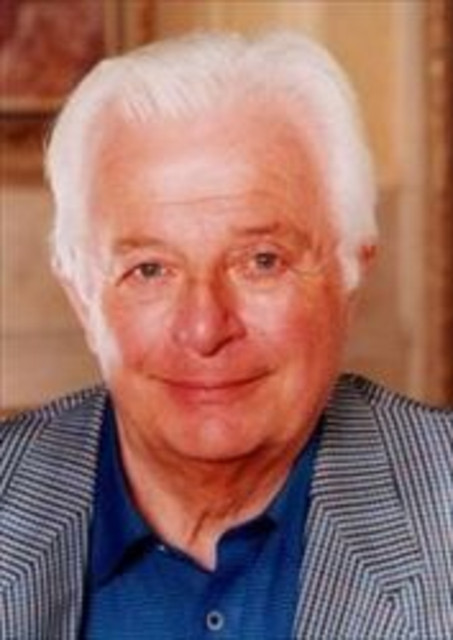
This busy tenor established his reputation early as a reliable artist in Mozart and Bach. With a voice less sensuous than those of Léopold Simoneau or Anton Dermota, he nonetheless was frequently engaged for stage performances, concert work, and recordings. Eventually, he ventured as far into a heavier repertory as Walter von Stolzing, a role he sang at the Bayreuth Festival. Kmentt's Metropolitan Opera debut -- in a speaking role -- awaited the new millennium, but still brought encomiums from audiences and the press. First intending to pursue a career as a pianist, Kmentt later studied singing at the Vienna Academy of Music with Hans Duhan, Elisabeth Rado, and Adolf Vogel. At that time, he was selected to tour Belgium and the Netherlands with a student opera ensemble that included two singers who would later achieve considerable fame: tenor Fritz Uhl and bass baritone Walter Berry. Kmentt's formal debut took place in 1950 with a performance in Vienna of Beethoven's Symphony No. 9 conducted by Karl Böhm. In 1951, he made his professional stage debut singing in a Wiener Volksoper production of Prokofiev's The Love for Three Oranges. The year following, Kmentt became a member of the Wiener Staatsoper. For the first three years of his tenure, the company performed at the Theater an der Wien while awaiting reconstruction of the company's own house. For the reopening of the Staatsoper in 1955, Kmentt was cast as Jacquino in Fidelio, sharing the stage with such luminaries as Martha Mödl, Anton Dermota, and Ludwig Weber. That same year, he made his debut at the Salzburg Festival singing Dandini in Pfitzner's Palestrina. Mozart served for his introduction to La Scala in 1968 when he sang the title role in Idomeneo. Kmentt made his debut at Bayreuth the same year, singing Walter in Die Meistersinger. During the years of his prime, he also appeared frequently in operetta. When Kmentt gradually relinquished leading roles, he moved into comprimario parts, such as the Major-Domo in Der Rosenkavalier. Ironically, it was another Major-Domo, this one in Strauss' Ariadne auf Naxos, who finally brought Kmentt to the Metropolitan Opera in spring 2001. Among Kmentt's roles captured in recording are the tenor part in Bach's St. Matthew Passion under Møgens Wöldike, his Froh under Solti, and his Ferrando with Böhm, taped live at La Scala.
First discovered Aug 17, 2026, 9:32 PM