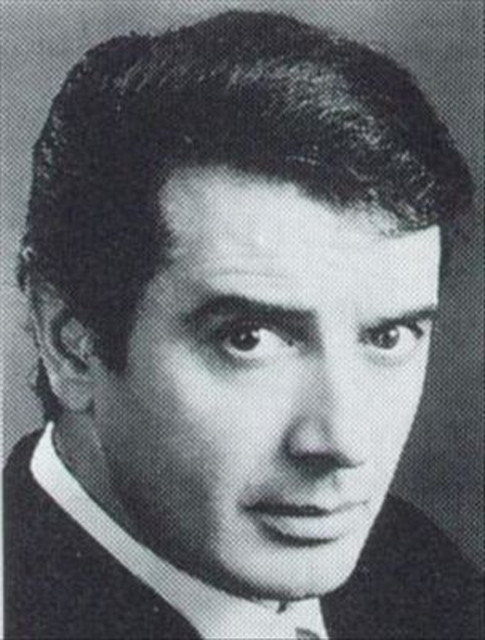
Franco Corelli
Charts
Tracks
Playlists
Press Mentions
Google Rankings
Overview
Not included in any known risky playlists
Monthly Listeners
Discography
Top Audiences
Top Listener Locations
 Madrid, ES646
 Mexico City, MX505
 Santiago, CL502
 London, GB407Barcelona, ES372
Playlist Summary
Playlist Movement
Event | Playlist | Botted? | Position | Track | Happened at | |
|---|---|---|---|---|---|---|
Biography & Metadata
"Thrilling" is the word that inevitably seems to come up in discussion of Franco Corelli, whether in reference to his powerful, immediately identifiable voice or his matinee idol good looks. (He was one of the few tenors whose appearance was actually enhanced by Renaissance-style tights and after one such appearance was nicknamed "The Golden Calves.") He sang everything "Corelli style," altering rhythms to suit his voice, inserting or prolonging high notes whenever he felt like it, and almost never displaying a high level of finesse, nuance, or sensitivity to phrasing; for his admirers, he was the quintessence of operatic excitement. Rather unusually, he did not come from a musical family, discovered his own talent relatively late in life, and was almost completely self-taught. He had studied for an engineering career, but friends encouraged him to think about music, and he briefly studied at the Pesaro Conservatory when he was in his early twenties. In 1951, he won the Maggio Musicale competition, but he decided to discontinue formal musical studies shortly afterwards. Instead, he spent his time listening to recordings of great tenors of the past, particularly Caruso, Gigli, and Lauri-Volpi, in the repertoire which he himself hoped to sing. He made his operatic debut as Don José in a production of Carmen in Spoleto, also during 1951. Despite not having the network of teachers that many students have, he quickly grew in reputation, appeared in a television production of Leoncavallo's Pagliacci, and made his La Scala debut in Spontini's La Vestale as Licinio, in 1954. His Covent Garden debut in 1957 was as Cavaradossi in Puccini's Tosca, and his Metropolitan Opera debut as Manrico in 1961. While he had a definite "bleat" in his voice during his early years that led to some critics dubbing him "PeCorelli" (Italian for "goat"), he did learn to overcome that, and also to add a ravishing pianissimo to his singing, though his phrasing remained more or less crude. Over the coming years, La Scala and the Met were the houses where he appeared most frequently. He constantly suffered from stage fright, and many of his divo antics, offstage and on, might have stemmed from that, but on stage, he cut a dashing figure, though somewhat more inclined to pose than to act. In one memorable staging of Don Carlo, feeling that Boris Christoff, the bass singing King Philip, was getting too much audience attention, he provoked a genuine sword fight with the no less feisty Christoff during the auto-da-fé scene, until a brave supernumerary (spear carrier) physically separated the two. In yet another staging of the same scene and opera, he didn't come out onto the stage until long after his cue; he had been in the middle of a dispute backstage, and wanted to win that before he came out to sing. He sang a wide variety of roles from the Italian and French repertoire, including several works that had been relative obscurities, such as Meyerbeer's Les Hugenots and Donizetti's Poliuto. Appropriately, considering how he learned to sing, he made several recordings, mostly for EMI/Angel. Among the recordings that capture him at his best are an Andrea Chenier, conducted by Santini (EMI CDS5 65287-2) and a selection of arias and songs (EMI Double Forte CZS 569530 2.)
First discovered Aug 17, 2026, 9:09 PM