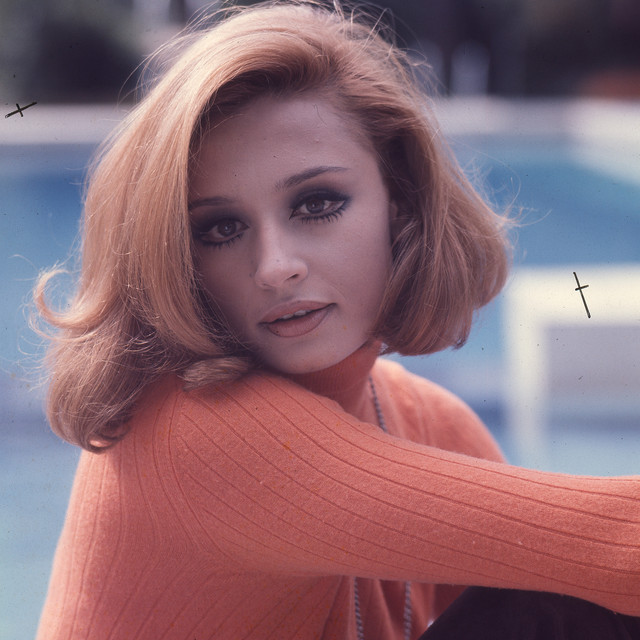
Raffaella Carrà
Charts
Tracks
Playlists
SEO
Press Mentions
Overview
Included in high risk playlists
Monthly Listeners
Discography
Top Audiences
Top Listener Locations
 Madrid, ES55,710
 Santiago, CL52,388
 Rome, IT51,819Milan, IT39,208
 Mexico City, MX38,172
Playlist Summary
Playlist Movement
No activity found
This artist's playlist additions and removals will appear here.
Biography & Metadata
First appearing in films as a child in the 1950s before acting in dozens of the films in the '60s and releasing her first pop album (Raffaella) in 1970 -- the same year she debuted as a TV variety show host -- singer, actress, dancer, and TV personality Raffaella Carrà was a well-known entertainer in her native Italy as well as in Spain and Latin America into the 21st century. The first woman to show her navel on Italian television when she performed "Tuca Tuca" on Canzonissima in 1971, a song that launched a dance craze, she later had a Top Ten U.K. hit with 1976's "Do It, Do It Again" (the English version of European smash "A Far l'Amore Comincia Tu"). Her eighth LP, 1977's dance-oriented Fiesta, then reached a career-high number four in Spain. Semi-retired from film acting by the early '80s, she worked as a TV presenter in Italy and Spain throughout the '80s, '90s, and 2000s, meanwhile releasing albums of disco and uplifting Euro-pop like 1981's Raffaella Carrà; it achieved gold sales in Spain. Her final scripted acting appearance was on the TV mini-series Mamma per Caso in 1997. In 1999, she released Fiesta: I Grandi Successi, a set of re-recorded fan favorites. As he recording career waned, Carrà was Italy's spokesperson for Eurovision Song Contest 2011 and concluded three seasons as a judge on The Voice of Italy in 2016. Active in eight different decades, her last album was the 2018 holiday release Ogni Volta Che È Natale, which she followed with a final film cameo in the 2020 jukebox musical My Heart Goes Boom! Born Raffaella Maria Roberta Pelloni in Bologna on June 18, 1943, the multi-faceted performer grew up in the village of Bellaria-Igea Marina in Rimini, where she learned songs from watching Il Musichiere, a TV program based on Name That Tune. She enrolled at the National Academy of Dance in Rome at the age of eight, and when she was nine, Raffaella made her film acting debut in the 1952 drama Torment of the Past. Dropping ballet for film studies at Centro Sperimentale di Cinematografia in her teens, she picked up further acting opportunities in the late '50s, and her stature rose with a role with the 1960 war drama It Happened in '43. Switching her name from Raffaella Pelloni to Raffaella Carrà (after painter Carlo Carrà) by 1961's 5 Marines per 100 Ragazze, she had an international breakthrough with a role in 1965's Von Ryan Express, which starred Frank Sinatra. That same year, Carrà appeared in the musical comedy Scaramouche on Italian TV. Among her roles in the U.S., a guest spot on the NBC series I Spy followed in 1966. With an appearance on the show Io, Agata e Tu in 1970, Carrà launched the controversial dance craze tuca-tuca ("touch-touch") and its accompanying single, and in 1971, as host of TV's Canzonissima, she performed the song in a shirt that exposed her navel. A first for Italian TV, the move prompted criticism from the Vatican newspaper. From 1970 onward, Carrà was a popular TV host for a variety of series in Italy (Canzonissima, Fantastico, Domenica In, Carràmba! Che Sorpresa) as well as in in Spain (Hola Raffaella!, En Casa con Raffaella). In the meantime, Carrà issued a steady stream of albums, including 1972's Raffaella...Senzarespiro, her third consecutive album for RCA. Signing with CGD, she followed it with Scatola a Sorpresa in 1973 and Milleluci in 1974. The disco outing Felicità Tà Tà, also from 1974, spawned hits including the title track and "Rumore," and went gold in Italy while translated versions helped sell ten million copies worldwide. The single "53.53.456" from her 1976 album, Forte Forte Forte, went gold in Canada, and she had her only U.K. Top Ten appearance with "Do It, Do It Again" from the same album. Various versions of that song -- "A Far l'Amore Comincia Tu" in its original Italian – reached the Top Three in Belgium, the Netherlands, and Switzerland. She peaked at a career-high number four on the album chart in Spain with the follow-up, 1977's Fiesta. CBS released Carrà's next three albums -- 1978's Raffaella, Hay Que Venir al Sur, 1979's Applauso, and 1980's Mi Spendo Tutto -- as the dance-pop artist continued her regular presence on television. Spanish label Hispavox issued the next year's Raffaella Carrà as well as Raffaella Carrà 82 and 1983's Fatalità. Back on the CGD imprint, Bolero arrived in 1984, and Fonit Cetra delivered Fidati! and Curiosità over the following two years. Her recording pace finally slowed in the '90s, but not before releasing Raffaella on CBS in 1988, Inviato Speciale on Fonit Cetra in 1990, and another self-titled album (this time for Fonit Cetra) in 1991. Moving to Germany's Ariola Records, she issued Hola Raffaella – while appearing on an award-winning Spanish TV series of the same name – in 1993. Her next long-player, Carràmba Che Rumba!, was three years in the making, and in 1997, she was cast in the RAI mini-series Mamma per Caso, which would prove to be her final appearance for a scripted show or movie, at least playing someone other than herself. An album consisting of re-recordings of previous hits from throughout her career (and opening with "Rumore" and "Tuca Tuca"), Fiesta: I Grandi Successi was issued by RCA/BMG in 1999. It wasn't until 14 years later, in 2013, that Carrà returned with the still upbeat Replay: The Album. During her break from recording, she didn't leave the public eye, as she continued to host TV series and special events, including serving as Italy's spokesperson for Eurovision Song Contest 2011. From 2013 to 2016, she appeared as a judge on The Voice of Italy (Seasons One, Two, and Four). Her final album, Ogni Volta Che È Natale, arrived in time for the holiday season of 2018, and her last of dozens of career hosting positions came on 2019's A Raccontare Comincia Tu, which saw Carrà interviewing celebrities from their homes. She had a cameo in the Spanish musical comedy film Explota Explota (aka My Heart Goes Boom!) in 2020. Raffaella Carrà died in Rome on July 5, 2021 due to lung cancer; she was 78 years old. ~ Marcy Donelson, Rovi
First discovered May 15, 2024, 9:51 PM