Mario del Monaco
Charts
Tracks
Playlists
Press Mentions
Google Rankings
Overview
Not included in any known risky playlists
Monthly Listeners
Discography
Top Audiences
Top Listener Locations
 Madrid, ES582
 Mexico City, MX394Barcelona, ES339
 Rome, IT316Milan, IT293
Playlist Summary
Playlist Movement
Event | Playlist | Botted? | Position | Track | Happened at | |
|---|---|---|---|---|---|---|
Biography & Metadata
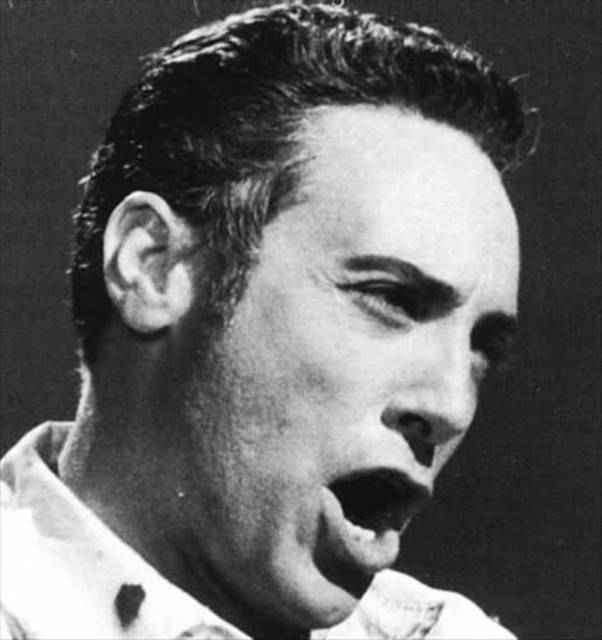
The stentorian dramatic tenor of Mario del Monaco was heard throughout the world during the 1950s and 1960s. While often berated by critics for his unsubtle vocal production, del Monaco was a favorite of audiences who appreciated his power and sincerity of approach while tackling the heaviest roles in the Italian tenor repertory. A contract with Decca (London in the United States) produced a long series of recordings, many of them in partnership with Renata Tebaldi, and most of which have been reissued in CD format. After having studied the early recordings of many tenors, del Monaco studied for a short time at the Pesaro Conservatory before gaining entry in 1935 to the school attached to the Rome Opera, largely through the urging of conductor Tullio Serafin. His formal debut occurred in 1941 at the Teatro Puccini as Pinkerton in Madama Butterfly -- while on leave from the army. Engagements were quickly forthcoming once WW II ended. A successful Radames (Aïda) at Verona was followed by appearances at Covent Garden with the Neapolitan Opera (Canio, Cavaradossi, and Pinkerton). Central and South America offered performances in Mexico City, at the Teatro Colón in Buenos Aires and in Rio de Janeiro. His North American debut took place at the San Francisco Opera as Radames in 1950. He was thereupon engaged by Rudolf Bing for a November 1950 appearance at the Metropolitan as des Grieux in Manon Lescaut. Subsequently, he sang more than 100 performances at the Met over the course of seven seasons, appearing also at Chicago's Lyric Opera during the 1950s. In that time, del Monaco became the world's leading Otello, performing the role (according to his own tally) 427 times. Other roles which formed the core of his repertory included Enzo in Ponchielli's La Gioconda, the title role in Giordano's Andrea Chénier (next to Otello perhaps his most authoritative role), Don Alvaro in La forza del destino, Don José and Saint-Saëns' Samson (despite his less-than-fluent French), Verdi's Ernani, Dick Johnson in Puccini's La fanciulla del West and Pollione in Bellini's Norma. In Italy, he occasionally ventured into the Wagnerian repertory, although these performances were sung in Italian. He did, however, record Siegmund's "Winterstürme" from Die Walküre in German. It was not regarded as a success. From the 1960s to his retirement from the stage in 1973, del Monaco increasingly confined his appearances to Italy, although he continued to record for Decca. His Loris in Giordano's Fedora (with Magda Olivero as the heroine) was taped when the singer was in his mid-fifties, by which time his voice had lost what little pliancy it had possessed earlier. Among del Monaco's most prominent recordings are his two as Otello, each with the same principals (Tebaldi as Desdemona and Aldo Protti as Iago), but the second with Herbert von Karajan as conductor. His Andrea Chénier was preserved by Decca with Tebaldi as Maddalena and Ettore Bastianini as Gérard as well as in a live recording from Tokyo with Tebaldi and Protti. The un-orthodox method of vocal production favored by del Monaco allowed him an overwhelming measure of strength in his middle and upper-middle registers, but lent a metallic buzz to his timbre and precluded his singing softly. Still, critics, following his death, rued his passing as they recalled performances of unsurpassed excitement.
First discovered Aug 20, 2026, 9:52 PM