Jean-Marie Leclair
Charts
Tracks
Playlists
Press Mentions
Google Rankings
Overview
Not included in any known risky playlists
Monthly Listeners
Series
- Monthly Listeners
- Listeners from Playlists
- Change
Discography
Genres
Spotify has not assigned genres to this artist yet
Top Audiences
Top Listener Locations
 Madrid, ES612
 Mexico City, MX582
 London, GB485
 Amsterdam, NL472
 New York City, US444
Playlist Summary
Playlist Movement
Event | Playlist | Botted? | Position | Track | Happened at | |
|---|---|---|---|---|---|---|
Biography & Metadata
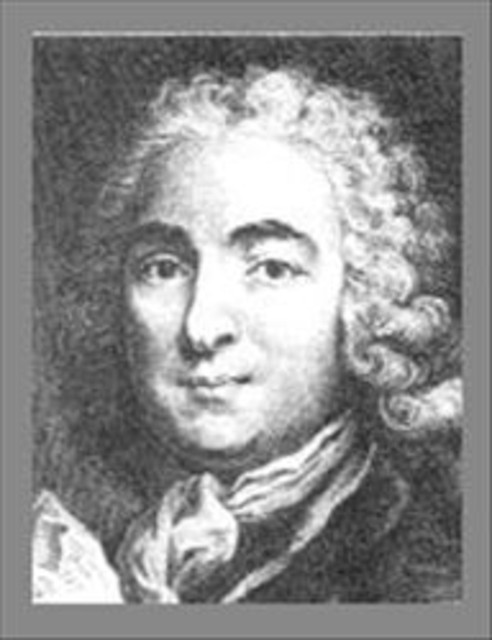
The French violinist and composer Jean-Marie Leclair (often referred to as "the elder" to distinguish him from a younger brother who went by the same name) is remembered for an effective synthesis of his own Parisian musical heritage with the Italian sonata style brought into vogue by Corelli. Born in 1697 to a French lacemaker and cellist, Leclair was considered a master of both the violin and his father's lacemaking trade by the time he reached adulthood. His skill as a dancer earned him a position with the Lyons Opera (1716 or perhaps a little earlier), and in the next few years it is probable that he either lived in or was a frequent visitor to Paris (an assumption scholars base on a 1721 Parisian musical publication which included ten of Leclair's violin sonatas). By 1723 Leclair had convinced Joseph Bonnier, one of France's wealthiest aristocrats, to publish his Opus 1 collection of violin sonatas, which were received with great admiration by the Parisian musical establishment. Around 1726 Leclair found his way to Turin to study with violinist-composer G.B. Somis, as well as to compose ballet interludes (now lost) for opera productions at the Teatro Regio Ducale. A second opus of violin sonatas was published in 1728, and during that same year Leclair made his debut as a violinist at the Concert Spirituel. Performances of his own music in London, Kassel (where Leclair engaged in a musical "duel" with famed Italian violinist Pietro Locatelli) and Paris earned Leclair a reputation as one of the leading figures of the new French school of violinist-composers. Formal recognition came in 1733 with an appointment to the musical court of Louis XV, to whom Leclair dedicated his third opus of violin sonatas as a display of gratitude. Leclair divided his time between a number of court appointments for the remaining decades of his life, including positions at The Hague, at the court of Orange in the Netherlands, and in the service of the Duke of Gramont (a former pupil of the composer). The official investigation of Leclair's suspicious death in 1767 incriminated both his nephew and his second wife (the couple had lived in separate households since 1758), but neither was ever formally charged with his murder. Leclair took the Italian sonata da chiesa and the sonata da camera and infused them with a stylistic elegance derived largely from the ballet music of Jean-Baptiste Lully. Fittingly, he composed almost exclusively for the violin (he did compose one opera in 1746, but the work never entered the Parisian repertory). His significance as a teacher of the violin, however, is perhaps greater than his place in the annals of composition: with a string of pupils including notable French violinists L'abbé le fils, Jean-Josephe Rudolphe, and Pierre Gaviniès, Leclair can truly be called the father of the modern French violin school. ~ Blair Johnston, Rovi
First discovered Aug 25, 2026, 10:45 AM