Germaine Tailleferre
Charts
Tracks
Playlists
SEO
Press Mentions
Overview
Included in high risk playlists
Monthly Listeners
Discography
Genres
Spotify has not assigned genres to this artist yet
Top Audiences
Top Listener Locations
 Mexico City, MX1,614
 London, GB1,558
 New York City, US1,314
 Sydney, AU1,104
 Singapore, SG1,096
Playlist Summary
Playlist Movement
No activity found
This artist's playlist additions and removals will appear here.
Biography & Metadata
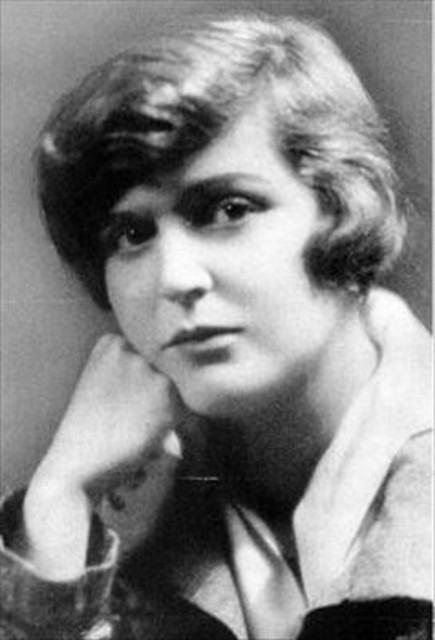
Of significance as the sole female member of the post-World War I group of French composers known as Les Six, Germaine Tailleferre remained a prominent -- if somewhat inaccessible -- musician long after the disintegration of that group during the middle and late 1920s. She left behind, at her death in 1983 at the age of 91, an extensive body of work representing almost 70 years of active composition. Tailleferre was born to a family living in the outskirts of Paris on April 19, 1892. Despite having exposed young Germaine to music from an early age, Tailleferre's parents considered music to be an inappropriate activity for a young lady, and it was not until her twelfth year that Tailleferre convinced them to allow her to pursue serious studies at the Paris Conservatoire, where she studied accompaniment, harmony, and counterpoint, eventually taking first prizes in each. During the years following her graduation she also received a few informal lessons in orchestration from Maurice Ravel. While a student at the Conservatoire, Tailleferre met composers Auric, Milhaud and Honegger, and after the premiere of her String Quartet in 1918, she was invited to join the Nouveaux Jeunes, a group of young composers who identified with the aesthetic of satirical composer Erik Satie and playwright Jean Cocteau which, with the addition of Tailleferre, Durey, and Poulenc, soon became known as Les Six, though not by their own choosing. Tailleferre married twice: following a brief marriage (in 1926) to American author Ralph Barton, she married Jean Lageat, a French lawyer. In 1974, she released an autobiography, Mémoires à l'emporte pièce. Tailleferre's commitment to progressive musical ideas during the early 1920s earned her a measure of notoriety throughout the Parisian musical establishment. Nevertheless, her music never abandoned its allegiance to the traditional French "voice" as passed down from Fauré through Ravel, and the seductive grace and charm of her work are perhaps best summed up by Cocteau's famous assessment of Tailleferre as the musical equivalent to painter Marie Laurencin. The Chansons françaises for voice and piano (1930), and the well-known Overture for orchestra (1932) are sparkling and quintessentially French in their lighthearted, rather humorous use of modernist techniques. In later years, she experimented with serialism; however, these works are not regarded as highly as her earlier compositions.
First discovered Aug 18, 2026, 9:42 PM