Howard Hanson
Charts
Tracks
Playlists
SEO
Press Mentions
Overview
Not included in any known risky playlists
Monthly Listeners
Discography
Top Audiences
Top Listener Locations
 São Paulo, BR513
 London, GB311Rio de Janeiro, BR229
 New York City, US225Chicago, US177
Playlist Summary
Playlist Movement
No activity found
This artist's playlist additions and removals will appear here.
Biography & Metadata
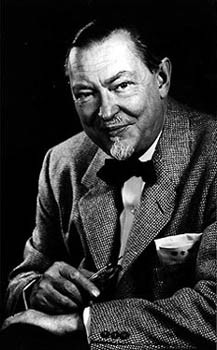
Howard Hanson was among the first twentieth century American composers to achieve widespread prominence. In contrast to the angular Stravinskian and Americana-influenced sounds that dominated American concert music prior to World War II, Hanson wrote in an unabashedly Romantic idiom influenced by his Nordic roots. Of particular importance to the composer was the music of Sibelius; however, he also acknowledged the influence of composers such as Palestrina and Bach. After boyhood studies on the piano, Hanson studied music at the Institute of Musical Art in New York City and Northwestern University, where he earned a degree in 1916. In 1921, he became the first American to win the Prix de Rome, which provided him the opportunity to study with Ottorino Respighi, whose colorful orchestral language was clearly an influence on Hanson's own. Upon his return to the United States, Hanson was appointed head of the Eastman School of Music at the University of Rochester at the age of 28. Under the composer's guidance over the course of more than four decades, Eastman became one of the world's preeminent educational institutions. During his tenure there Hanson continued to compose prolifically; he also embarked on a career as a conductor, in which capacity he proved himself one of the great champions of American music. At Eastman, it has been calculated, he presented some 1,500 works by 700 composers. Hanson also commercially recorded a number of modern works in a series for the Mercury label in the 1950s, drawing much attention to otherwise neglected repertoire. Hanson's most characteristic works are undoubtedly his seven symphonies. The first of these, the "Nordic" Symphony (1922), dates from the composer's studies in Rome. The Second Symphony ("Romantic"), remains Hanson's best-known work, a characteristic realization of the lush, lyric aesthetic with which he is closely associated. Further notable among Hanson's symphonies are the Symphony No. 4 (1943), awarded the Pulitzer Prize, and the Symphony No. 7 (1977), one of a series of works inspired by the poetry of Walt Whitman. Other important works in Hanson's catalogue include The Lament for Beowulf (1925) for chorus and orchestra; the opera Merry Mount (1933), well received at its premiere and in subsequent productions, but now rarely performed; and a variety of other chamber, vocal, and orchestral works.
First discovered Aug 26, 2026, 4:13 PM