Kayhan Kalhor
Charts
Tracks
Playlists
Press Mentions
Google Rankings
Overview
Not included in any known risky playlists
Monthly Listeners
Series
- Monthly Listeners
- Listeners from Playlists
- Change
Discography
Genres
Spotify has not assigned genres to this artist yet
Top Audiences
Top Listener Locations
 Istanbul, TR995
 Baku, AZ557
 Frankfurt am Main, DE487
 Toronto, CA397Berlin, DE376
Playlist Summary
Playlist Movement
Biography & Metadata
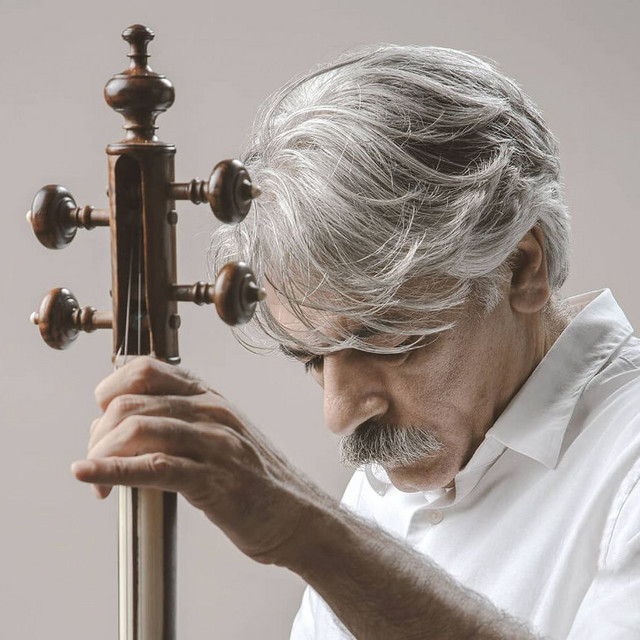
Kayhan Kalhor is a composer of Kurdish and Persian classical music and well known as a member of the Persian/Kurdish folk and classical ensemble Ghazal and Yo-Yo Ma's Silk Road Ensemble. He is also virtuoso on the kamancheh, setar, and Persian violin. He is globally renowned for his original works, his interpretations of traditional music, and his collaborations with other classical and modern musicians. Kalhor was born to a Kurdish family in the Kermanshah Province of Iran, but raised in Tehran. He began studying music when he was in primary school, and began playing in Iran's National Orchestra of Radio and Television at the age of 13. He also studied classical music of the Persian radif tradition and continued his research in Kurdish and Turkic traditions in the northern part of Khorasan Province. He also studied and collaborated with the celebrated tar and setar maestro Mohammad-Reza Lofti at Tehran's music conservatory, which is where he became proficient on the Persian violin. Kalhor then moved, first to Europe and then to Canada, where he studied composition in the European classical tradition. He received a degree from Carleton University. He then immigrated to the United States. In 1996 he formed Ghazal with sitar master and vocalist Shujaat Khan. Their recorded debut, Lost Songs of the Silk Road, was released by Real World in 1997. Kalhor's solo debut, Scattering Stars Like Dust, was issued in 1998 on Traditional Crossroads, followed later that year by Ghazal's As Night Falls on the Silk Road. In 1999 he appeared on Shahram Nazeri's Dastan Ensemble recording of Persian devotional music, Through Eternity. The third Ghazal offering, Moon Rise Over the Silk Road, appeared in 2000, as did Night Silence Desert, Kalhor's collaborative album with renowned vocalist Mohammed Reza Shajarian. That same year he also performed on his own composition, Gallop of a Thousand Horses, for string quartet, kamancheh, and tombak, on the Kronos Quartet's Caravan album. In 2001, Kalhor's new ensemble, the Masters of Persian Music with Hossein Alizâdeh and Shajarian, released its debut offering, It's Winter. That year he became a member of Yo-Yo Ma's Silk Road Ensemble, and appeared on the group's debut, Silk Road Journeys: When Strangers Meet. The second Masters of Persian Music album, Without You, appeared in 2002 and was nominated for a Grammy. The final Ghazal recording, The Rain, was released in 2003 and also received a Grammy nomination. In 2004, In the Mirror of the Sky, a collaborative album with celebrated tambur player and vocalist Ali Akbar Moradi, was released by World Village. The Silk Road Ensemble's Silk Road Journeys: Beyond the Horizon was issued in 2005, as was the Masters of Persian Music's Faryad; the latter was nominated for a Grammy. In 2006, Kalhor formed an intensely creative project with the Turkish composer Erdal Erzincan. Their debut offering, The Wind, an album-length suite, appeared on ECM to global acclaim. Kalhor was busy in 2007: two Masters of Persian Music recordings -- Saze Khamoosh and Soroude Mehr -- saw release, as did the Silk Road Ensemble's New Impossibilities. In 2008, Kalhor collaborated with the Brooklyn Rider string quartet on Silent City, which featured not only his kamancheh and setar playing, but two of his compositions that were commissioned by the group. The Silk Road Ensemble's 2009 album, Off the Map, was nominated for a Grammy. In 2011, Kalhor collaborated with young Iranian percussionist/composer Madjid Khaladj on Voices of the Shades (Saamaan-E Saayeh'haa). That year he also contributed to the soundtrack for Cinema Jenin by Marcos Vetter, and in 2012 with Brooklyn Rider for the score to Rhino Season by Bahman Ghobadi. Later in the year, he and santoorist Ali Bahrami Fard recorded I Will Not Stand Alone. Kalhor's second collaborative ECM album with Erzincan, Kula Kulluk Yakisir Mi: Live in Bursa, was released in the fall of 2013. ~ Thom Jurek, Rovi
First discovered Apr 19, 2025, 10:15 AM