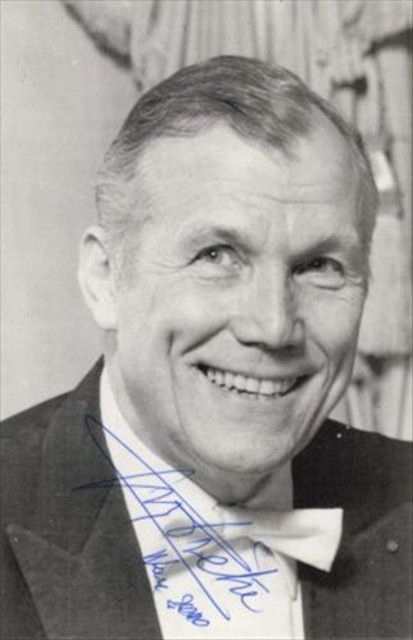
Georges Prêtre
Charts
Tracks
Playlists
Press Mentions
Google Rankings
Overview
Not included in any known risky playlists
Monthly Listeners
Discography
Genres
Spotify has not assigned genres to this artist yet
Top Audiences
Top Listener Locations
 Mexico City, MX5,177
 Madrid, ES4,361
 London, GB3,270
 Santiago, CL2,781
 Paris, FR2,706
Playlist Summary
Playlist Movement
Event | Playlist | Botted? | Position | Track | Happened at | |
|---|---|---|---|---|---|---|
Biography & Metadata
Georges Prêtre was one of the leading conductors of the last half of the 20th century, especially known for operatic conducting and performances of French music. His long career, which lasted more than six decades, included working closely with Francis Poulenc and Maria Callas; long leadership roles with the Paris Opéra, the Vienna Symphony Orchestra, and the Stuttgart Radio Symphony, among other institutions; and premieres of several significant compositions. His knowledge of the orchestral repertoire was demonstrated by him sometimes conducting Debussy and Ravel from memory. Prêtre was born in Waziers in 1924. He studied trumpet as a boy, graduating from the Douai Conservatory. Nazi occupation of Paris did not substantially interfere with the teaching activities of the famous Paris Conservatory, where Prêtre continued his musical studies. He took first prize in trumpet in 1944 and studied harmony with Henri Challan and Maurice Duruflé. He began studying conducting with André Cluytens, Pierre Dervaux, and Richard Blareau. Upon his graduation, he took up a pseudonym -- Georges Dherain -- and conducted operettas at a number of small opera houses in France. His official conducting debut was at the Marseilles Opera in 1946, in Lalo's Le Roi d'Ys. He spent a decade primarily in provincial French opera houses: Marseilles (1946-1948), Lille (1948), Casablanca (1949-1951), and Toulouse (1951-1955). He was appointed music director of the Opéra-Comique in Paris in 1956, debuting with Richard Strauss' Capriccio and conducting a wide variety of repertory there. He made his American conducting debut at the Chicago Lyric Opera in 1958. By 1960, he had become well-known and was selected by composer Francis Poulenc to conduct the premiere of Le voix humaine (1959). He was also highly esteemed for his performances of Dialogues de Carmelites and led the premiere of the Sept répons des ténèbres (1963). In 1959, he joined the staff of the Paris Opéra, becoming music director in 1966. He debuted at the Royal Opera House, Covent Garden (1961), the Metropolitan Opera in New York (1965), and La Scala (1965), often returning to the latter two venues. During this period he became a conductor often requested by opera superstar Maria Callas. His concert conducting career also advanced during this period. Over the years he conducted most of the important orchestras of Europe and America, and in 1962 was appointed deputy director of the Royal Philharmonic Orchestra. In 1971, the Paris Opéra's periodic political problems erupted into a huge backstage dispute that closed the Opéra for several months, during which Prêtre left the company. He was conductor for Franco Zeffirelli's filmed versions of Cavalleria Rusticana and Pagliacci, both released in 1982. Prêtre most frequently worked outside of France, but nevertheless was made an Officer of the Légion d'Honneur in 1984 and a Grand Officer in 2009, two of several honors he received throughout his career. He became principal guest conductor of the Vienna Symphony Orchestra in 1986, holding that post through 1991, when he was named one of its honorary conductors for life. In 1995, he became artistic director and principal conductor of the Stuttgart Radio Symphony Orchestra, where he remained until 2004. Besides the earlier Poulenc works, among his world premieres were the Symphonie Concertante, Op. 81 (1959) by Joseph Jongen, with Virgil Fox performing the organ solo; Symphony No. 4 by Marcel Landowski (1988); and Concerto for 15 Soloists and Orchestra by Françaix (1990). In 1999, he conducted a major series of concerts in Paris in honor of the 100th anniversary of Poulenc's birth. In 2008 and 2010, he conducted the Vienna Philharmonic's New Year's concert. In between those, he led "Cav and Pag" again in televised performances with Roberto Alagna in Rome. Prêtre was 92 when he died on January 4, 2017, in Navès, France. His last concert at La Scala was recorded by Deutsche Grammophon and released in 2020. SWR Music released a box set of Prêtre's recordings with the Stuttgart Radio Symphony in 2024. Many of his other recordings on major labels such as Erato, RCA, and EMI are routinely reissued. ~ TiVo Staff, Rovi
First discovered Aug 18, 2026, 12:50 PM