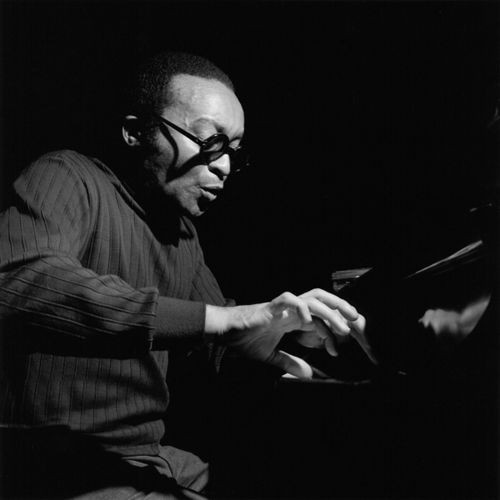
Cecil Taylor
Charts
Tracks
Playlists
Press Mentions
Google Rankings
Overview
Not included in any known risky playlists
Monthly Listeners
Series
- Monthly Listeners
- Listeners from Playlists
- Change
Discography
Genres
Spotify has not assigned genres to this artist yet
Top Audiences
Top Listener Locations
 New York City, US147
 London, GB136Brooklyn, US132Los Angeles, US93Chicago, US87
Playlist Summary
Playlist Movement
Event | Playlist | Botted? | Position | Track | Happened at | |
|---|---|---|---|---|---|---|
Biography & Metadata
American pianist Cecil Taylor is one of the great names in jazz history. Classically trained, Taylor combined the compositional grandeur of the European tradition with an intense, idiosyncratic improvisational technique to express emotions and employ his own brand of lyricism inspired by Duke Ellington. Beginning in the 1950s, the artist shaped a body of work that, in scope and dissonant audacity, made him one of the most original jazz artists of the post-war era. His debut album, Jazz Advance, was released in 1956. He followed with dozens of releases including Unit Structures (1966), Indent (1973), One Too Many Salty Swift and Not Goodbye (1980), Garden (1982), For Olim (1987), and The Tree of Life (1998). Taylor's final work, Birdland, Neuburg 2011, appeared in 2011. He passed away in 2018 at the age of 89. Since then, his entire catalog has been reissued; that bounty includes many previously unissued live outings including 2026's Fragments: The Complete 1969 Salle Pleyel Concerts. Born in 1929, and raised in Corona, Queens in New York City, Taylor started piano lessons at the age of six, and attended the New York College of Music and the New England Conservatory. His early influences included Duke Ellington and Dave Brubeck, but from the start he sounded original. Early gigs included work with groups led by Johnny Hodges and Hot Lips Page, but, after forming his quartet in the mid-'50s (which originally included Steve Lacy on soprano, bassist Buell Neidlinger, and drummer Dennis Charles), Taylor was never a sideman again. The group played at the Five Spot Cafe in 1956 for six weeks and performed at the 1957 Newport Jazz Festival (which was recorded by Verve), but, despite occasional records like 1958's Looking Ahead, work was scarce. In 1960, Taylor recorded extensively for Candid under Neidlinger's name (by then the quartet featured Archie Shepp on tenor), and the following year he sometimes substituted in the play The Connection. By 1962, Taylor's quartet featured his regular sideman Jimmy Lyons on alto and drummer Sunny Murray. He spent six months in Europe (Albert Ayler worked with Taylor's group for a time although no recordings resulted) but upon his return to the U.S., Taylor did not work again for almost a year. Even with the rise of free jazz, his music was considered too advanced. In 1964, Taylor was one of the founders of the Jazz Composer's Guild and, in 1968, he was featured on a record by the Jazz Composer's Orchestra. In the mid-'60s, Taylor recorded two very advanced sets for Blue Note, but it was generally a lean decade. Things greatly improved starting in the '70s. Taylor taught for a time at the University of Wisconsin in Madison, Antioch College, and Glassboro State College. European tours also became common. After being awarded a Guggenheim Fellowship in 1973, the pianist's financial difficulties were eased a bit; he even performed at the White House (during Jimmy Carter's administration) in 1979. He also recorded more frequently, delivering albums like 1976's Dark to Themselves, and 1979's Cecil Taylor Unit. Taylor also started incorporating some of his eccentric poetry into his performances. The death of longtime associate Jimmy Lyons in 1986 was a major blow, but Taylor remained active over the next few decades, issuing albums on labels such as hatART, Soul Note, Leo, and FMP, including 1986's For Olim, 1993's Always a Pleasure, and 1996's The Light of Corona. He also formed a trio with bassist William Parker and drummer Tony Oxley. During the 2000s, the pianist slowed down a little, often working often with his various ensembles, including his trio, and his big band. Having never compromised his musical vision, Taylor's stature grew in his later years. He was the subject of a 2006 documentary All the Notes, and in 2013 was awarded the Kyoto Prize for Music. In 2016, the Whitney Museum of American Art hosted a retrospective of his career titled Open Plan: Cecil Taylor. Taylor died on April 5, 2018 at his home in Brooklyn at the age of 89. In the wake of his passing, no less than 119 posthumous albums were released, many offering previously unissued live material including Corona in 2020, The Complete, Legendary, Live Return Concert in 2021 (offering his complete 1973 Town Hall concert, that had been excerpted on 1974's Spring of Two Blue J's), and Flashing Spirit recorded in duo with Tony Oxley in 1988. On Record Store Day in 2026, Elemental released Fragments: The Complete 1969 Salle Pleyel Concerts. While other music from the band's previous summer tour of France had been issued and released several times in different forms, this album was the very first time that the November 3 concerts of "Fragments of a Dedication to Duke Ellington" were officially released. ~ Scott Yanow, Rovi
First discovered Aug 25, 2026, 12:08 PM