Rodion Shchedrin
Charts
Tracks
Playlists
Press Mentions
Google Rankings
Overview
Not included in any known risky playlists
Monthly Listeners
Series
- Monthly Listeners
- Listeners from Playlists
- Change
Discography
Genres
Spotify has not assigned genres to this artist yet
Top Audiences
Top Listener Locations
 London, GB310
 Sydney, AU226Melbourne, AU224
 Warsaw, PL195
 Mexico City, MX194
Playlist Summary
Playlist Movement
Event | Playlist | Botted? | Position | Track | Happened at | |
|---|---|---|---|---|---|---|
Biography & Metadata
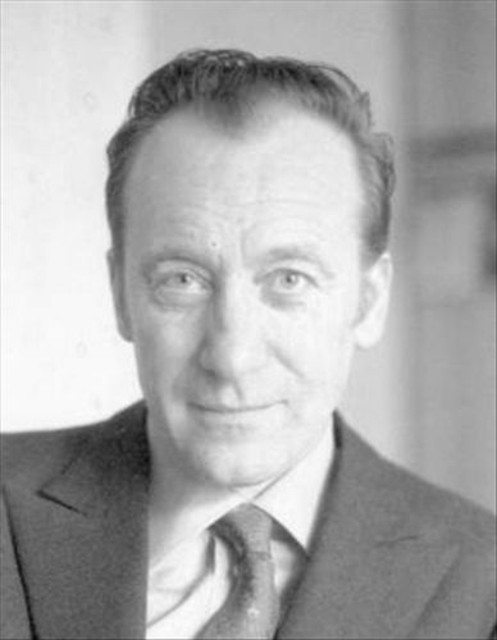
Composer and pianist Rodion Shchedrin was among the more prominent figures to emerge from the Soviet Union after Dmitry Shostakovich. Shchedrin's extensive catalog of compositions, which encompasses many genres, evolved from tonal to aleatoric to what he called "post-avant-garde," and he often incorporated folk music and liturgical themes. Among his most popular works are his ballets written or arranged for his wife, prima ballerina Maya Plisetskaya. Shchedrin was born in Moscow, then the capital of the Soviet Union, on December 16, 1932. The son of a music theorist and writer, he was encouraged in his musical interests from a very young age. Initial studies at the Moscow Conservatory were interrupted by Russia's participation in World War II, but in 1948, he entered the Moscow Choral School, and three years later, he returned to the Conservatory where he studied piano with Yakov Flier and composition with Yuri Shaporin. At the same time, his interest in Russian folk music came to the surface; he led a 1951 trip to Belorussia to collect folk songs, some of which turned up in his early Piano Quintet (1952). Folk songs also play a role in his brilliant Piano Concerto No. 1 (1954), which he wrote and premiered as his graduation composition from the Conservatory. Not long after his graduation, Shchedrin began what has become one of his best-known works, the ballet Konek-gorbunok (The Little Humpbacked Horse, 1956), which quickly became a staple of the Bolshoi Ballet. Shchedrin married ballerina Maya Plisetskaya, a soloist in the Bolshoi Ballet, in 1958. Another very popular work in Russia was the opera Not love alone (1961). In the mid-'60s, Shchedrin started to incorporate modern sounds and techniques like tone-rows and aleatorics (chance elements) into works like his Symphony No. 2 (1962 to 1965) and the Piano Concerto No. 2 (1966). After that, Shchedrin consistently exhibited an eclectic taste; elements of the avant-garde, neo-Classicism, folk, jazz, and pop music all played roles in his music, which he called "post-avant-garde." From 1964 to 1969, Shchedrin taught composition at the Moscow Conservatory while gaining recognition as one of the most successful Russian composers of his time. Music fans around the world have come to know The Carmen Ballet, his 1968 arrangement of parts of Georges Bizet's Carmen for strings and percussion, produced for Plisetskaya, who was by then the prima ballerina assoluta of the Bolshoi Theatre. He also wrote the full-length ballet Anna Karenina (1972) for her. In 1973, Shchedrin succeeded Shostakovich as the chairman of the Composers' Union of Russia, serving in this role until 1989, and afterward as its honorary chairman. Although elements of Russian Orthodox chants appeared in early works like the Concerto for Orchestra No. 2 ("The Chimes") (1967) (written for the 125th anniversary of the New York Philharmonic), it was not until the 1980s that explicit liturgical themes found their way into works like Stihira (1987) and The Sealed Angel (1988). Shchedrin wrote, among many other works, six piano concertos, five concertos for orchestra, and three symphonies; the last of these (subtitled "Scenes of Russian Fairy Tales") was premiered in Berlin in 2000. In the new century, Shchedrin continued to write profusely. He penned more than 40 works since his third symphony, including a Commemoration Mass for Maya Plisetskaya (2018), who died in 2015. He followed that in 2020 with The Adventures of an Ape, for narrator and orchestra. Shchedrin died in Munich on August 29, 2025. ~ Chris Morrison & Keith Finke
First discovered Aug 22, 2026, 7:59 PM