Philip Langridge
Charts
Tracks
Playlists
Press Mentions
Google Rankings
Overview
Not included in any known risky playlists
Monthly Listeners
Series
- Monthly Listeners
- Listeners from Playlists
- Change
Discography
Genres
Spotify has not assigned genres to this artist yet
Top Audiences
Top Listener Locations
 London, GB853
 Madrid, ES482
 Sydney, AU320
 New York City, US318
 Amsterdam, NL300
Playlist Summary
Playlist Movement
Event | Playlist | Botted? | Position | Track | Happened at | |
|---|---|---|---|---|---|---|
Biography & Metadata
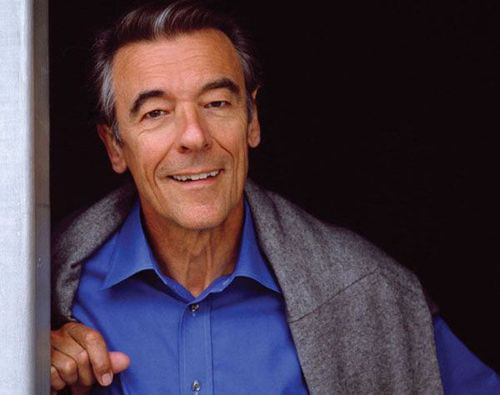
A welcome addition to the 20th century's operatic canon, tenor Philip Langridge spent nearly a half-century as one of England's great interpreters of opera and oratorio. Audiences and critics alike lauded him for not only the power of his voice, but the clarity of his lyrical delivery, as well as the works he enjoyed bringing to life, including English-language material by fellow countrymen Benjamin Britten and Sir Harrison Birtwistle. Langridge, born in Hawkridge, Kent at the end of 1939, did not come from a musical family but was nonetheless encouraged by family and teachers alike as he took an interest in both singing and playing violin. He studied at the prestigious Royal Academy of Music in London, honing his vocal skills under the tutelage of Celia Bizony and Bruce Boyce. His early work as a musician would be as a violinist, until his successful debut at the Glyndebourne opera festival in 1964, portraying the Footman in Richard Strauss' Capriccio. Over time, he became a familiar face (and voice) to British opera enthusiasts, with appearances at the BBC Proms, the Edinburgh Festival, the London Opera Players, and opera houses in England, Europe, and eventually America, with a 1985 debut at the Metropolitan Opera House in New York in a production of Mozart's Cosi fan tutte. The breadth of Langridge's repertoire made him a force to be reckoned with in a generation dominated by crossover opera stars like Pavarotti, Domingo, and Carreras. He became the pride of his homeland as a savvy interpreter of English-language operas by the composer Benjamin Britten. In short order, he became known as a successor to the singer Peter Pears, another great Britten interpreter; the title role of Peter Grimes was a favorite, as were roles in Billy Budd, The Turn of the Screw, and Death in Venice. Langridge was also known for his performances in works by another British composer, Sir Harrison Birtwistle; the tenor appeared in the title role at the premiere of Birtwistle's The Mask of Orpheus at the English National Opera and was featured as the Lawyer in the premiere recording of Punch and Judy. Langridge's discography included many recordings for labels like Decca, Deutsche Grammophon, Angel, and Chandos, including appearances in works by Stravinsky (The Rake's Progress, Oedipus Rex), Schoenberg (Moses und Aron), Berlioz (Romeo and Juliet), and Handel (Messiah). Late-period roles he treasured included Loge in Wagner's Das Rheingold, which he portrayed on several stages around the world, and a 2007 Met production of Humperdinck's Hänsel und Gretel that saw him displaying his acting talents as the Witch. Offstage, Langridge was married twice, the second time to mezzo-soprano Ann Murray, and had four children, including son Stephen who became an opera director. He was honored with a CBE from Queen Elizabeth II in 1994 and earned praise for a 70th birthday recital at London's Wigmore Hall -- a performance that, sadly, was among the last before his death from cancer in 2010. ~ Mike Duquette, Rovi
First discovered Aug 21, 2026, 4:32 AM