Alan Curtis
Charts
Tracks
Playlists
SEO
Press Mentions
Overview
Not included in any known risky playlists
Monthly Listeners
Discography
Top Audiences
Top Listener Locations
 London, GB751
 Mexico City, MX625
 Madrid, ES499
 São Paulo, BR329
 Santiago, CL318
Playlist Summary
Playlist Movement
No activity found
This artist's playlist additions and removals will appear here.
Biography & Metadata
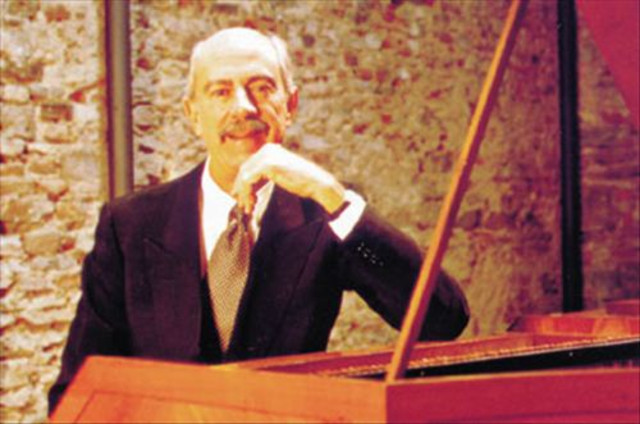
Equally known for his live performances and musicological work in establishing new performing practices for early opera, Alan Curtis enjoyed a fruitful career. A scholar as well as a conductor and harpsichordist, Curtis edited several important works with an appreciation for authenticity, effective performance, and -- in the case of opera -- stage-worthiness. Several of his best recordings were issued in the 1990s and the new millennium. Curtis was born on November 17, 1934, in Mason, Michigan. He studied at Michigan State University, attaining a bachelor's degree in 1955. His graduate study at the University of Illinois was interrupted (after the completion of his master's program) by two years of tutelage under Gustav Leonhardt in Amsterdam. Following his work with the master harpsichordist, organist, and conductor, Curtis returned to the University of Illinois to complete his doctorate, awarded in 1963. By this time, he had already published several scholarly texts that had attracted the interest of the growing period-performance movement. His doctoral thesis on Sweelinck quickly became a standard text on that composer's works for keyboard, and later formed the basis for Curtis' more extended volume, published in 1969. Curtis was hired as a teacher at the University of California at Berkeley in 1960, advancing to full professor by 1970. During that decade, Curtis took advantage of increasing opportunities to put into practice the results of his research; he achieved a reputation as an accomplished harpsichordist and, increasingly, as a conductor of 17th and 18th century opera. A recording of Monteverdi's L'Incoronazione di Poppea was heralded as an antidote to less-authentic realizations. Equally, it demonstrated just how vital period performance could be when shorn of Romantic-period excesses. While continuing his instructional work and music research in academia, Curtis performed as a conductor and harpsichordist both in America and Europe. In 1979, he founded the Amsterdam-based ensemble Il Complesso Barocco, performing and recording many operas with the group. A 1980 La Scala debut conducting Handel's Ariodante led to other significant engagements in Italy. In 1984, Curtis conducted Gluck's Armida (not often heard then) in Bologna, and in 1989, he led Cimarosa's even rarer Gli Orazi ed I Curiazi in Rome. Curtis' recordings with Il Complesso Barocco continued well into the new century. Among these are Handel's Tolomeo (2008), Alcina (2009), and Giulio Cesare (2012). Curtis and his group also collaborated on albums by high-profile performers including Joyce DiDonato's Drama Queens and Max Emanuel Cencic's Fantastic Cencic. Curtis died on July 15, 2015, in Florence, Italy.
First discovered Aug 21, 2026, 1:47 PM