Jackson C. Frank
Charts
Tracks
Playlists
Press Mentions
Google Rankings
Overview
Included in high risk playlists
Monthly Listeners
Series
- Monthly Listeners
- Listeners from Playlists
- Change
Discography
Top Audiences
Top Listener Locations
 London, GB9,894
 New York City, US5,534
 Melbourne, AU4,711Brooklyn, US4,310Los Angeles, US4,309
Playlist Summary
Playlist Movement
Event | Playlist | Botted? | Position | Track | Happened at | |
|---|---|---|---|---|---|---|
Biography & Metadata
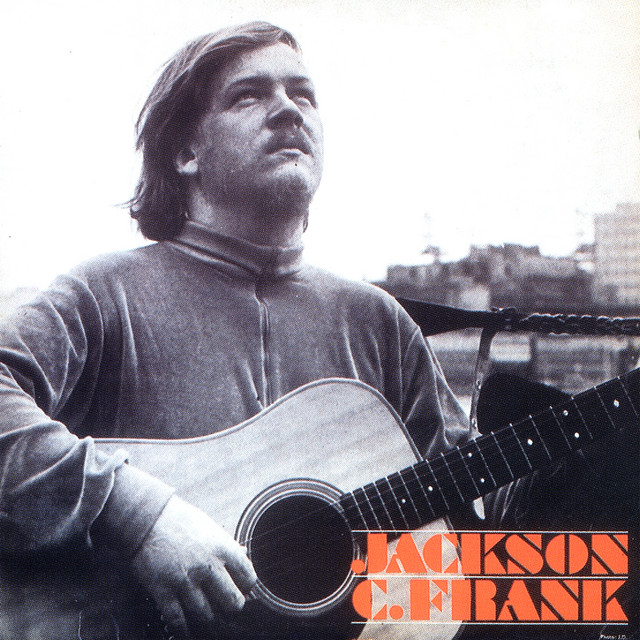
One of the most interesting and enigmatic cult figures of 1960s folk, Jackson C. Frank's reputation rests almost solely upon one hard-to-find album from the mid-'60s. A stronger composer than a singer, he nonetheless had an appreciable influence on many more famous performers of the decade, including Paul Simon, Sandy Denny, and Nick Drake. Trauma and misfortune dogged Frank throughout his life. At the age of 11, a fire in his elementary school killed many of his classmates, and left him with burns over most of his body. He eventually recovered and learned to play the guitar, and hung around the early-'60s New York coffeehouse scene with John Kay, later of Steppenwolf. A large insurance settlement enabled him to travel to England after he turned 21, and it was there that he made most of his impact. Frank shared a London flat with fellow American expatriates Paul Simon and Art Garfunkel, who were briefly based there in the mid-'60s prior to their first hit, "The Sounds of Silence." Simon, then a struggling folk singer/songwriter himself, was impressed enough to produce Frank's self-titled album, released in the U.K. only. While Frank's voice was tremulously earnest, the quality of the compositions was often impressive, with a reflective, melancholic air that most likely influenced Simon, Al Stewart (who made his recording debut on one of the LP's tracks, "Yellow Walls"), and Nick Drake (who covered one of the songs, "Here Come the Blues," on late-'60s home tapes that have been extensively circulated as a bootleg). Frank's album was well-received in British folk circles, and several of his songs made their way into the repertoire of his friend Sandy Denny, who recorded a couple, "Milk and Honey" and "You Never Wanted Me," on her own debut LP. (She also recorded a version of "You Never Wanted Me" with Fairport Convention, and a 1966 demo of "Blues Run the Game" appears on her Dark the Night bootleg.) Frank, however, was unable to come up with a similar quality of material for a follow-up. This, combined with stage fright, depression, and an end of the funds from the insurance settlement that had enabled him to travel in high style, meant that he returned to the States in 1969 without releasing another album. Based in Woodstock, New York, Frank continued his songwriting, but family and depression problems resulted in homelessness by the mid-'70s. For most of the next two decades, Frank lived on the streets or hospitals, too discouraged to contact old friends and family. He was further hobbled by arthritis, inappropriate medication for his mental problems, and a shooting incident that left him legally blind in his left eye. In the mid-'90s, a sympathetic folk fan, Jim Abbott, helped Frank regroup from his setbacks by helping him gain more appropriate medical assistance and settle back in Woodstock, where he resumed songwriting, and occasionally performed. A 1995 profile in Dirty Linen magazine effectively "rediscovered" the missing legend, and legendary vintage recordings were finally issued on CD in 1996. Stricken with pneumonia, Jackson C. Frank died in March 1999 after a heart attack; he was 56 years old. ~ Richie Unterberger, Rovi
First discovered Dec 7, 2025, 4:45 PM