Sylvester
Charts
Tracks
Playlists
SEO
Press Mentions
Overview
Included in high risk playlists
Monthly Listeners
Discography
Top Audiences
Top Listener Locations
 Mexico City, MX46,218
 Santiago, CL39,104
 London, GB22,260
 Johannesburg, ZA18,822
 São Paulo, BR12,676
Playlist Summary
Playlist Movement
No activity found
This artist's playlist additions and removals will appear here.
Biography & Metadata
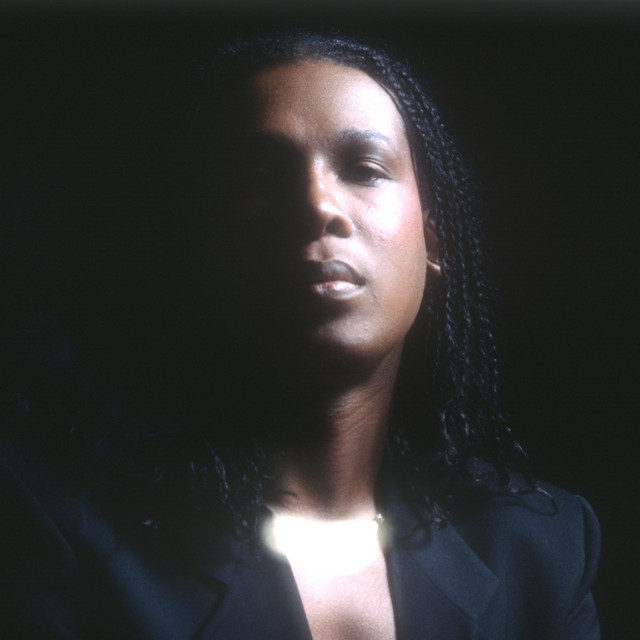
A disco and queer icon who was openly gay throughout his career, Sylvester possessed a supremely expressive high tenor voice unlike any other singer before or since him. He started recording in the early '70s with the rock-oriented Hot Band, releasing two albums before resurfacing later that decade as a solo R&B and disco artist. Recording for the Fantasy label, his singles regularly scaled the upper reaches of Billboard's club chart, truly breaking through with the ecstatic Top 40 crossover hits "Dance (Disco Heat)" and "You Make Me Feel (Mighty Real)," both of which drove the 1978 album Step II to a gold certification. Sylvester continued to blaze paths after Disco Demolition Night, most significantly teaming with producer Patrick Cowley in 1982 for the Top Five club hit "Do Ya Wanna Funk," an early Hi-NRG classic. Born Sylvester James, Jr. in Los Angeles' Watts neighborhood, Sylvester was introduced to music at an early age by his grandmother, Julia Morgan, who was a traveling jazz singer. While still a youngster, Sylvester began singing in gospel groups and found further inspiration from the likes of Bessie Smith and Billie Holiday. After relocating to San Francisco in the late '60s, Sylvester performed in a musical production called Women of the Blues, then became a star attraction of the Cockettes, a multiracial drag ensemble, in the early '70s. After leaving the Cockettes, Sylvester and his manager put together the Hot Band, with whom he recorded Sylvester & the Hot Band and Bazaar, rock-oriented albums released on Blue Thumb in 1973. The Hot Band subsequently split from Sylvester, who continued performing and gravitated toward disco. Signed in 1977 to the Fantasy label, Sylvester broke through that year with a cover of Ashford & Simpson's "Over and Over" -- the highlight of his self-titled solo debut, produced by Harvey Fuqua -- which reached number 18 on Billboard's disco chart. Step II, released in 1978, built on that success with "Dance (Disco Heat)" and "You Make Me Feel (Mighty Real)," both of which topped the club chart and went Top 40. Step II would eventually go gold. Although the 1979 album Stars produced a third Top 40 single with his version of "I (Who Have Nothing)," "I Need Somebody to Love Tonight," a predominantly electronic track written by Patrick Cowley, would prove to leave a deeper impression on club music in the post-disco era. After two more studio albums for Fantasy, 1980's Sell My Soul and 1981's Too Hot to Sleep, Sylvester signed on with Patrick Cowley's Megatone label and released four albums through 1986. These LPs veered from Hi-NRG and electro to soul-rock hybrids and high-tech contemporary R&B. The singles taken from the left more of an impact. A total of six, including the Hi-NRG staple "Do Ya Wanna Funk," peaked within the Top Ten of the club chart. Sylvester's career came to an abrupt and tragic end on December 16, 1988, when he died from AIDS-related complications. Despite his passing, Sylvester's music remains popular on dancefloors worldwide, while "You Make Me Feel (Mighty Real)" has been covered over the years by the likes of Jimmy Somerville, Sandra Bernhard, and Byron Stingily, whose 1998 version hit number one on the U.S. dance chart. Archival recordings continued to circulate well into the 2020s. Disco Heat: The Fantasy Years 1977-1981 and Private Recordings, August 1970 were both released 2023. Live at the Opera House, a complete edition of a 1979 concert in San Francisco, followed the next year. ~ TiVo Staff, Rovi
First discovered Oct 24, 2025, 10:53 PM