Pam Hall
Charts
Tracks
Playlists
Press Mentions
Google Rankings
Overview
Not included in any known risky playlists
Monthly Listeners
Series
- Monthly Listeners
- Listeners from Playlists
- Change
Discography
Top Audiences
Top Listener Locations
 London, GB2,615
 Nairobi, KE1,688
 Toronto, CA1,128Birmingham, GB1,020
 Kingston, JM762
Playlist Summary
Playlist Movement
Biography & Metadata
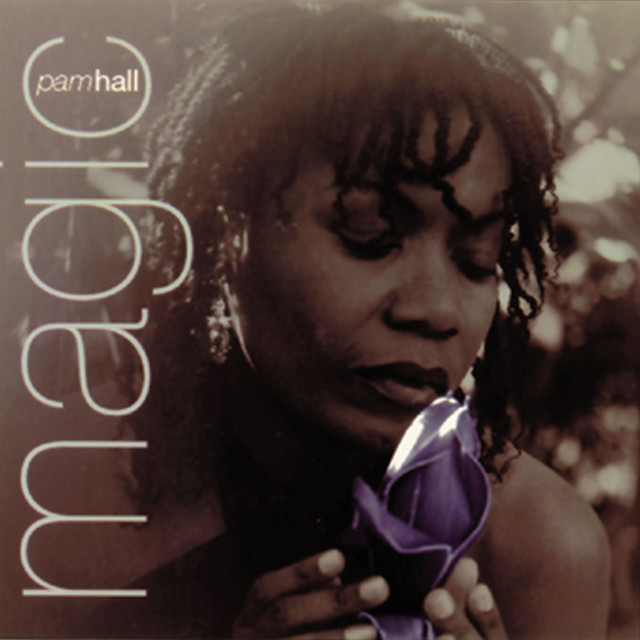
Hall has provided backing vocals, often alongside her brother Raymond, on numerous recording sessions in Jamaica. The family involvement in the music business also includes her sister Audrey Hall, who has been recording since the late 60s, peaking with her crossover chart success in the 80s with Donovan Germain. In 1976, Pam recorded in her own right for her performance on a duet with Tinga Stewart, ‘You Should Never Do That’. In 1986 her quest for recognition as a soloist came to fruition with the release of ‘Dear Boopsie’, which topped the reggae chart and crossed over into the mainstream, spending four weeks at the lower end of the UK Top 50. She followed the hit with ‘How Glad I Am’, produced by Danny Browne at Music Mountain, but in spite of suitable promotion she was unable to emulate her earlier success. The singles were both coupled with productions by Errol Wilson who has remained with the singer throughout her career as her manager and producer. Her debut album, Perfidia, took its title from the Phylis Dillon classic. While pursuing her aspirations towards a career as a soloist she continued to provide back-up vocals for many of Jamaica’s top performers, including Peter Tosh, Bunny Wailer, Dennis Brown, Jimmy Cliff and Gussie Clarke. Following a period of anonymity she re-emerged in 1994 with the release of ‘Missing You Baby’. She followed the hit with her interpretation of ‘I Will Always Love You’, inspired by the phenomenal success of Whitney Houston’s version of the Dolly Parton composition. Hall’s version, recorded for Joe Frasier, topped the reggae chart and was followed by the equally successful ‘Young Hearts Run Free’. Although a competent DJ in her own right in 1995, she also performed in combination with General Degree for ‘Lonely Days’, which provided the basis and title for the Nardo Ranks hit several months later. Her interpretation of Michael Jackson’s ‘You Are Not Alone’ provided Hall with a massive solo hit, topping the reggae charts in the early summer of 1996. She continues to perform on stage, having supported the I-Threes in Judy Mowatt’s absence, as well as with Toots Hibbert and Ziggy Marley. It was through the latter’s involvement in the Fugees’ version of ‘No Woman No Cry’ that she was asked to provide backing vocals on the Ziggy Marley remix. In 1996 she joined the growing number of popular reggae artists in Japan, where she released Magic, which included her Jamaican hits alongside a version of Toni Braxton’s ‘Unbreak My Heart’. The album was heavily promoted in early 1997 when the premier US reggae distributor released her second compilation with the label.
First discovered Aug 19, 2026, 1:29 AM