Gustave Charpentier
Charts
Tracks
Playlists
SEO
Press Mentions
Overview
Not included in any known risky playlists
Monthly Listeners
Discography
Top Audiences
Top Listener Locations
 Madrid, ES110
 London, GB94
 Mexico City, MX76
 Berlin, DE61
 Santiago, CL61
Playlist Summary
Playlist Movement
No activity found
This artist's playlist additions and removals will appear here.
Biography & Metadata
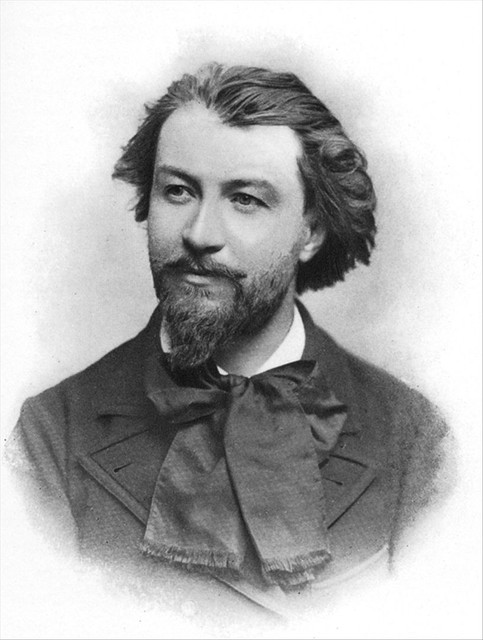
Charpentier was born in Dieuze, on June 25, 1860. He did not come from a musical family -- his father was a baker -- but his family encouraged his interest in music and allowed him to study the violin at an early age. His formal studies, however, did not begin until he was a teenager. He began working in a spinning mill in 1875, and gave violin lessons to his employer, Albert Lorthiois. Charpentier's musical abilities must have been impressive, for Lorthiois subsequently sponsored Charpentier for entrance into the Lille Conservatoire. Finally, in 1881, Charpentier was formally accepted into the Paris Conservatoire, where he studied violin with Massart, harmony with Pessard, and composition with Massenet. Charpentier's composition studies with Massenet began in 1885; surprisingly, only two years later, the young composer won the prestigious Prix de Rome for his cantata, Didon. While living and composing in Rome at the Villa Medici -- a condition of winning the Prix de Rome -- Charpentier completed an number of important works, including a symphony entitled La vie du poete, and an orchestral suite, Impressions d'Italie. He also began work on an opera, Louise, which was destined to become his most famous work. Charpentier returned to Paris in 1890 with the libretto for Louise, which he had written himself. The text of the opera concerned a dressmaker's shop girl named Louise and her life in Paris. Many of Charpentier's friends and colleagues suggested that the libretto was too realistic, too crude; the composer made a number of revisions to the text before finally completing the music in 1896. The opera was premiered at the Opera Comique early in 1900 and was an astounding success. It has been called a "roman musical," an early example of "verismo," and a "realist" drama; most importantly, Louise secured Charpentier's fame as a composer and earned him many honors, including election to the Academie des Beaux Arts. In 1900, he was also named a Chevalier of the Legion of Honor. In 1902, Charpentier founded a school of music, the Conservatoire Populaire Mimi Pinson, which offered free musical instruction to Paris' many "midinettes" -- the shop girls who were popularized in his Louise. Charpentier also organized successful festivals throughout the country, many of which featured his own music, and thus enlarged his fame. Charpentier's next success was the opera Julien of 1913, essentially a sequel to Louise. Probably the second work in an intended trilogy (never to be completed), Julien was not as successful as Louise, but shares many of the latter's charateristics: both are naturalistic music dramas that include the sights and sounds of life on the streets of Paris. After Julien, Charpentier completed virtually no music, and instead busied himself with organizing concerts and writing music criticism. Interested in modern technological developments like the gramophone, radio, and film, Charpentier participated in a film version of Louise in 1936; however, Charpentier became a recluse after World War II, and produced no more music until his death (Paris, February 18, 1956).
First discovered Aug 16, 2026, 7:32 PM