Camerata Carioca
Charts
Tracks
Playlists
Press Mentions
Google Rankings
Overview
Not included in any known risky playlists
Monthly Listeners
Discography
Genres
Spotify has not assigned genres to this artist yet
Top Audiences
Top Listener Locations
 São Paulo, BR216Rio de Janeiro, BR161Itabuna, BR95Brasília, BR72Belo Horizonte, BR67
Playlist Summary
Playlist Movement
Event | Playlist | Botted? | Position | Track | Happened at | |
|---|---|---|---|---|---|---|
Biography & Metadata
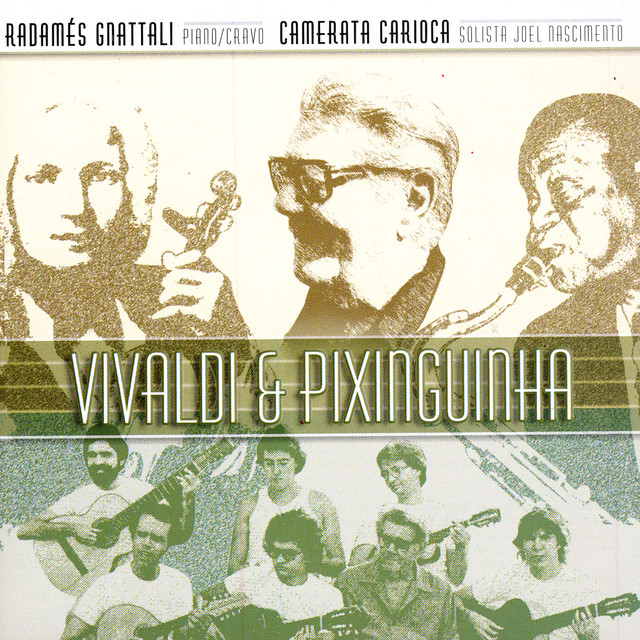
Camerata Carioca was a group formed and led by the choro mandolinist Joel Nascimento, or Joel do Bandolim. In 1978, Joel do Bandolim asked Radamés Gnattali to transcribe Gnattali's suite, "Retratos," for Joel's choro regional (small ensemble). The transcription reshaped the group into a chamber format, and they adopted the denomination Camerata Carioca (given by Hermínio Bello de Carvalho), which opened doors for a new direction of choro where erudite elements were introduced. The band was formed after the Os Carioquinhas, with Raphael Rabello (seven-string violão), Maurício Carrilho (violão), Luciana Rabello (cavaquinho), and Celsinho (pandeiro). The solo violão of Luiz Otávio Braga was added to this formation. Before the group's opening, Luiz Otávio traveled to Japan with Paulo Moura and was replaced by João Pedro Borges. In 1979, the group, with Joel and Gnattali, performed the tribute show Tributo a Jacob do Bandolim, in Curitiba PR, Rio de Janeiro RJ, and Brasília DF, which was recorded and released through WEA. The group followed a transcription written by Gnattali of Vivaldi's Concerto grosso Op. 3 #11 in D minor and Concerto No. 5: Seresteiro for piano and orchestra, performed by the Camerata at Rio's Teatro Municipal. An increase in their rehearsal routine demanded the departure of Rafael and Luciana Rabello, who were replaced by Luiz Otávio and Henrique Cazes. The percussion was delivered to Beto Cazes. The show Vivaldi and Pixinguinha, also with Gnattali, opened at the Teatro Guaíra (Curitiba PR), recorded and released by Funarte (1980). The Camerata also worked with important singers like Elizeth Cardoso, soprano Maria Lúcia Godoy, and Nara Leão, opening the show Nasci Para Bailar with the latter in late 1982. In the same year, the Camerata shared instrumental tracks with Paulo Moura in Nara Leão's Meu Samba Encabulado. In May 1983, they opened the successful show Uma Rosa Para Pixinguinha with Elizeth Cardoso and Radamés Gnattali, which was recorded live, released in LP format, and reissued on CD. Tocar came out in 1983 by Polygram, also with the participation of Gnattali. In August 1983, the group toured the Northeast in the Pixinguinha Project with great success. In the same month, they received the Shell prize at the Teatro Municipal, where they performed again with Gnattali, along with the Orquestra Sinfônica do Teatro Municipal. In May 1986, Camerata Carioca dissolved after several international tours. ~ Alvaro Neder, Rovi
First discovered Sep 22, 2026, 12:22 AM