Stan Jones
Charts
Tracks
Playlists
Press Mentions
Google Rankings
Overview
Included in 1 High Risk Playlist
Monthly Listeners
Series
- Monthly Listeners
- Listeners from Playlists
- Change
Discography
Genres
Spotify has not assigned genres to this artist yet
Top Audiences
Top Listener Locations
 Sydney, AU108Melbourne, AU94Brisbane, AU82
 Toronto, CA58
 Santiago, CL55
Playlist Summary
Playlist Movement
Biography & Metadata
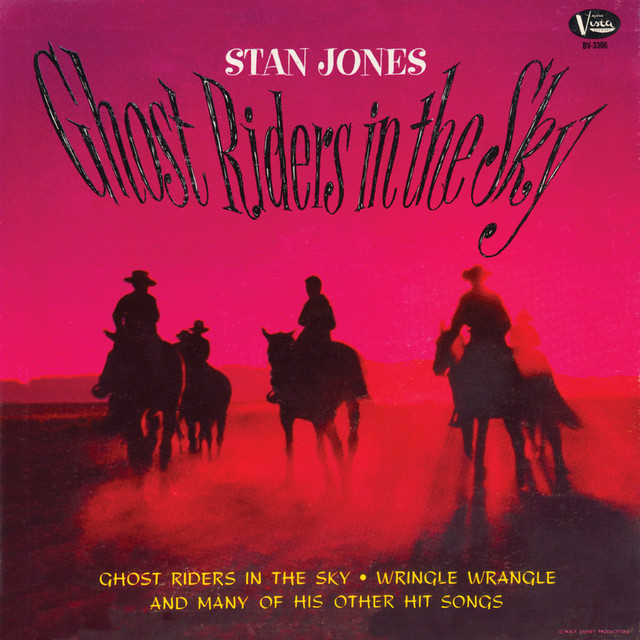
The name Stan Jones doesn't pop up in too many country music reference books, but most fans of cowboy songs and Western movie soundtrack music, not to mention the music of Gene Autry, the Sons of the Pioneers, Vaughn Monroe, and Johnny Cash, know his name, as the author of "(Ghost) Riders in the Sky." Stanley Davis Jones was born in Arizona in 1915 and became a forest ranger. He had an interest in music, could sing a little and play a guitar, and occasionally wrote songs in his spare time. In the fall of 1948, he was assigned as a technical advisor on a Columbia Pictures movie called The Walking Hills, starring Randolph Scott and Ella Raines and directed by John Sturges, when the crew was doing their location shooting in Death Valley. During a slow point in the work, Jones pulled out his guitar and started singing some of those songs and was told by Scott and the rest of the crew that the songs might go nicely in Western movies and that he should try and sell them to the Hollywood studios. Jones followed their advice and tried to publish some of his songs (including "(Ghost) Riders in the Sky," which owed its melody to "When Johnny Comes Marching Home"), only to have them turned down by the music companies that he approached -- one even said that "Riders" was too dirgeful and funereal. He recorded that song and a few others on his own, and composer Eden Ahbez (best known for the hit "Nature Boy") heard "(Ghost) Riders in the Sky" and brought it to Burl Ives, who cut it for Columbia Records. It was later picked up by Bing Crosby, Gene Autry, and Vaughn Monroe, as well as dozens of others, and Jones had a new career and major Hollywood representation. By 1950, Jones was writing songs for major motion pictures, including Ford's Rio Grande, starring John Wayne and Maureen O'Hara -- Ford learned of Jones' songs when actors Harry Carey Jr. and Ben Johnson brought him and his music to the director in person, during shooting -- where they were sung by the Sons of the Pioneers, and he was being looked at by Walt Disney Studios, where he signed on as a composer and recording artist. He wrote and recorded individual songs and began releasing albums in 1961 with Ghost Riders in the Sky, followed by Creakin' Leather a year later and the concept album This Was the West. Jones' other credits include the beautiful theme music to the Warner Bros. television series Cheyenne, written in collaboration with Hollywood veteran William Lava -- indeed, some viewers say the title theme was the best part of the program -- and the title theme from the landmark John Ford Western The Searchers. "(Ghost) Riders in the Sky" remains one of the most popular and often-covered post-World War II country & western songs, constantly re-recorded and old recordings constantly revived. ~ Bruce Eder, Rovi
First discovered Aug 22, 2026, 5:20 PM