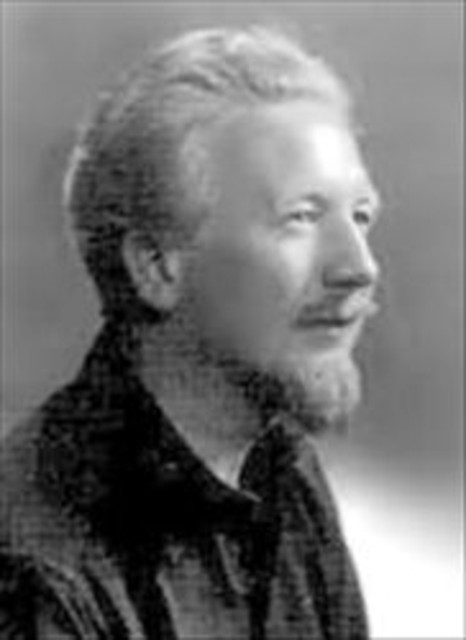
Edmund Rubbra
Charts
Tracks
Playlists
SEO
Press Mentions
Overview
Not included in any known risky playlists
Monthly Listeners
Discography
Genres
Spotify has not assigned genres to this artist yet
Top Audiences
Top Listener Locations
 London, GB74
 Melbourne, AU22Sydney, AU13Manchester, GB13
 Chicago, US12
Playlist Summary
Playlist Movement
No activity found
This artist's playlist additions and removals will appear here.
Biography & Metadata
Edmund Rubbra's emergence during the interwar period as one of England's most skillful symphonists, and the subsequent dissemination of his musical ideals through 40 years of teaching at major British institutions, have earned him a place of honor among twentieth century British musicians. Rubbra was born into an impoverished Northampton family in 1901. His mother gave him his first musical lessons at the age of eight, and, although Rubbra was forced to take a job as a railway clerk at age 14, his enthusiasm for music continued unabated. By 1917 he had discovered the music of Cyril Scott, and his subsequent recital of that composer's piano works impressed the composer enough that he invited Rubbra to study both piano and composition with him privately. After working with Scott for three years he attended Reading University on a musical scholarship for one year (1920-1921), after which he entered the Royal College of Music to study composition with Gustav Holst and harmony/counterpoint with R.O. Morris. Rubbra's career was somewhat uncertain after graduating from the Royal College in 1925, and he was forced to work in a number of capacities to make ends meet (teaching school, working as an accompanist on a part-time basis, and writing reviews of new music for the Monthly Musical Record). By the mid-1930s, however, Rubbra was beginning to make waves as a composer, and the premieres of his first three symphonies (between 1937 and 1939) were sufficient to thrust him into the front rank of contemporary British composers. Rubbra found professional stability with an appointment as lecturer at Oxford in 1947 (for which purpose he made a thorough and insightful examination of both books of Bach's Well-Tempered Clavier), and in 1961 he was invited to join the composition faculty of the Guildhall School of Music, where he remained until the 1980s. His later years were marked by an increasing interest in Eastern spirituality, in conjunction with a devout Roman Catholicism. Rubbra died in 1986. Although a major facet of British musical life during the second half of twentieth century, Rubbra's music has been sadly neglected by North American musicians. Rubbra developed his compositional voice slowly and with great care, absorbing the myriad influences of British composers, from Holst and Vaughan Williams to his childhood idol Cyril Scott, and eventually emerging with a musical language all his own. His later music shows a keen awareness of sixteenth century polyphony (especially that of Monteverdi). The 11 symphonies (the ninth, entitled Sinfonia Sacra, for soloists, chorus, and orchestra) are undoubtedly Rubbra's most significant contribution to the repertory.
First discovered Aug 24, 2026, 4:20 AM