Antonio Caldara
Charts
Tracks
Playlists
Press Mentions
Google Rankings
Overview
Not included in any known risky playlists
Monthly Listeners
Discography
Top Audiences
Top Listener Locations
 Madrid, ES625
 Paris, FR413
 Mexico City, MX410
 Amsterdam, NL401
 Istanbul, TR383
Playlist Summary
Playlist Movement
Event | Playlist | Botted? | Position | Track | Happened at | |
|---|---|---|---|---|---|---|
Biography & Metadata
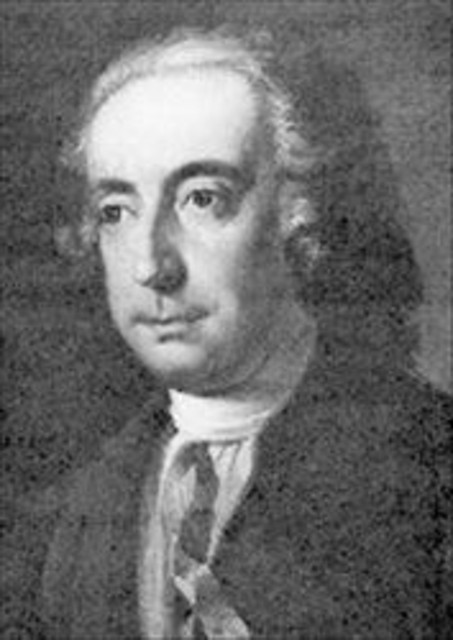
Antonio Caldara was not only one of the most important composers of his generation, but wielded considerable influence over the evolution of Italian vocal music of the early eighteenth century. Moreover, having lived the last two decades of his life in Vienna, he was a significant factor in shaping the direction of both Viennese and German music. To say Caldara was prolific is an understatement: he wrote nearly 3,500 works, including more than 90 operas, numerous oratorios, liturgical works, cantatas, madrigals, and many instrumental pieces. Unfortunately, many of his scores are lost, but there still exists a substantial body of work by which to judge him positively. As a performer he was immensely talented: he was accomplished as a viol player, cellist, and keyboardist, and in his childhood, as a choirboy at St. Mark's Cathedral in Venice, he was considered a highly gifted singer. While his operas are rarely performed today, his instrumental and liturgical music has achieved some currency, and because of the increasing availability of them on recordings, Caldara's reputation could be on the upswing. Antonio Caldara was born in Venice, Italy, probably in 1671. Caldara's educational background is clouded: his first teacher was probably his father, a workaday violinist, and Giovanni Legrenzi, maestro di cappella of St. Mark's, and cello virtuoso Domenico Gabrielli likely taught the young Caldara. By the early 1690s Caldara's operas were drawing attention, and he was already known as a virtuoso cellist in Venice. In 1699 he was appointed maestro di cappella to the Duke of Mantua, a fanatic lover of opera. Caldara apparently wrote many operas for the Duke, but none of the manuscripts survive. Caldara relocated to Rome in 1708, where he was taken into the service of Cardinal Ottoboni. Caldara's Serenata Chi s'arma di virtù (1709) was one of many successful works he wrote while in Rome. In 1717 Caldara resettled once more, this time in Vienna as the vice-kapellmeister under Charles VI. Caldara was required to write many operas, oratorios, and other works as part of his duties. Among his more successful efforts from the Vienna years were the operas Dafne (1719) and Sancio Panza (1730). His sacred music also drew acclaim with such works as Missa Laetare (1729) and Missa in spei Resurrectionis (1732). So busy was Caldara from the demands of his Viennese post that there is evidence exhaustion was a factor in his death on December 28, 1736.
First discovered Oct 25, 2025, 5:47 PM