Tiger
Charts
Tracks
Playlists
SEO
Press Mentions
Overview
Not included in any known risky playlists
Monthly Listeners
Discography
Genres
Spotify has not assigned genres to this artist yet
Top Audiences
Top Listener Locations
 London, GB929
 Toronto, CA626
 New York City, US616
 Panama City, PA615Brooklyn, US544
Playlist Summary
Playlist Movement
No activity found
This artist's playlist additions and removals will appear here.
Biography & Metadata
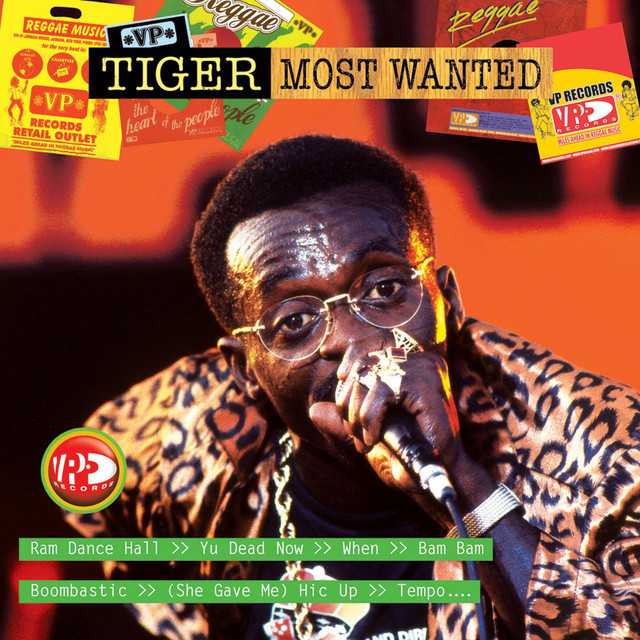
One of dancehall's most eccentric DJs, Tiger rose to fame during the latter half of the '80s with a distinctively offbeat toasting style, full of growls (true to his name), grunts, odd vocal effects, rapid-fire rhymes, and witty asides. Tiger was born Norman Washington Jackson in Kingston on June 6, 1960, and got his first taste of the music scene during his teenage years, while working as a dancehall security guard. Eventually, he started picking up the mic himself after the headlining DJs had finished their sets. Under the name Ranking Tiger, he made his first recording in 1978 for producer Philip Grant; that single, "Why Can't You Leave Dreadlocks Alone," presented him as a singer, not a toaster. Two more singles, "Love Line" and "Knock Three Times," appeared in 1981 before Tiger became a full-time DJ. Tiger spent several years making a name for himself on the dancehall scene as a DJ for the Black Star Sound System. During that time, he released several singles, but didn't break through to a wide audience until 1986, when he scored a monster hit with "No Wanga Gut"; its follow-up, "Puppy Love," was also a significant success. Further hits followed in "Mi Lover Mi Lover" and "Me Name Tiger," and all were collected on his first LP, 1987's Me Name Tiger. Over the remainder of 1987, Tiger recorded for a variety of producers, as well as manning the boards himself on some selections. His next LP, Bam Bam, appeared in 1988 and was paced by its hit title track; the following year, he joined forces with producers Steely & Clevie for the successful Ram Dancehall. He also guested on lovers rock tracks by Anthony Malvo ("Come Back to Me") and Maxi Priest ("I Know Love"), and in 1990 recorded with American rappers the Fat Boys. Despite all the demand for his collaborative input, Tiger went some time without a hit of his own. That changed in 1991, when he reunited with Steely & Clevie for "Cool Me Down," which was featured on the soundtrack of the film Cool Runnings. Its follow-up, "When," proved to be one of the biggest hits of Tiger's career, and wound up landing him a major-label deal with Columbia. In the meantime, he kept recording for a variety of Jamaican producers, landing more hits like "Beep Beep Move Over," "Crying Fool," and "Yuh Dead Now." His lone Columbia album, Claws of the Cat, appeared in 1993 and boasted contributions from producers Sly Dunbar, Steely & Clevie, and acid-jazzers the Brand New Heavies, as well as a guest rap from A Tribe Called Quest's Q-Tip. Unfortunately, in January 1994, Tiger was involved in a near-fatal motorcycle crash that stalled his career momentum; although he was able to recover, he was forced to undergo extensive speech therapy to regain his old toasting form. ~ Steve Huey, Rovi
First discovered Aug 24, 2026, 10:27 PM