Rolando Panerai
Charts
Tracks
Playlists
Press Mentions
Google Rankings
Overview
Not included in any known risky playlists
Monthly Listeners
Series
- Monthly Listeners
- Listeners from Playlists
- Change
Discography
Genres
Spotify has not assigned genres to this artist yet
Top Audiences
Top Listener Locations
 Madrid, ES1,586Barcelona, ES1,026
 Melbourne, AU963
 London, GB963
 New York City, US845
Playlist Summary
Playlist Movement
Biography & Metadata
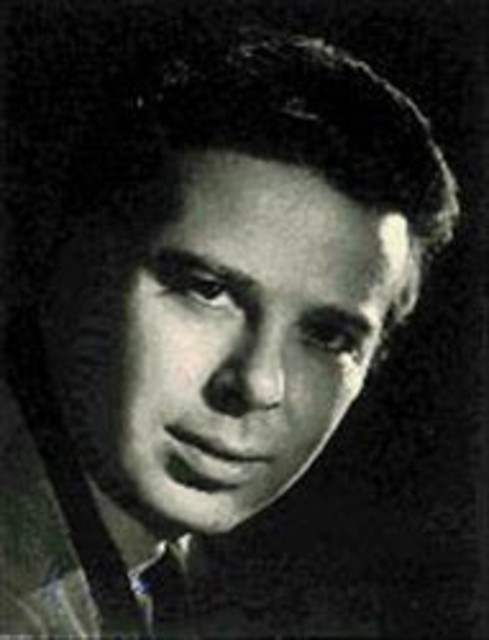
In a career spanning over 60 years, the venerable Rolando Panerai not only was one of the most admired and popular baritones of his time but one of the most versatile. Panerai was born in the Italian town of Campi Bisenzio, near Florence, on October 17, 1924. After studying with Vito Frazzi in Florence and with Giulia Tess in Milan, he won first prize in the Spoleto-based Adriano Belli Competition. He debuted in 1946 in Florence, singing Enrico Ashton from Donizetti's Lucia di Lammermoor. Panerai's La Scala debut came in 1951 when he sang the High Priest with great success. In his early career, Panerai not only distinguished himself with memorable performances, but he took chances: when he sang Ruprecht from Prokofiev's The Fiery Angel at the 1955 Venice music festival, it was the first stage performance of the opera, a work virtually unknown at the time, even in Russia. Other important debuts followed, including at Salzburg (1957), San Francisco (1958), and Covent Garden (1960). By 1970, he was a well-known recording artist and had worked with numerous celebrated conductors like Serafin, Sabata, Giulini, and Karajan, and would sing under Muti, Sawallisch, and many others from the younger generations. Though he lacked a measure of power in his voice, he always possessed an attractive tone and excellent dramatic skills. Panerai appeared in most of the major operatic venues in the world and on numerous recordings, again in varied repertory that bespoke his seemingly inherent versatility. Witness the disparate roles he sang: the High Priest from Saint-Saëns' Samson et Dalila, Paolo (Verdi's Simon Boccanegra), Ford (Verdi's Falstaff), Svejk (Guido Turchi's Il buon soldato Svejk), Mathis (Hindemith's Mathis der Maler), and many more, including Mozart's and Rossini's Figaro. He sang in more than 150 operas and, not surprisingly, with many of the operatic greats, including Callas, Tebaldi, Corelli, Bergonzi, di Stefano, Pavarotti, and countless others. As Panerai entered the new century, he was not as active as in the past, but still appeared regularly on the stage, including at the Paris Opera, Glyndebourne, and Frankfurt Staatsoper. In June 2000, the indefatigable Panerai appeared in the Zubin Mehta-led international television broadcast production of Verdi's La Traviata singing Giorgio Germont. Even later, he performed Gianni Schicchi in Genoa at the age of 87. Panerai died at the age of 95 in late 2019, while still living near Florence. His recorded legacy is on a variety of labels, including EMI and Decca. Older performances have been reissued on Opera d'Oro, Urania, Andante, and several other labels.
First discovered Aug 26, 2026, 8:39 AM