Manuel de Falla
Charts
Tracks
Playlists
Press Mentions
Google Rankings
Overview
Not included in any known risky playlists
Monthly Listeners
Discography
Genres
Spotify has not assigned genres to this artist yet
Top Audiences
Top Listener Locations
 Madrid, ES10,237Barcelona, ES5,376
 Santiago, CL4,011
 London, GB3,965
 Mexico City, MX3,411
Playlist Summary
Playlist Movement
Event | Playlist | Botted? | Position | Track | Happened at | |
|---|---|---|---|---|---|---|
Biography & Metadata
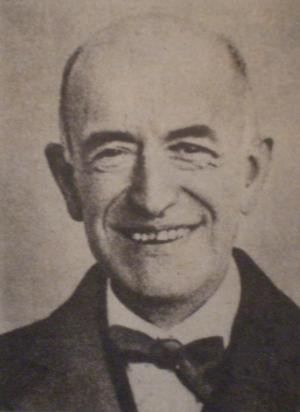
Part Impressionist and part neo-Classicist, Manuel de Falla is difficult to peg, but he is widely regarded as the most distinguished Spanish composer of the early 20th century. His output is small but choice and revolves largely around music for the stage. Falla's reputation is based primarily on two lavishly Iberian ballet scores: El amor brujo ("Love, the Magician"), from which is drawn the Ritual Fire Dance (a pops favorite, often heard in piano or guitar transcriptions), and the splashy El sombrero de tres picos ("The Three-Cornered Hat"). He also gained a permanent place in the concert repertory with his evocative piano concerto Nights in the Gardens of Spain. Born in 1876, Falla first took piano lessons from his mother in Cádiz, and later moved to Madrid to continue the piano and to study composition with Felipe Pedrell, the musical scholar who had earlier pointed Isaac Albéniz toward Spanish folk music as a source for his compositions. Pedrell interested Falla in Renaissance Spanish church music, folk music, and native opera. The latter two influences are strongly felt in La Vida breve ("Life Is Short"), an opera (a sort of Spanish Cavalleria rusticana) for which Falla won a prize in 1905, although the work was not premiered until 1913. A second significant aesthetic influence resulted from his 1907 move to Paris, where he met and fell under the Impressionist spell of Claude Debussy, Paul Dukas, and Maurice Ravel. It was in Paris that Falla published his first piano pieces and songs. In 1914 he was back in Madrid, working on the application of a quasi-Impressionistic idiom to intensely Spanish subjects; El amor brujo drew on Andalusian folk music. Falla wrote another ballet in 1917, El Corregidor y la molinera ("The Magistrate and the Miller Girl"). Diaghilev persuaded him to expand the score for a ballet by Léonide Massine to be called El sombrero de tres picos, and excerpts from the full score have become a staple of the concert repertory. In between the two ballets came Nights in the Gardens of Spain, a suite of three richly scored impressions for piano and orchestra, again evoking Andalusia. In the 1920s, Falla altered his stylistic direction, coming under the influence of Stravinsky's neo-Classicism. Works from this period include the puppet opera El retablo de Maese Pedro ("The Altarpiece of Maese Pedro"), based on an episode from Don Quixtote, and a harpsichord concerto, with the folk inspiration now Castilian rather than Andalusian. After 1926 he essentially retired, living first in Mallorca and, from 1939, in Argentina. He was generally apolitical, but the rise of fascism in Spain contributed to his decision to remain in Latin America after traveling there for a conducting engagement. He spent his final years in the Argentine desert, at work on a giant cantata, Atlántida, which remained unfinished at his death in 1946. ~ James Reel, Rovi
First discovered Aug 25, 2026, 5:30 AM